Russia Hit Kyiv With One of Its Biggest Missile Attacks Yet — Here's What to Know

Russia launched one of its largest-ever missile attacks on Kyiv in the early hours of July 19, 2026. Over five hours, roughly 40 missiles struck the Ukrainian capital in two waves — the first starting at 1:30 a.m. and a second at 6:30 a.m. At least one person was killed and seven were wounded (The Guardian).
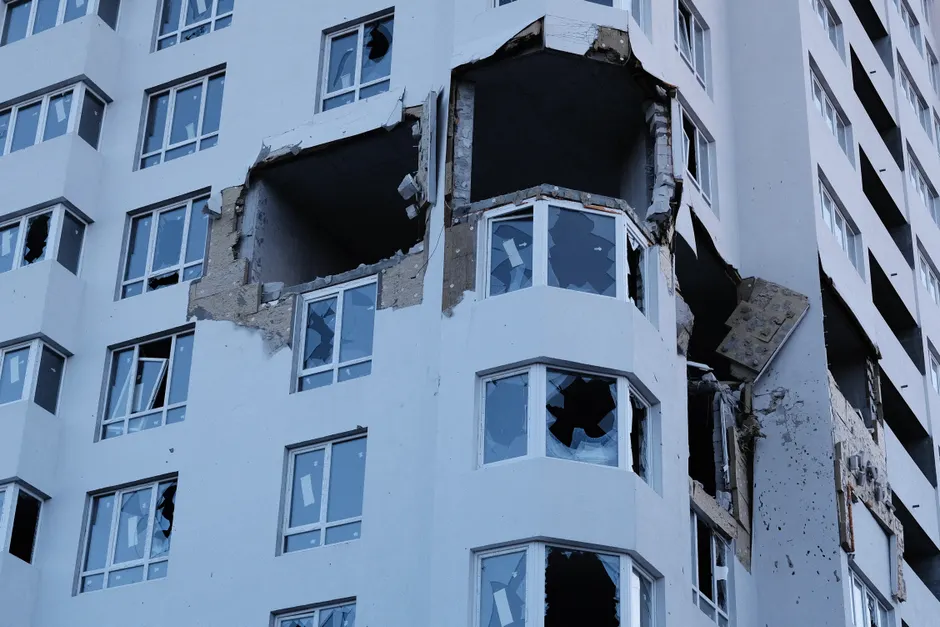
The central Shevchenkivsky district took some of the heaviest damage. A three-storey building caught fire, and rescuers recovered a body from the wreckage while pulling out several trapped people. Four other areas of Kyiv were also hit, with fires at office buildings, homes, and a dormitory. The force of a nearby explosion caused the ceiling of a metro station entrance to collapse, forcing the station to close temporarily.
Kyiv's city military administration confirmed the death via Telegram, and Mayor Vitali Klitschko reported the seven wounded. The casualty numbers are lower than in some of the war's deadliest strikes, but the scale of destruction to buildings and infrastructure tells a bigger story about the attack's reach (The Guardian).
This attack did not happen on its own. Earlier that same day, Russian strikes killed five people and wounded nearly 20 in areas outside the capital. Ukraine then retaliated by sending attack drones that destroyed e-commerce warehouses in the Moscow and Tambov regions of Russia, killing eight people. Both sides are now locked in a pattern: each strike triggers an immediate counterstrike, and civilians on both sides are caught in the middle.
Russia used two different types of missiles in this attack, and that detail matters. The first, called Iskander-M, is a short-range missile fired from a truck that can change direction as it nears its target, making it hard to shoot down. The second, called Zircon, is a hypersonic missile — meaning it travels faster than five times the speed of sound. Think of it like trying to stop two very different threats at once: one that can dodge at the last second and another that is simply too fast to catch easily. Using both together puts enormous strain on Ukraine's air defense systems.
The collapse of the metro station ceiling also carries a deeper consequence. Since the war began, Ukrainians have used subway stations as shelters during air raids because they are underground and considered safe. Damage to one of these stations, even if temporary, suggests that even this last layer of protection is vulnerable to the force of large missile impacts.
The broader picture here is that both sides are hitting deeper into each other's territory more often. Russia's use of Zircon missiles in large numbers suggests it may have ramped up production or decided to use its most advanced weapons more freely. Ukraine's drone strike on Russian warehouses, which killed eight, shows that Kyiv can still hit economic targets deep inside Russia. Both trends point to a war where escalation is not an occasional spike but a built-in feature of the fighting.