Two Earthquakes Hit Peru: What Happened and Why It Matters
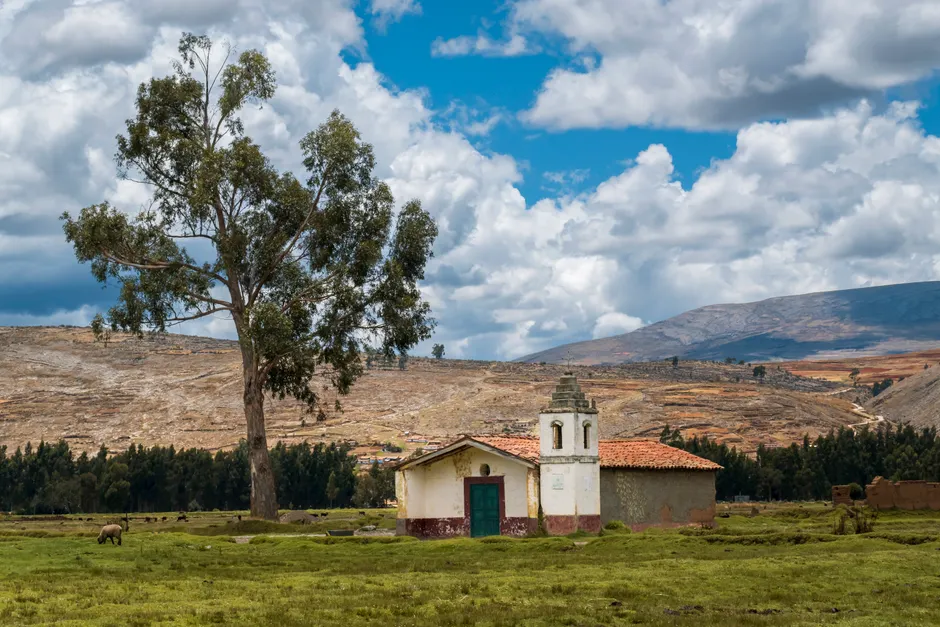
Two earthquakes hit Peru's Junín region on the night of July 18, 2026, killing at least six people. The Peruvian government declared a state of emergency the next day. The first quake measured magnitude 5.1 and struck at 9:24 p.m. local time. A second, smaller quake of magnitude 3.7 followed about 17 minutes later, according to Peru's National Seismological Center (Al Jazeera; INDECI). The center of the quake was in Chongos Bajo, a district in Chupaca province (INDECI).
The number of deaths changed as more information came in. Exitosa radio first reported five deaths. Reuters, citing Peru's civil defense chief, said six. Peru's Premier confirmed six deaths on July 19 (TV Peru). The number of injured people also shifted: early reports said 21, while Peru's civil defense agency (INDECI) listed 32 treated, and TV Peru reported about 40 injured and 300 affected (TV Peru; INDECI). These changing numbers are normal in the first 24 hours of a disaster, when rescue teams are still reaching affected areas.
Luis Vasquez, the head of Peru's civil defense agency (INDECI), said at least 48 homes were destroyed, 18 damaged, and about 300 people left without shelter (Al Jazeera). One reason so many homes collapsed is how they were built. Many houses in Chupaca, which is about 300 km east of Lima, are made of adobe — bricks dried from mud in the sun. Adobe is cheap and common in rural Peru, but it crumbles easily when the ground shakes. INDECI's seismic bulletins rated the shaking from the first quake at level IV-V on the Modified Mercalli Intensity scale, and the second at level III (INDECI; INDECI). The Mercalli scale describes how strongly people feel the shaking and how much damage it causes, which is different from magnitude, which measures the total energy released.
Different agencies also measured the quake's magnitude differently. Peru's center recorded it at 5.1. The European-Mediterranean Seismological Centre (EMSC) estimated it at 5.6 (Al Jazeera). This kind of difference is normal. Each agency uses different sensors, different assumptions about how waves travel through rock, and different calculation methods, so small gaps in the numbers are expected.
President-elect Keiko Fujimori issued a statement of sympathy (Al Jazeera). Peru's Premier, speaking for the incoming government, confirmed the six deaths and announced three steps: a state of emergency for the area, financial aid for victims, and continued damage assessment (TV Peru). A state of emergency lets the government send federal money faster, skip some normal paperwork, and act more quickly to coordinate help.
INDECI responded quickly. The agency issued a preliminary report on the night of July 18, then several follow-up reports on July 19, each updating the numbers of dead, injured, and damaged homes (INDECI; INDECI). National Seismic Information Bulletins provided exact times and shaking data for each quake.
The broader context helps explain why a magnitude 5.1 quake, which would be considered modest in many earthquake-prone areas, caused so much harm. Three factors came together: the quakes were shallow (24 km and 18 km deep, meaning closer to the surface), many homes were built from adobe, and the area is rural with fewer resources to respond. Peru lies on a subduction zone, where one of the Earth's tectonic plates — large slabs of rock that make up the planet's crust — slides beneath another. The friction and pressure from this process make Peru one of the most earthquake-prone countries in the world. But the tectonic setting alone does not decide how deadly a quake becomes. The type of buildings and how well construction rules are enforced in rural areas like Chongos Bajo are what turn a moderate quake into a deadly one.
For the Fujimori administration, which had not yet taken office when the quake struck, this is an early test. The Premier's promises of emergency aid and a state of emergency show a willingness to act fast. But how quickly the money reaches people, whether the amounts are enough, and how fast damaged adobe homes get replaced with sturdier structures will determine whether the response is judged a success in the weeks ahead.


