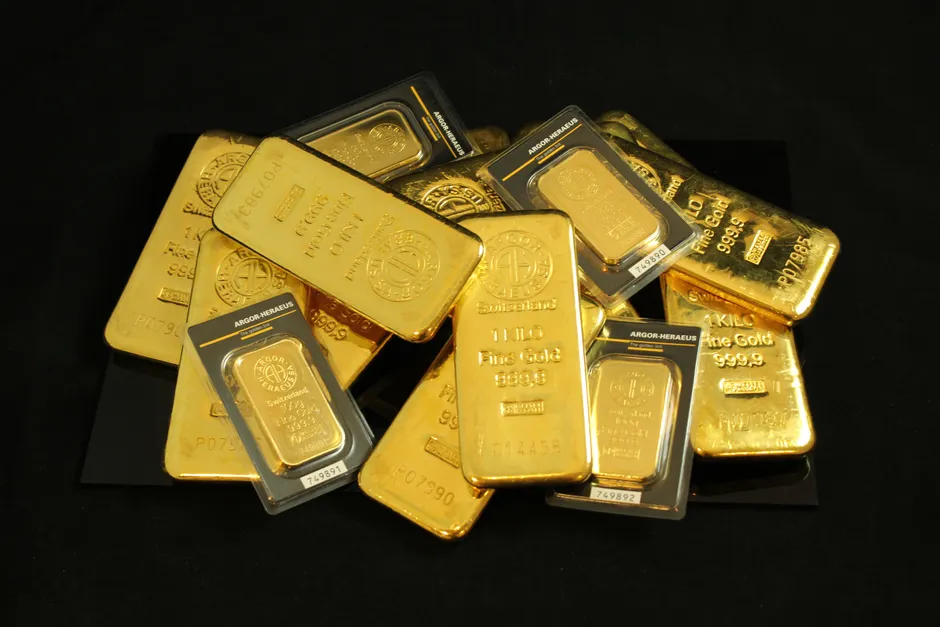
Gold Dropped From Record Highs — Here's Why
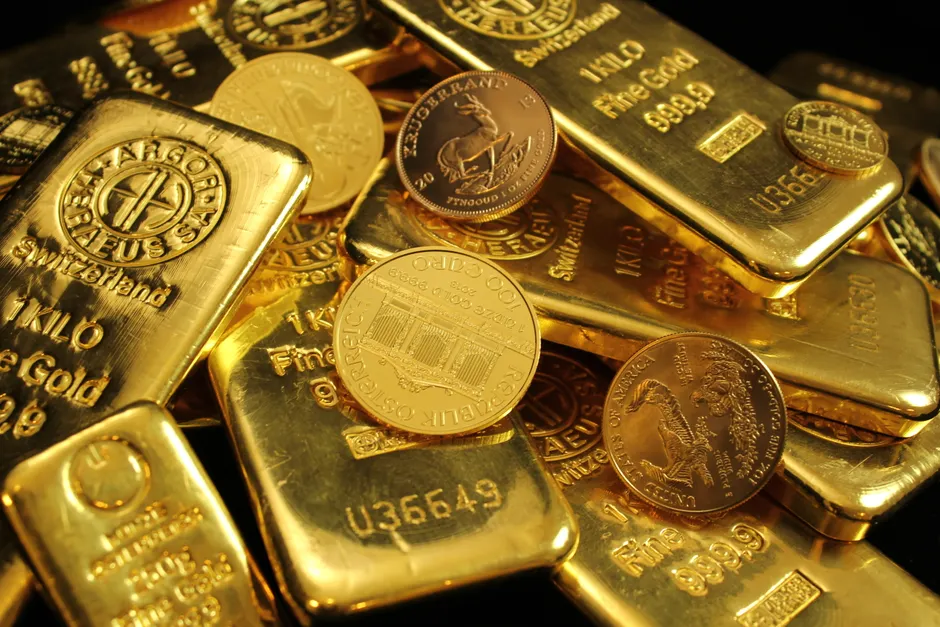
Gold was trading at $4,018.80 per ounce on July 18, 2026, according to CNBC. That's about 15% below the all-time high of $4,765.93 set on January 20, 2026, Reuters. The drop follows a remarkable streak: gold rose 64% in 2025 and was up another 11% by January 2026, Reuters, briefly crossing $4,800 per ounce. Now it's back near $4,000, pulled in different directions by competing economic forces.
HSBC cut its 2026 average gold price prediction from $4,864 to $4,560 per ounce, and its 2027 prediction from $5,000 to $4,925, Reuters. The bank's July 9, 2026 revision points to the Federal Reserve leaning toward keeping interest rates higher for longer. Think of it this way: gold doesn't pay you any interest. When savings accounts and bonds pay higher rates, holding gold instead costs you money in missed earnings. So when rates go up, gold becomes less attractive. HSBC's lower numbers suggest they expect that pressure to last into 2027.
The trading around HSBC's call has been bumpy. On July 13, 2026, gold fell 3% to $3,996.76 per ounce, Reuters, as Middle East tensions raised fears of rate hikes. Normally, global conflict sends people rushing to buy gold as a safe place to park money. But when conflict threatens oil supplies and pushes up inflation, investors worry the Fed will raise rates to fight that inflation — and that rate-hike worry outweighed the safe-haven instinct.
A similar thing happened in late October 2025, when gold futures dropped 2.83% to $4,001.90, falling 3% as U.S.-China trade tensions eased, WSJ. The trigger there was good news: trade-deal optimism made the world feel less risky, so investors needed less gold as a safety net. Both episodes show that gold's direction right now depends more on how people feel about risk and interest rates than on any single factor.
The broader context here is a market cooling off from a stunning run. A 64% gain in one year is extraordinary. It was fueled by trade-war fears, heavy gold buying by central banks, and falling interest rates. As those forces fade or reverse, gold has been drifting back toward $4,000. But HSBC's revised 2026 average of $4,560 still sits well above today's price, which suggests the bank expects gold to recover somewhat rather than enter a long slump.
Gold's small bounce to $4,018.80 on July 18, up from the July 13 low of $3,996.76, suggests the market is finding a floor near the $4,000 round number. But closing the 13% gap between today's price and HSBC's $4,560 forecast would require either the Fed to start cutting rates or a major new crisis to send investors fleeing to safety. Neither is happening right now. XS.com's market analysis desk continues to track these flows, XS.com.
For anyone holding gold as a safety net in their investments, the question is whether that protection still works the way it used to. Because gold's price has become so tied to Federal Reserve decisions, it may not provide the same balance in a portfolio that it did during the 2025 rally. HSBC's forecast cut signals that at least one major bank expects higher interest rates to keep weighing on gold through 2027.