Gold and Silver Hit Record Highs — Here's What That Means

Gold and Silver Hit Record Highs — Here's What That Means
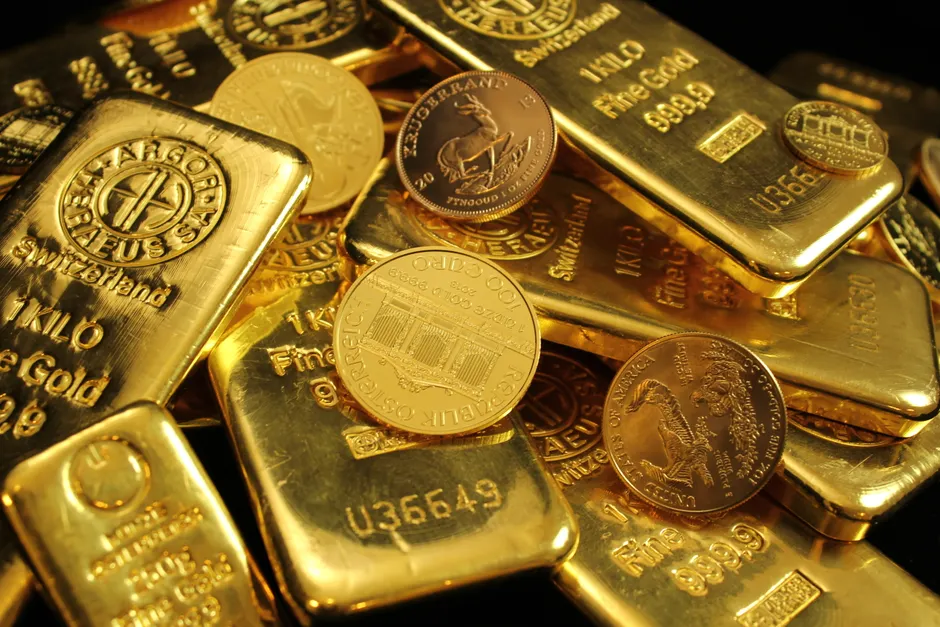
Gold just hit an all-time high of $4,441.92 per ounce on December 22, 2025. Silver crossed $100 per ounce for the first time ever. These are not small moves. And they are connected to decisions the Federal Reserve is making about interest rates — decisions that ripple through the money in your pocket.
What Happened and Why It Matters
The day before gold's record, spot gold (the price you see quoted) had already climbed to $4,347.07, a 1.1% jump in just one week, per Reuters. Silver's jump above $100 was similarly significant — it's a threshold the market had never crossed before in modern trading.
Think of these prices as signals. When something costs more than it ever has, people notice. Money tends to flow into assets when investors believe their value will hold up — especially when they are worried about the value of currency itself.
How Much Gold Actually Changes Hands
Every trading day, roughly 27 million ounces of gold are traded on COMEX, a futures exchange in New York run by CME Group. That is a lot of paper gold changing hands — contracts that represent gold, but don't require anyone to physically take delivery.
Here's the key: most of this trading is not about people wanting to own actual bars sitting in vaults. It is about professional traders, funds, and banks passing contracts back and forth to bet on where prices are headed, or to hedge other bets they have made. When 27 million ounces trade every day but the world doesn't use anywhere near that much physical gold, something important is happening: the price is being discovered in real-time across a deep, liquid marketplace.
The broader context here is that the mechanics of price discovery — the way traders learn what something is truly worth — rely on this daily churn. When something disrupts that smooth flow, the price can spike or crack abruptly.
When Gold Prices and Futures Prices Don't Match
In early December 2024, something unusual happened. Gold futures — contracts to buy gold at a future date — were trading nearly $60 per ounce higher than the spot price. That is about a 2% gap. In a normal market, this gap is tiny, because it should cost almost nothing to bridge it. The gap exists to reflect storage and borrowing costs over time, nothing more.
A 2% gap blowing out in a single day is a red flag. It signals that something has broken down — that the usual mechanisms for buying and selling are under stress.
The culprit was tariff risk. Traders were worried that new U.S. trade policy might make importing gold more expensive or complicated. So some traders preferred to hold gold in New York rather than buy it through the London market and move it later. This created artificial demand for gold in one location and a shortage in another, widening the gap.
In my view, this kind of dislocation — caused by uncertainty about government policy rather than any real shortage of metal — is worth paying attention to. It happened in 2008 during the financial crisis, and it is happening again now. Each time, it reveals how quickly a market can fracture when confidence in institutions wobbles.
Why Are Gold and Silver Prices Rising Now?
The climb to record highs through late 2025 is primarily because investors expect the Federal Reserve to cut interest rates. Here is why that matters.
When interest rates fall, holding assets that do not pay interest — like gold — becomes more attractive. Gold produces no dividends, no yield, nothing. Its only value is that you can sell it later for (hopefully) more than you paid. When you can earn 5% interest elsewhere, that trade-off is unappealing. When interest rates drop to 2%, gold suddenly looks better by comparison.
The weekly jump of 1.1% in gold prices on December 19, 2025, happened on the same day traders repriced their bets on Fed rate cuts, per Reuters. Silver rose even faster in the same period, breaking above $100. Silver is used in industry as well as being held as money, so when economic sentiment turns optimistic, silver often outperforms gold. Both moved together this time.
Reading the Daily Data
CME Group publishes settlement data — the official prices and trading activity — every day for gold, silver, and thousands of other futures contracts. For silver, they also publish what is called implied volatility: a measure of how much the market thinks silver's price will bounce around in the coming weeks.
When silver finally broke above $100, something interesting happened in the options market. Traders were pricing in the possibility of wild swings. Not because anyone thought silver would crash, but because nobody has a good historical anchor for what "$100+ silver" should actually be worth. Every model, every comparison to the past, every rule of thumb breaks down when you are in truly new territory.
The same challenge faces gold traders now at $4,441.92. The models used to predict how far prices might move are trained on years of history that never included prices this high. In practical terms, that means risk management becomes harder. Traders have to be more cautious about how much protection they buy.
What This Tells Us About Positioning
The 27 million ounces traded daily on COMEX can mean different things depending on what is happening underneath. If volume is climbing and more contracts are being held open (what traders call "open interest"), that usually means fresh money is coming in — new conviction on either the long side or the short side. If volume is high but open interest is falling, traders are probably closing positions and rolling out of old ones into new ones.
The rise to gold's record would have been shaped by some combination of both. The market's settlement data shows both volume and open interest across the whole curve. In my view, serious observers looking to understand whether these highs are built on new structural demand or just short-term speculation should have been tracking this interaction closely.
Silver's $100 breach raised the same question: was it driven by actual demand for silver from factories and investors, or were traders covering short bets and piling into a psychologically significant level? The daily settlement data does not answer directly, but the behaviour of volatility — whether traders were buying protection into the move or selling it after — gives clues.
The Bottom Line
Gold and silver are trading at levels no one has seen before. The main reason is Fed rate expectations: investors think rates will fall, which makes non-yielding assets like gold less costly to own. That trend is still in place.
The uncertainty around trade policy — which drove the December 2024 basis dislocation — has not gone away either. Those kinds of sudden gaps can open again when confidence in how markets function gets shaken.
For savers and investors reading this: these metals behave differently from stocks and bonds. They do not produce cash flow. Their value depends entirely on someone paying more tomorrow than you paid today, or on their usefulness as insurance when other assets are falling. When rates drop, that insurance looks more attractive. When real yields fall sharply, it can look very attractive indeed.
The historic price levels mean that the usual rules about how volatile these markets should be no longer apply cleanly. That is not a forecast or a warning — it is a simple fact about how far we have strayed from the past.