A Signal That Predicts Recessions Just Flashed Another Warning
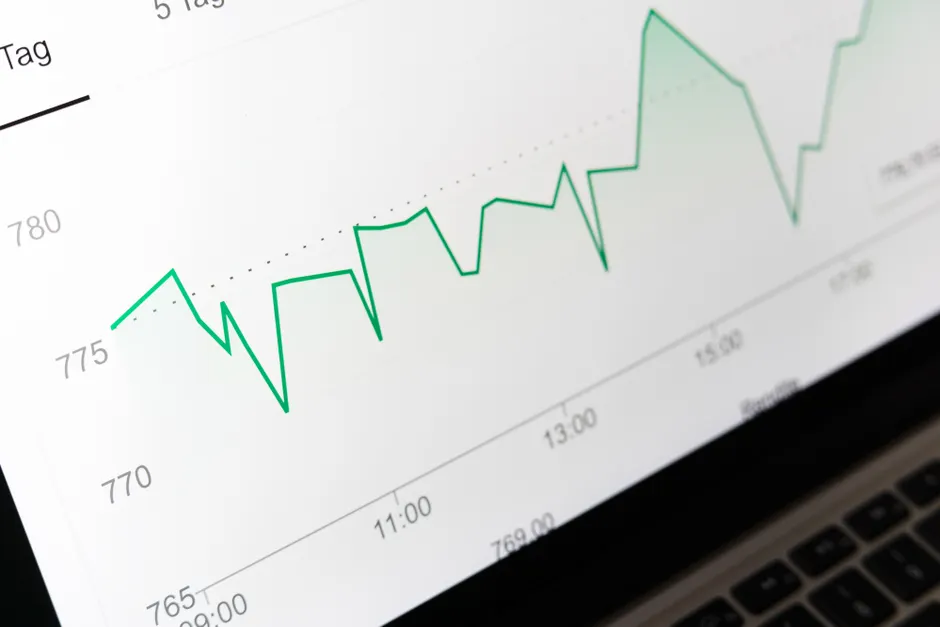
A widely watched index designed to predict where the economy is headed fell 0.2% in June 2026. It is called the Leading Economic Index, or LEI, and it is published by The Conference Board. The index dropped to 99.1 on a scale where 2016 equals 100.
The LEI works like a weather forecast for the economy. Instead of predicting rain, it pulls together ten indicators — things like new building permits, stock market trends, and how confident consumers feel — to estimate whether the economy will grow or shrink over the next three to six months.
The index had ticked up 0.1% in May, but that one good month did not change the bigger picture. The LEI fell 0.3% over the first half of 2026 and 1.1% over the second half of 2025.
The Conference Board also publishes two companion measures. The Coincident Economic Index, or CEI, tracks where the economy stands right now. It rose 0.2% in June to 114.6, the same increase as in May. The CEI grew 0.4% over the first half of 2026 and 0.3% over the second half of 2025. The Lagging Economic Index, or LAG, captures leftover momentum from earlier in the cycle. It was flat at 120.5 in June after dipping 0.1% in May, having grown 1.1% over the first half of 2026 following a 0.1% contraction in the second half of 2025.
The CEI pulls together four things: payroll employment, personal income excluding government payments, manufacturing and trade sales, and industrial production. The 0.2% gain in June means all four are collectively still moving forward — consistent with an economy that kept growing in real terms during the period, even as the leading index worsened.
The Conference Board also nudged its 2026 US GDP growth forecast up from 1.8% to 1.9% year-over-year. Justyna Zabinska-La Monica, Senior Manager of Business Cycle Indicators at The Conference Board, oversees the compilation of these indices. The June 2026 US LEI press release was published on the organization's website on July 20, 2026.
The broader context here is that the LEI's 0.3% decline over the first half of 2026 is much smaller than the 1.1% drop it suffered over the second half of 2025. The rate of decline is slowing. That could mean the economy is finding a floor at a modest growth pace rather than sliding into a recession — and the CEI's steady gains and the small GDP upgrade fit that picture.
But slowing decline is not the same as recovery. The LEI has not managed two consecutive monthly gains since at least the start of 2026, and its level of 99.1 sits below its 2016 starting point. The LAG's flat reading in June, coming after a 1.1% surge over the first half of the year, suggests leftover momentum from earlier in the cycle is still working through the system. That tailwind will not last forever.
For economists who track these numbers, the pattern is familiar but not yet conclusive. When the LEI falls over multiple quarters while the CEI keeps rising and the LAG stays elevated, it is the classic sign of a late-cycle economy — the expansion is still going, but the early-warning indicators are flashing caution. Whether that caution signal turns into something worse depends on whether the LEI keeps falling at this modest pace or starts dropping faster.
When the CEI and GDP forecast point up while the LEI points down, they are sending conflicting signals. Historically, the LEI has been the earlier indicator of turning points, though it has a well-documented tendency to send false alarms, especially when the economy is growing slowly.
The US is not alone in this pattern. The Conference Board's LEI for the Euro Area fell in June 2026, and Mexico's LEI also declined. Both were released on July 17, 2026 (the Euro Area at 9:30 AM ET, Mexico at 11:00 AM ET). When leading indicators weaken across major economies at the same time, spreading investments internationally provides less protection than usual — exactly when people need it most. France's LEI, by contrast, rose in May 2026, an outlier worth watching but not enough to offset the broader trend.
For bond investors, the combination of a weakening LEI and a slightly higher GDP forecast creates a puzzle: growth is holding for now, but the forward-looking data argue against a rebound. Interest rate expectations that assume growth stays strong could prove wrong if the LEI keeps sliding. For stock market strategists, the gap between the forward-looking index and the current-conditions index has historically rewarded a shift toward safer, defensive investments before that move becomes obvious to everyone. That said, the LEI's history of false alarms in slow-growth periods is well known.
The next data point to watch is whether July reverses June's decline or extends it. Two consecutive drops would push the six-month trend further into negative territory and sharpen the debate over where the economy is actually headed.