When the Money Stopped: What Cutting US AIDS Aid Did to the World
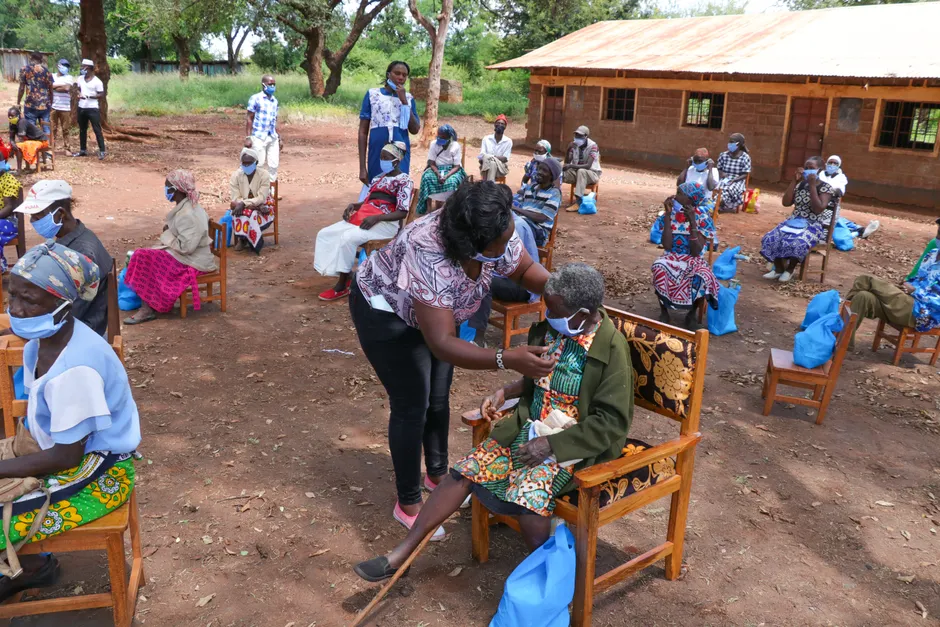
On January 20, 2025, the US government froze all foreign aid for 90 days. That included a program called PEPFAR — the President's Emergency Plan for AIDS Relief, which is the biggest effort by any single country to fight one disease. PEPFAR provides HIV drugs and prevention tools to millions of people, mostly in Africa. Eighteen months later, researchers are now putting numbers on what happened.
What the Studies Found
One of the clearest estimates focuses on PrEP — a daily pill that keeps people from getting HIV. A study by Stone et al. (2025) in The Lancet HIV found that losing PrEP for one year could lead to 10,313 new HIV infections over five years.
A larger study by Hontelez et al. (2025) in eClinicalMedicine found that cutting off PEPFAR funding entirely could cause tens of thousands of HIV deaths and new infections. That study has been cited 53 times by other researchers — more than any other study in this group.
A third study by Filiatreau et al. (2026), published in The Lancet Africa Health, looks at what actually happened on the ground after the freeze. It has been cited three times so far. The first two studies predict what could happen. This one starts showing what did happen.
Program Data Confirms the Impact
The Center for Global Development (CGD) reported on February 24, 2026, that millions of people lost access to HIV medication during the pause. Another CGD analysis from September 17, 2025, found that PEPFAR treatment programs were completely shut down. A third CGD report from October 20, 2025, estimated that nearly one in four patients who should have been getting treatment may have gone without it.
Court records make the cuts concrete. A federal court filing from April 14, 2025 (Case 1:25-cv-10814-BEM) documents a specific PEPFAR grant of $99,974 that was cancelled on March 21, 2025. The same filing records the cancellation of an HIV prevention grant.
Countries are also changing how they deliver care. After the January 2025 cuts, Uganda's Ministry of Health said it would move HIV treatment away from programs focused only on HIV and into general health services.
The Bigger Picture
Writing in The Lancet in 2026, J. Ratevosian warned that changes to PEPFAR "risks a period of structural vulnerability in the HIV response." The US Congress has not passed a long-term plan to keep PEPFAR running. Without that stability, programs keep changing with no clear direction. A Lancet editorial made the same point.
The concern here is both immediate and long-term. People are losing access to medication right now, and health systems are being reorganized in ways that could outlast the funding freeze itself. When HIV care gets folded into general health systems during a period of shrinking resources, it is unclear whether those systems can maintain the same quality that dedicated HIV programs provided.
What remains unresolved is whether the policy will stabilize. The 90-day freeze has ended, but program cancellations continued into March 2025 and beyond. Millions of people still lost access to drugs well after the freeze formally ended. The research now available gives governments and health workers the tools to understand where things are heading. Whether that direction changes depends on decisions in Washington that the research can document but not control.