The US Is Giving $600 Million for Vaccines — But Not Through the World Health Organization
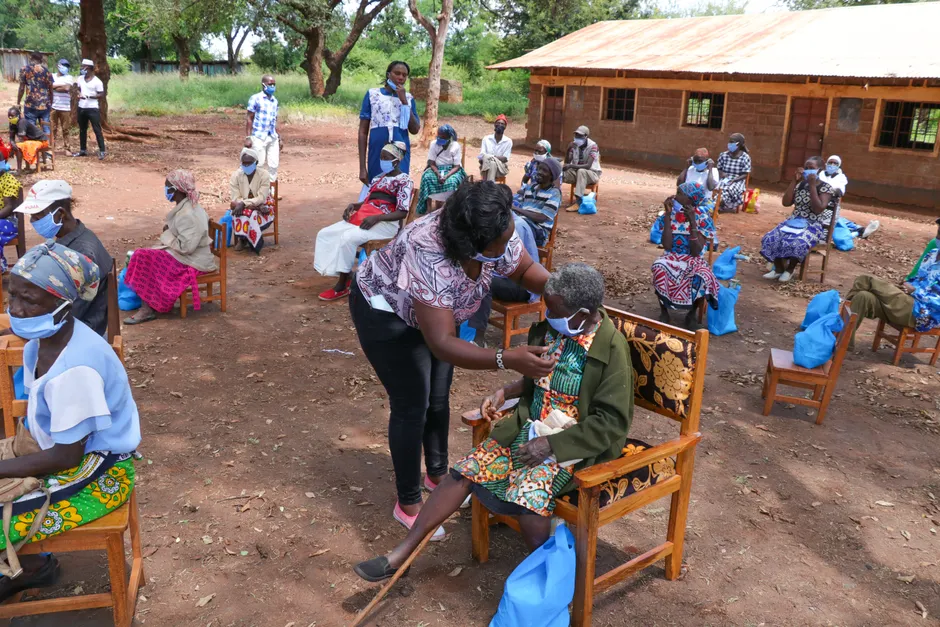
On July 30, 2026, the United States said it would release $600 million to help pay for vaccines in poor countries through a group called Gavi. At the same time, the US made clear that none of that money can go to the World Health Organization, or WHO. The WHO is the part of the United Nations that handles global health.
The announcement came in a joint statement from the State Department and the Department of Health and Human Services, dated July 29. It said plainly: "The United States also reaffirms that it will not provide US Government funding to the World Health Organization through Gavi" (Al Jazeera).
Here is why this matters. Gavi is an organization that collects money from governments and donors to buy and deliver vaccines in countries that cannot easily afford them on their own. The WHO advises countries on health rules and helps coordinate responses to disease outbreaks. The two have traditionally worked together. By insisting that its money stay separate from the WHO, the US is forcing Gavi to keep American vaccine funds on a different path from any WHO programs.
President Trump told Health Secretary Robert F. Kennedy Jr. and Secretary of State Marco Rubio to negotiate changes at Gavi before the US would resume its support. One result: Gavi agreed to work toward replacing vaccines that contain mercury with mercury-free versions. This idea was first reported in January 2026, when Reuters reported that the administration was making US funding to Gavi conditional on dropping thiomersal, a mercury-based preservative used in some vaccines (Reuters). Most childhood vaccines in the US and Europe no longer use thiomersal, though the WHO has said the small amounts used as preservatives are not harmful. Kennedy has long raised concerns about mercury in vaccines, and this condition turns that concern into a funding requirement.
This release of money follows a long period of uncertainty. On January 20, 2025, his first day back in office, Trump said the US would leave the WHO and stopped paying into it. His budget request for the following year left out all money for Gavi (KFF). In March 2025, Reuters reported that the administration's plan to end US funding for childhood vaccines in developing countries involved canceling 5,341 grants worth just under $76 billion (Reuters). In June 2025, Health Secretary Kennedy said publicly that the US was ending support for Gavi (AP News). The State Department's budget document for the following year also says no money is included for Gavi and that any future support depends on the organization meeting certain conditions.
Congress did not go along with the cuts. Both the Senate and the House included Gavi funding in their own spending bills for 2026 (Devex). The House approved $300 million for Gavi in its version (BMJ). A bipartisan group of lawmakers asked the administration to restore funding in May 2026 (CIDRAP). Republican Senator Susan Collins said she welcomed the July 30 decision to release the $600 million.
The administration changed direction again in June 2026, when Secretary Rubio said the US would re-engage with Gavi during an Ebola outbreak, after having cut about $300 million in annual funding in 2025 (Reuters). Gavi's CEO, Dr. Sania Nishtar, had warned that a funding cut would be "disastrous" and could lead to more than 1 million deaths from diseases that vaccines can prevent (AP News). The UK announced it would pledge £1.25 billion ($1.7 billion) to Gavi from 2026 onward (AP News.
For scale, the WHO's budget is about $3.4 billion. That is roughly one-third of the CDC's $9.3 billion in core funding in 2023. The State Department describes Gavi as a Swiss nonprofit that reports holding more than $7.0 billion in reserves.
The broader picture is that the US is reorganizing how it pays for global health on two tracks. It is demanding that Gavi adopt specific reforms tied to Kennedy's priorities on vaccine safety. And it is keeping a firm distance from the WHO that started on Trump's first day back in office. Whether Gavi's promise to pursue mercury-free vaccines will satisfy the administration in practice, and whether Congress will keep funding the commitment past 2026, are open questions that the next budget document does not answer.