Why the Houthi Blockade of Saudi Arabia Could Shake Up Global Trade

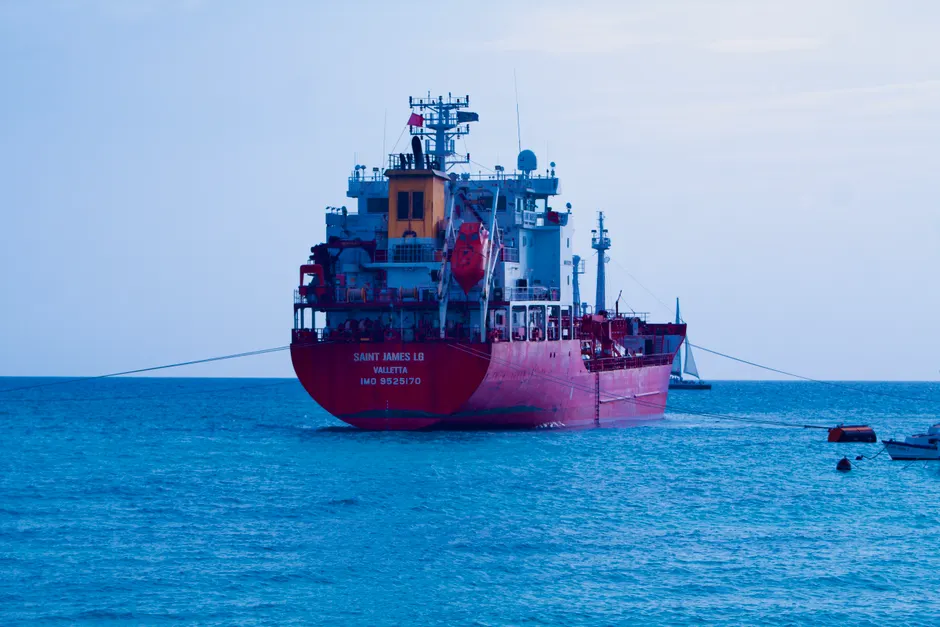
On July 20, 2026, the Houthis announced a naval blockade against Saudi Arabia. They warned shipping companies that oil tankers visiting Saudi ports could be attacked.
A naval blockade is when a group tries to stop ships from reaching a country's ports by threatening to attack them. This declaration is a big step up in Houthi aggression at sea. Until now, they said their Red Sea attacks were about showing support for Palestinians. This time, they are targeting one country directly.
The Houthis said the blockade is retaliation — meaning payback — for a Saudi blockade of ports and airports in the part of north-western Yemen that the Houthis control, according to the BBC. Saudi Arabia denied the accusation and said it would take all necessary steps to protect its ships under international law. Sudan also condemned the Houthi threats, warning about risks to Red Sea shipping and global trade, as reported by Sudan Tribune.
The announcement came after a week of back-and-forth attacks. In the week before July 22, the Houthis fired missiles at an airport in south-western Saudi Arabia. They said they were responding to airstrikes on Sana'a's airport that they blamed on Saudi forces. These exchanges broke an informal truce — a agreement to stop fighting that was never written into a formal peace deal — that had held between the Houthis and Saudi Arabia since 2022.
To understand why this matters, some background helps. Yemen's civil war started in 2014, when the Houthis took over the capital city, Sana'a, from the country's internationally recognized government. In 2015, Saudi Arabia led a group of Arab countries in a military intervention to put the official government back in power. The war settled into a stalemate, with neither side winning. The 2022 truce reduced the major fighting, but problems underneath — including limits on Houthi-controlled ports and airspace — were never resolved.
The blockade also builds on an existing disruption at sea. After the Gaza war started in October 2023, the Houthis began attacking cargo ships in the Red Sea, saying they were acting in support of Palestinians. Those attacks have sunk four ships, seized one vessel, and killed nine crew members. The new embargo narrows the threat to ships going to Saudi Arabian ports specifically, rather than the broader campaign tied to Palestine.
The timing matters for world trade. Saudi Arabia had already moved more than 70% of its oil exports away from the Gulf and through the Red Sea port of Yanbu, using an east-west pipeline. This was after the Strait of Hormuz, a narrow shipping lane in the Gulf, was closed. In the weeks before July 22, about four million barrels of oil per day were shipped from Yanbu. A year earlier, that number was about 973,000 barrels per day, according to data from Kpler and Signal Ocean. That is a fourfold increase — and all of it now passes through waters the Houthis say they will blockade.
Think of the Bab al-Mandab Strait as a narrow doorway in the sea. It is only 32 km (20 miles) wide, and it is the route that Saudi oil and a huge amount of global trade must pass through. MarineTraffic, which tracks ships and maritime risks, reported that some vessels are already making U-turns, switching off their tracking signals, or delaying their entries into the strait because of the Houthi embargo.
The broader context here is that two shipping disruptions have happened at the same time, on opposite sides of the Arabian Peninsula. The closure of the Strait of Hormuz pushed Saudi oil westward through Yanbu. Now the Houthi blockade threatens the very waters that oil was rerouted into. Saudi Arabia's pipeline was meant to be a safety net against trouble in the Gulf. Instead, it has funneled a huge amount of oil into a narrow corridor the Houthis now say they will block.
For energy markets, the numbers are serious. Four million barrels of oil per day flowing through a declared blockade zone, through a strait only 32 kilometers wide, means a lot of risk in one place. Insurance companies, shipping companies, and oil refiners will all have to factor that risk into their costs. The Houthis have already sunk four ships, seized one, and killed nine crew members since October 2023, so they have shown they can and will act on their threats. What is not clear is whether they can enforce a blockade on the scale they are claiming.
Saudi Arabia's promise to protect its ships "in accordance with international law" suggests it wants to respond through legal channels rather than by escalating the conflict on its own. But the missile exchanges across the border in the days before suggest the situation on the ground is already getting worse. The 2022 truce was never turned into a permanent ceasefire — a formal, lasting agreement to stop fighting — and it now seems to exist mostly on paper.
Other countries are still figuring out how to react. Sudan's condemnation shows that concern goes beyond the two main parties. The Bab al-Mandab Strait is not just a route for Saudi Arabia; it is a global shipping lane. If ships cannot pass through it freely, the effects would ripple out to the Suez Canal, insurance costs, and shipping prices well beyond the Arabian Peninsula.
The biggest question is whether the Houthis can actually enforce the blockade. They control about 200 kilometers of Yemen's Red Sea coastline and have used drone boats, missiles, and drones to attack ships since 2023. Saying you will block a route is not the same as actually doing it. But the Houthis have made the threat, shown they have the weapons, and Saudi Arabia has concentrated a huge amount of its oil exports right in the corridor they want to block. Shipping companies, insurers, and navies in the region will be watching closely in the coming days to see whether this turns into real disruption or stays a warning.