Defense Tech Company Anduril Raises $5 Billion, Now Worth $61 Billion

Defense Tech Company Anduril Raises $5 Billion, Now Worth $61 Billion
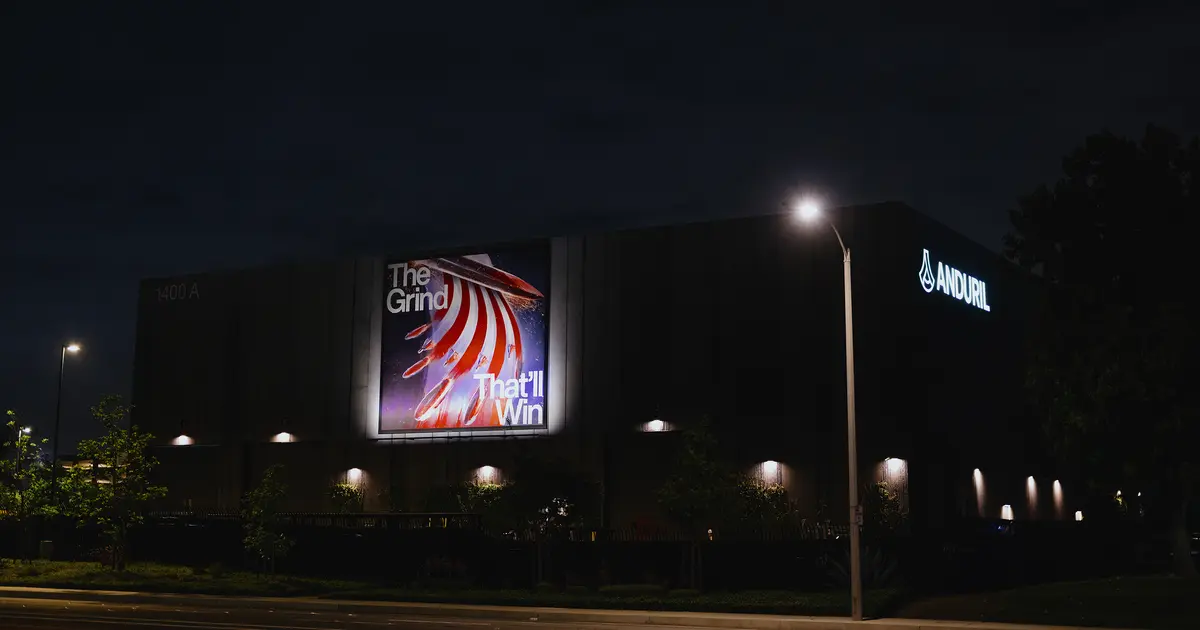
Anduril Industries, a company that builds technology for the military, has closed a $5 billion funding round led by Thrive Capital. This brings the company's total value to $61 billion, according to the company's announcement. It is one of the largest funding rounds ever for a defense technology company.
The jump in value is striking. Just a few years ago, Anduril was valued at $4.6 billion. Now it is worth more than 13 times that amount. This rapid increase shows how much investors believe in the company and the growth of military technology.
What Anduril Does
Anduril builds robots and software that help the military work without constant human control. Think of these systems like self-driving cars, but built for military tasks in the air, on land, and at sea. The company's main software product is called Lattice, an operating system that lets one operator control many different autonomous systems at once—much like how a conductor directs an entire orchestra.
The key difference between Anduril and old defense companies is how fast they can build and update their systems. Traditional defense contractors take decades to develop a single weapon or platform. Anduril uses software that can be updated quickly and adapted to different types of hardware, so they can move much faster.
Why This Money Matters
The military around the world wants more autonomous systems, and these systems need to be built in large quantities. Manufacturing is the challenge. Unlike software, which can be copied instantly on computers, physical robots and drones require real factories and workers.
The $5 billion helps Anduril build the factories and production lines needed to make enough systems to meet demand. It also gives the company the financial strength to bid on large military contracts, which often require companies to prove they have the money to deliver.
The Bigger Picture
The defense technology industry is attracting venture capital in new ways. For decades, military spending went mostly to the big, established companies like Lockheed Martin and Raytheon. Now, faster, smaller companies like Anduril are competing for that money by offering new technologies—particularly in artificial intelligence and autonomous systems.
This shift reflects a change in how militaries think about modernization. Rather than waiting 20 years for a new tank or fighter jet, they want systems they can deploy in 2 or 3 years. Anduril's approach—software-first, modular, upgradeable—fits that demand.
The broader context here is worth understanding. We have seen similar shifts before. When the internet moved from academic networks to commercial use in the 1990s, the same technologies eventually became the backbone of military communications. What starts as commercial innovation often becomes military capability. The same machine learning and computer vision systems that power smartphones and self-driving cars are now being used in military autonomous systems, with consequences that are rippling well beyond the defense sector alone.
What Comes Next
With $5 billion in new money, Anduril can now build more factories, develop new types of autonomous systems, and compete for bigger military contracts. The company's roadmap likely includes expanding its air drones, adding maritime (sea-based) systems, and improving how different autonomous systems work together in the same mission.
The real test ahead is whether Anduril can actually deliver on what investors are paying for. A $61 billion valuation means the company needs to win major contracts, prove its technology works in real combat situations, and scale manufacturing to enormous levels. That is much harder than raising money.