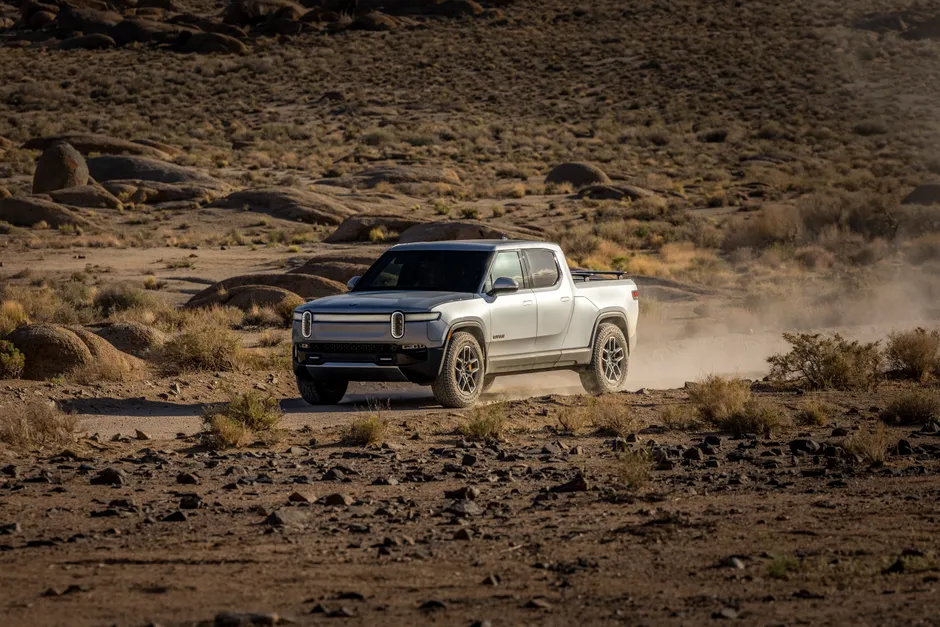
Rivian Is Suing the Government to Get Its Tariff Money Back

Rivian, the electric vehicle maker, filed a lawsuit against the U.S. government on July 23, 2026. The company wants a full refund of import taxes (called tariffs) that it paid under tariffs President Trump imposed on what he called "Liberation Day." The Supreme Court later ruled those tariffs unconstitutional, meaning the government did not have the legal authority to collect them. The lawsuit names the United States, Customs and Border Protection (the agency that collects import taxes at the border), and CBP Commissioner Rodney Scott as defendants. TechCrunch
The Trump administration had used a law called IEEPA — short for the International Emergency Economic Powers Act — to justify the tariffs. That law was originally meant to let presidents freeze foreign assets during national emergencies. Customs and Border Protection, or CBP, collected the duties on the administration's behalf. After the Supreme Court struck down the use of IEEPA for tariffs as unconstitutional, the question of what happens to all the money already paid was left unanswered. Rivian's complaint states that "importers that have paid IEEPA tariffs, including Plaintiffs, are not guaranteed a refund of amounts previously paid based on the Supreme Court's decision," so the company says it had to file its own lawsuit to get its money back. TechCrunch
Rivian is asking the court to declare the tariffs "contrary to law," issue a refund with interest, and pay associated court fees. The complaint was reviewed and linked by TechCrunch and is hosted on DocumentCloud. TechCrunch
The financial stakes are real. CFO Claire McDonough said in April that the company expected a refund in the "tens of millions of dollars." CEO RJ Scaringe told Reuters that the tariffs initially raised the cost of each vehicle by "a couple of thousand dollars," though by the end of 2025 the company had lowered that per-vehicle impact to "low hundreds of dollars." TechCrunch
Getting refunds has been a slow and bumpy process for everyone. The Cato Institute, a think tank, reported earlier in July 2026 that $71 billion in refunds had been paid out so far, but also found "frictions" and "obstacles for importers seeking refunds." CBP told TechCrunch that over $121 billion in "potential and certified refunds have been accepted for processing" but declined to comment specifically on Rivian's lawsuit. TechCrunch
Here is the problem in plain terms. The Supreme Court said the government should not have collected these tariffs. But the court did not set up an automatic system to return the money. It is a bit like a store being told it charged customers illegally for a fee: the fee is gone going forward, but every customer still has to go to the counter and ask for their money back individually. The gap between $71 billion actually paid out and $121 billion accepted for processing shows that the refund system is struggling to keep up.
For a company like Rivian, which makes electric vehicles on tight profit margins and depends on parts from multiple countries affected by the tariffs, the difference between waiting for a refund and getting one through a court order matters. The interest on tens of millions of dollars in paid tariffs could add up to a meaningful amount on its own. And a court declaration that the tariffs were "contrary to law" would give Rivian a stronger position than simply waiting in CBP's refund line.
Rivian did not immediately respond to TechCrunch's request for comment on the lawsuit. TechCrunch
The broader context is that Rivian is probably not alone in thinking a lawsuit is the better route. With $121 billion accepted for processing but only $71 billion actually paid out, the refund system clearly has a significant backlog. Other companies that paid large amounts in tariffs and have the money to go to court have a strong reason to follow Rivian's example, especially if the court handles these cases quickly. The outcome of this suit could set a pattern for how refunds from the unconstitutional tariffs actually get returned to the companies that paid them.