Irish Police Stopped a Ready-to-Use Bomb Near the Northern Ireland Border. Here's What Happened.
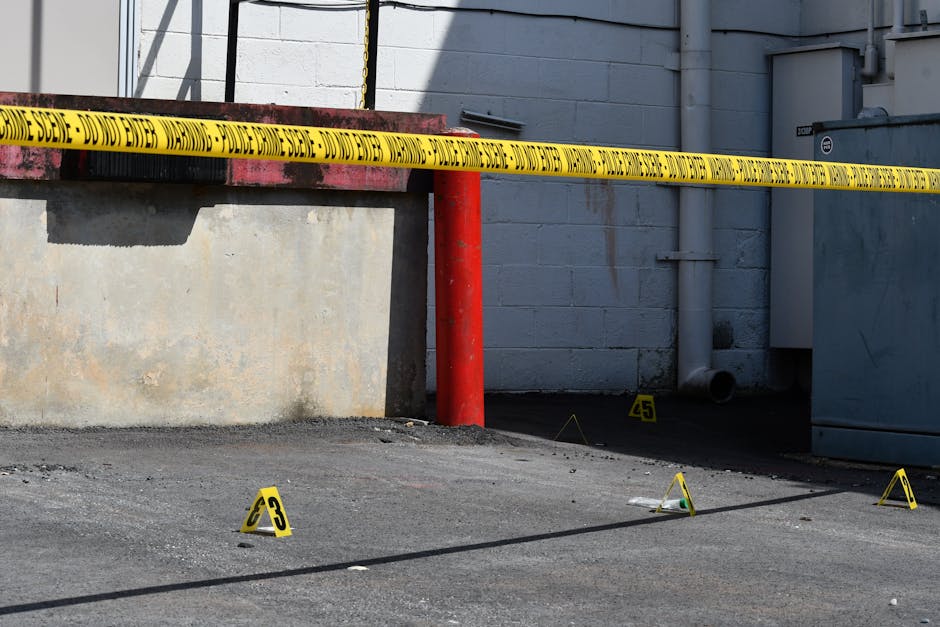
On Wednesday, July 22, 2026, Irish police stopped a car on a road south of Carrickmacross, a town in County Monaghan. Inside the car, they found a finished, military-grade bomb. Ireland's top police officer, Garda Commissioner Justin Kelly, called it an "extremely significant seizure" The Guardian.
The police acted on intelligence — meaning they had information ahead of time, rather than stumbling on the bomb by chance. They were targeting dissident republicans. These are groups that rejected the 1998 peace deal for Northern Ireland, known as the Good Friday Agreement, and still use violence. Police sources described the bomb as "highly sophisticated," fully built, and ready to use. It contained a power source, a detonator (the part that sets off the explosion), and military-grade explosives believed to be Semtex, a powerful plastic explosive. Security sources believed the bomb was meant to be attached under someone's car in Northern Ireland and triggered remotely. The Irish Defence Forces' bomb disposal team examined the vehicle at the scene.
The level of skill behind this bomb sets it apart from what dissident republicans have done recently. A security source said the bomb required real mechanical and electrical know-how, plus access to explosives. It was far more advanced than the crude pipe bombs previously used to target members of the Police Service of Northern Ireland (PSNI).
On Friday evening, July 24, 2026, a 25-year-old law student named Isobella Perrie Sullivan, from Clane, County Kildare, was charged with possession of explosives at a special court sitting in Trim. A second person, a man in his 40s, was also arrested and remained in custody The Guardian.
Police argued against letting Sullivan out on bail Irish Times. The court granted bail anyway, set at €15,000 ($17,054 USD), and she was released after the hearing Idaho Press.
Commissioner Kelly, speaking at a police graduation event on July 24, confirmed details of the operation and said the device "would have or could have potentially caused significant damage." He also spoke about the ongoing threat from what he called a "small minority of radicalised republicans" who rejected the Good Friday Agreement and the process of handing over and destroying weapons The Guardian.
To understand why this matters, it helps to know some background. The Good Friday Agreement of 1998 ended decades of violence in Northern Ireland known as the Troubles. It set up a shared government and was followed by the IRA giving up its weapons. But not every armed group went along. Some, like the New IRA and Continuity IRA, kept operating at a low level, occasionally attacking police officers and military sites. The fact that this bomb used Semtex suggests either someone found old hidden stocks of explosives, or new supply routes exist that police thought were shut down.
One security source raised a different possibility. They pointed to the "radicalisation of individuals captured by the internet," meaning someone could be inspired online to act on their own, rather than belonging to an organised group. Think of it like the difference between a member of a trained team and a lone person acting on their own initiative. That would make it harder for police to gather intelligence and stop attacks before they happen. The fact that the person charged is a 25-year-old law student with no known ties to any paramilitary group fits this picture, though it does not prove it.
The location also matters. Carrickmacross is about 20 kilometres from the border with Northern Ireland. This area has long been used to move people and weapons between the two jurisdictions. Cooperation between Irish police and the PSNI across that border has been a key part of stopping dissident activity, and the fact that this operation was intelligence-led shows that cooperation is still working.
Several questions remain unanswered: Who was the intended target? What was the role of the man in his 40s? Did the two suspects build the bomb themselves, or did it come from a larger network? The man remained in police custody as of July 24, and the investigation is ongoing.