The World's Top War-Crimes Prosecutor Was Just Fired. Here's What Happened.
On July 24, 2026, the countries that belong to the International Criminal Court voted to remove Karim Khan from his job as the court's Chief Prosecutor. His time in the role was shaped by some of the court's biggest-ever arrest warrants and a misconduct scandal that took over his final months.
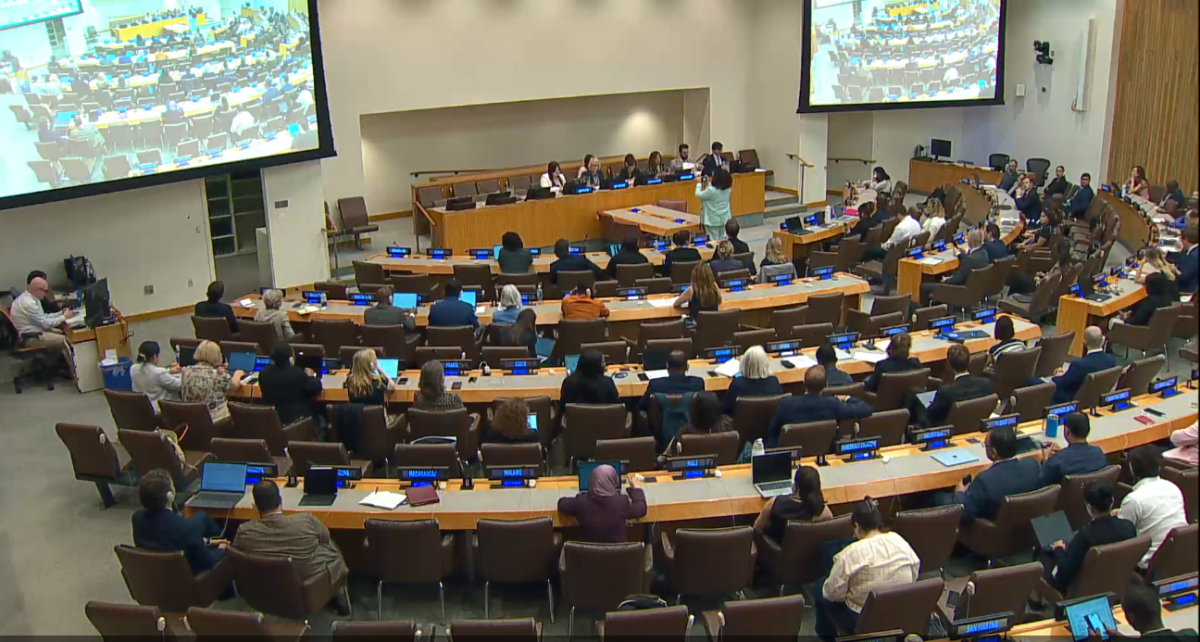
The International Criminal Court, or ICC, is a global court set up to prosecute individuals for the most serious crimes, such as genocide and war crimes. Countries that join the court agree to its rules under a treaty called the Rome Statute. The vote to remove Khan happened at a special meeting of the court's member countries, held at the United Nations headquarters in New York. Eighty-two of the ICC's 125 member countries voted to remove him, 13 voted against, and 11 abstained, meaning they chose neither side. The vote was held in secret. It used a rule in the court's treaty — Article 46 — that allows officials to be fired for misconduct or for seriously failing in their duties (ICC).
The case against Khan began with sexual abuse allegations first reported in 2024. A woman who worked for Khan at the ICC said he engaged in coercive sexual behavior — meaning he used pressure or power to make her comply — over a long period of time without her consent. In June 2026, an ICC committee said Khan should be fired for an inappropriate sexual relationship with a junior staff member (Reuters). Before that, the court's leadership had already concluded that Khan committed serious misconduct, suspended him, and sent the matter to member countries for a removal vote.
The diplomats who voted reviewed evidence from three sources: the ICC's own executive committee, a report from a United Nations watchdog group, and a legal analysis by a panel of judges. The ICC's governing body also looked into whether the complainant might have been sent by outside groups, such as intelligence agencies, to target Khan. They found no evidence of that (The Guardian).
Khan has repeatedly denied all the allegations. His legal team said the disciplinary process was unfair and that Khan would fight the decision through every legal avenue available. His representatives have suggested the allegations might be an attempt to discredit him because of his 2024 decision to seek an arrest warrant for Israeli Prime Minister Benjamin Netanyahu. The complainant spoke publicly about the allegations in an interview with CNN's Christiane Amanpour around July 16, 2026, and said she was not working for any government.
Danya Chaikel, a representative of the International Federation for Human Rights (FIDH) at the ICC, was among the civil society figures watching the proceedings, though her specific public comments are not detailed in the available record.
Khan was elected in 2021 for a nine-year term. During his time as prosecutor, the ICC issued arrest warrants for Russian President Vladimir Putin and Israeli Prime Minister Benjamin Netanyahu. These were major decisions that put the court at the center of global political conflicts. The warrants for both leaders still stand after Khan's removal. The ICC has also said that Khan's firing does not affect the ongoing case against former Philippine President Rodrigo Duterte (ICC). ICC judges had already removed Khan from the Duterte case in October 2025 because of a conflict of interest, meaning his personal involvement could have affected his fairness (Reuters).
The ICC's prosecution division has about 400 staff members. It now has to find new leadership while handling cases that are politically sensitive on a global scale.
The broader context here is that this vote raises questions that go beyond Khan himself. The ICC has spent years trying to build trust with its member countries and the public. Removing a chief prosecutor for sexual misconduct puts a spotlight on how the court handles accountability internally. The wide margin of the vote — 82 countries in favor versus 13 against — suggests that most members felt the court's credibility required decisive action, no matter how politically charged Khan's past decisions had been.
Khan's legal challenge is still pending. If his team's complaints about the process are upheld by a review body, the story may not end here. The claim that the allegations were retaliation for the Netanyahu warrant — though rejected by the ICC's own investigation — feeds into an ongoing debate about whether international justice is being used as a political tool. That debate grew louder during Khan's tenure. Whether it now fades or grows will depend in part on how the next prosecutor handles the same set of cases.
For now, the Putin, Netanyahu, and Duterte cases continue unchanged, which is the most immediate reassurance for member countries. But transitions like this rarely leave the work untouched. The next prosecutor will take over a set of cases shaped by Khan's decisions and will face pressure from both supporters and critics to either continue or change the direction of the last five years.