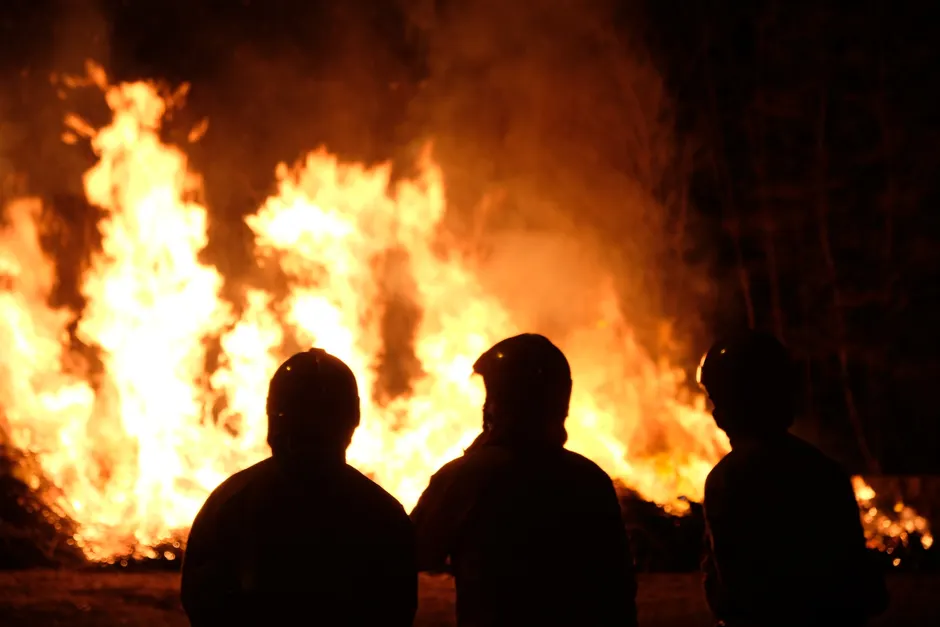
Thousands of Lightning Strikes Have Set Off a Wave of Wildfires Across Canada

Nearly 34,000 lightning strikes hit southern British Columbia in just one week before July 24, 2026, starting new wildfires and forcing people to flee their homes. The fires have pushed Canada's 2026 wildfire season past its 10-year average for burned land, and there is no sign of relief. The Guardian
As of the morning of July 24, 90 wildfires were burning in British Columbia, with 25 evacuation orders telling people to leave immediately. The problem goes beyond BC: northwestern Ontario reported 139 active wildfires that same day, 32 of them not under control. Canada has more active wildfires in July 2026 than at the same time in either of the previous two years. The Guardian
About 2.95 million hectares (7.29 million acres) have burned across Canada so far this season. That is above the 10-year average of about 2.55 million hectares. Prime Minister Mark Carney on July 24 called the 2026 wildfire season "one of the most intense wildfire seasons on record." The Guardian
Carney announced the federal government would send more than 5,300 firefighters, along with about 300 water bombers, helicopters, and evacuation aircraft. Mexico will send up to 200 firefighters to Canada in the coming weeks, according to the Prime Minister. This kind of international help has happened before: in past seasons, Canadian provinces borrowed crews and equipment from other countries through mutual-aid agreements, which are basically deals between countries to share emergency resources when one needs extra help.
In BC, the situation has worsened on several fronts. The BC Wildfire Service reported crews fighting more than 300 wildfires across the province around July 19. That number has since come down a bit but not to manageable levels. As of July 21, about 600 properties were under evacuation order and about 5,700 were under evacuation alert, meaning residents should be ready to leave at short notice. Coast Mountain News
Specific fires show how fast things are moving. The Bonanza Creek wildfire was placed under evacuation order at 6:52 p.m. PDT on July 24, with authorities telling residents to leave immediately. Another fire, listed as Incident V61135 and suspected to have been started by lightning, carried evacuation alerts and orders as of the same date. A fire called Incident V61174 was discovered on July 24. The Brunswick Creek wildfire had been burning since at least July 12. CBC News
Hugh Murdoch, the official in charge of a group of fires near Kimberley, BC (about 320 miles from Vancouver), is coordinating firefighting efforts in the province's interior. Fires in the Fraser Canyon region forced the closure of several major highways as of July 22. Smoke from the BC wildfires was thick enough to be photographed over Pemberton on July 18. Reuters Connect
Environment Canada issued a poor air quality alert for Banff, Alberta, and surrounding areas on July 24, showing that the health effects of the fires reach well beyond the places where they are actually burning.
The broader context here is that lightning-driven fire outbreaks are arriving earlier and burning more intensely than they have over the past decade. The 34,000 lightning strikes in a single week in southern BC suggest a weather pattern, probably a large dome of high pressure parked over the region, that created the two conditions needed for big fire outbreaks: unstable air that produces lots of dry lightning, and vegetation dry enough that a lightning strike can easily catch and keep burning. Think of it like striking a match in a room full of dry kindling versus a damp one. The fact that Ontario also has 139 active fires at the same time suggests this weather pattern covers much of the continent, not just one province.
Carney's description of the season as historically intense fits the numbers: 2.95 million hectares already exceeds the 10-year average by about 400,000 hectares, and the season has not yet reached its usual peak. The federal deployment of 5,300 firefighters and 300 aircraft is a major commitment, and the 200 firefighters from Mexico will add to Canada's own capacity at a time when several provinces are all competing for the same limited crews and equipment. Whether that surge of resources can slow the rate of new fires before the weather changes later in the season is the key question that will shape what happens next.