Someone Tried to Target Trump's Plane in Turkey. Here's What Happened.
US officials discovered a real threat from Iranian-backed fighters who wanted to fire a missile at President Donald Trump's plane during the NATO summit in Ankara, Turkey. The Secret Service — the agency that protects the president — told Trump to switch planes before leaving the country, according to the New York Times and confirmed by CBS News (New York Times).
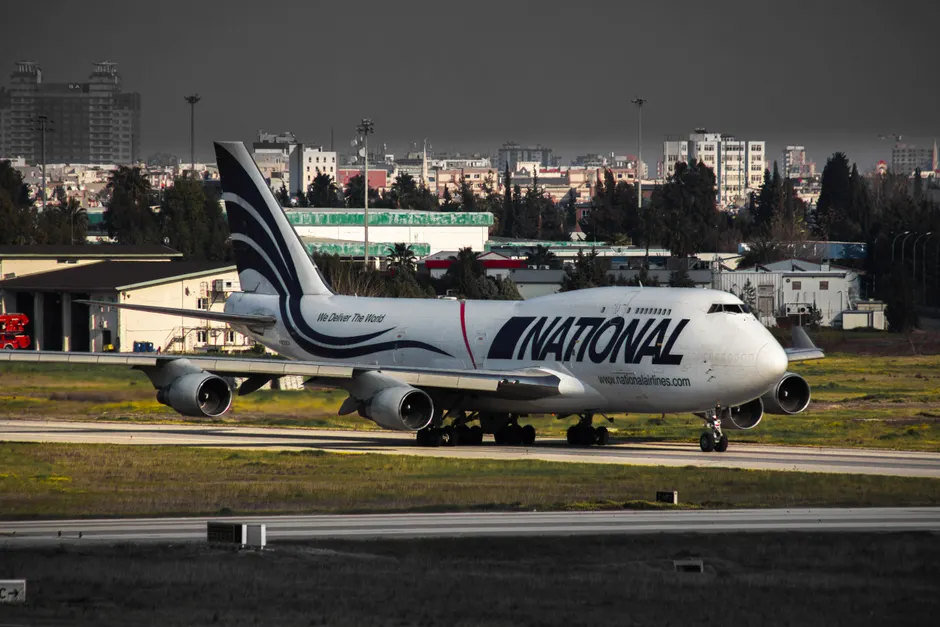
Trump had arrived in Turkey on a Boeing 747-8 that Qatar gave as a gift. That plane does not have the special protective equipment that the traditional Air Force One has. Air Force One is the name for the plane that carries the US president, and it is loaded with defenses like tools to block missiles and secure communication lines that cannot easily be intercepted.
After the threat was found, Trump said he would fly home on the older Air Force One instead. He did not explain why at the time. He said he was using the older plane "for old time's sake" (The Guardian). NPR reported that Trump flew part of the return trip on the older Air Force One. Both planes made an unplanned stop at RAF Mildenhall, a UK military base used by US troops, before heading back to the United States.
According to CBS News sources, the Secret Service decided to switch planes after receiving intelligence about a plan to fire a missile at the president's aircraft. The threat was not aimed at the Qatari plane specifically. The intelligence pointed to Trump himself, no matter which plane he was on (The Guardian).
The New York Times first reported the plane switch as a security precaution on July 8, 2026, more than two weeks before its detailed July 24 report that named the Iranian proxy threat. Euronews also reported on July 8 that Trump would leave Turkey on the older Air Force One rather than the Qatari-gifted plane. Trump left Turkey on a Wednesday night on the older aircraft.
The news about the plane switch came out as Trump was reportedly thinking about increasing attacks on Iran after a ceasefire fell apart. A ceasefire is an agreement to stop fighting. He promised "major military punishment" for Iran and its Houthi allies. The Houthis are fighters in Yemen backed by Iran. Trump has previously talked publicly about threats from Iran against his life. He said he left standing orders for the US military to destroy Iran at unprecedented levels if Iran assassinates him (The Guardian).
The reporting also connects to a separate dispute about press freedom. Trump's Justice Department had previously demanded that New York Times reporters hand over information related to their coverage of security risks involving the Qatari-gifted plane. That demand is called a subpoena, which is a legal order forcing someone to provide evidence or testimony. The department dropped those efforts on July 23, 2026, one day before the detailed threat report was published.
The broader context here is that this was not a simple plane swap. Switching a president from one aircraft to another on foreign soil is complicated and risky. The fact that the Secret Service went ahead with it means they took the missile threat seriously. But because the threat was aimed at Trump himself and not at a particular plane, the older Air Force One was not a complete fix. Its defenses would make a missile attack harder, but the move only worked if the people behind the threat could not quickly figure out which plane Trump was now on.
The episode also raises questions about why the Qatari-donated plane was being used at all. The Justice Department's attempt to pressure NYT reporters over their coverage of the plane's security risks suggests the administration saw that reporting as damaging. Yet the plane's weaknesses have now been exposed by a real threat. The timing, with the subpoenas dropped one day before the threat report went public, may reflect a decision that keeping legal pressure on reporters no longer made sense once the government's own actions confirmed the very concerns those reporters had been writing about.
At the same time, Trump's tough talk — including his promise of "major military punishment" and his standing orders to hit Iran hard if they kill him — places the Ankara incident inside a cycle of back-and-forth retaliation that has already broken at least one ceasefire. If it is confirmed that Iranian-backed fighters were trying to kill a sitting US president, that would be a major step up in the conflict between Iran and the United States. Up to now, the fighting has mostly involved attacks on US military bases and forces overseas. An attempt on the president's life is something different. Whether the administration treats this as a line that cannot be crossed, or uses it as a bargaining chip in an already unstable situation, will shape what happens next between the two countries.