Why India's Education Minister Quit After Student Protests

India's Education Minister Dharmendra Pradhan resigned on Saturday, 25 July 2026, after a week of protests by a new youth political movement. The movement wanted him gone because of an exam leak scandal that affected millions of students and led to more than a dozen student suicides (The Guardian).
In India, big exams determine which students get into college and professional programs. An exam leak means someone stole the test questions ahead of time and shared them, making the whole exam unfair. When millions of students are affected, the damage is enormous.
Pradhan announced his resignation in a social media post, stating he was acting so that "anti-national forces do not take advantage of this situation." In the same statement, he said he had been "saddened by what unfolded over the last 10 days" and that he "deeply respects the aspirations, feelings, and legitimate expectations of the country's youth." The phrasing is notable: Pradhan framed his exit as a voluntary act to protect national interests rather than a concession to protest demands, even as the demonstrations explicitly sought his removal.
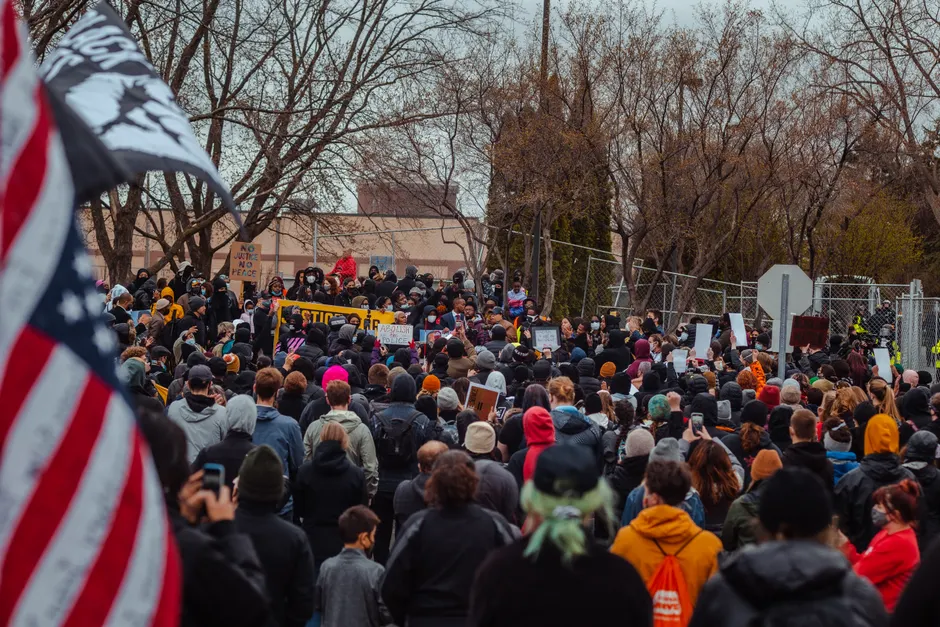
The protests were organized by the Cockroach Janata party (CJP), a newly formed youth political movement founded by Abhijeet Dipke. Demonstrations took place at Jantar Mantar in Delhi — a well-known spot where Indians gather to protest — and across India, sustaining pressure for roughly a week before Pradhan's resignation. The core demand was singular: Pradhan's resignation over the exam leak scandal that had already caused student suicides and engulfed the education ministry in crisis.
This is the first time during Modi's 12 years in power that a mass uprising forced one of his ministers to resign. Modi had initially refused to sack Pradhan, a stance that Al Jazeera noted fit a broader pattern of the Prime Minister resisting opposition and public pressure to dismiss ministers (Al Jazeera). Opposition members had disrupted parliament proceedings in the days prior, shouting and interrupting the speaker in support of student protests (Reuters.
CJP organizers confirmed they called off their demonstration after Pradhan's resignation and a meeting with senior BJP ministers. But Dipke, addressing the crowd at Jantar Mantar, made clear the movement's ambitions extend beyond a single ministerial scalp. He told supporters that Pradhan's resignation was "just the beginning" in the push for systemic education reform.
The broader context here matters for several reasons. First, the exam leak scandal that triggered this crisis involved a compromised examination process affecting millions of students, with the human cost measured in more than a dozen suicides. The scale of the harm is what gave the CJP's demand moral and political weight, transforming what might have remained a bureaucratic controversy into a mass mobilization. Second, the Modi government's initial refusal to dismiss Pradhan, followed by his resignation under sustained public pressure, represents an inflection in the dynamics between the BJP's entrenched executive authority and grassroots youth mobilization. For over a decade, Modi's government has weathered controversies without ministerial casualties driven by street protest. The CJP broke that pattern in roughly ten days.
Third, the emergence of the CJP itself is worth noting. A newly formed youth political movement, organized under a name that deliberately courts attention, managed to coordinate nationwide demonstrations, extract a meeting with senior BJP ministers, and secure the resignation of a Union minister. Whether the movement can sustain momentum beyond this initial victory, as Dipke's rhetoric suggests it intends to, will depend on whether the CJP can translate protest energy into durable organizational infrastructure and concrete policy demands. "Just the beginning" is a familiar refrain at protest sites; the harder task is what comes after.
Prior to the scandal, Pradhan's ministry had been engaged in forward-looking education initiatives. He reviewed preparedness for the NEET-UG 2026 re-examination alongside former ISRO Chairman Dr. K. Radhakrishnan, as documented in PIB press releases. He also launched the Viksit Bharat Buildathon, scheduled to run from September 23 to October 2026. Those initiatives now face an uncertain trajectory under new leadership.
What remains unresolved is the accountability question the CJP raised in the first place. Pradhan's resignation addresses the political demand, but the exam leak's systemic failures, the process failures that enabled it, and the question of who bears institutional responsibility beyond the minister are all unanswered. Dipke's framing, that the resignation is a starting point rather than a conclusion, places the focus on whether the movement can hold the government to structural reform commitments, or whether the ouster of one minister will be treated as sufficient closure.