Iran Says Ukraine Attacked Its Ship — Here's Why It Matters

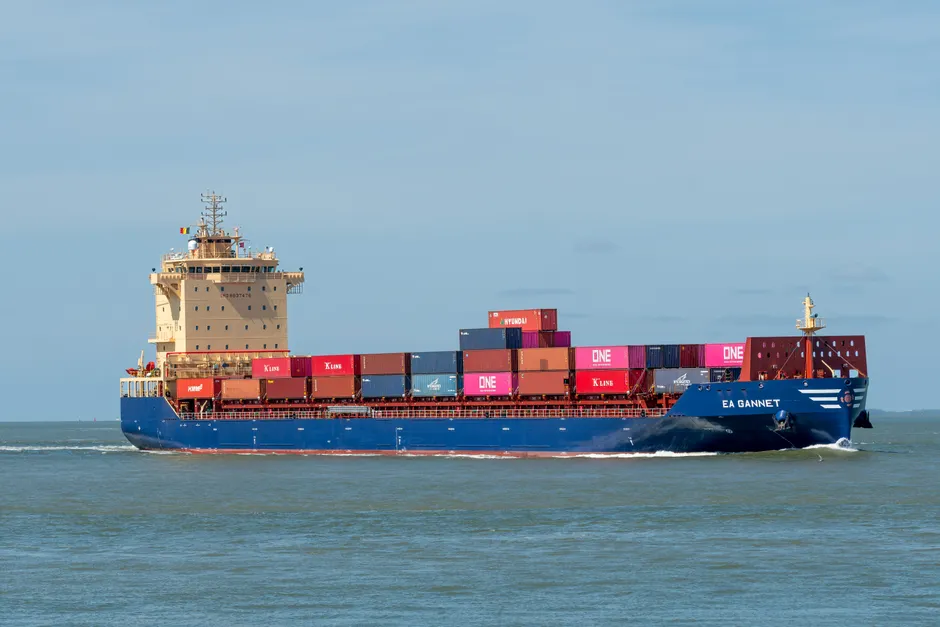
Iran's government accused Ukraine on July 25, 2026, of attacking an Iranian commercial ship in the Caspian Sea, an incident that killed one sailor and injured another, according to Al Jazeera. Iran's state news agency, IRNA, said the attack happened early Saturday morning, July 25 (IRNA).
Iran responded through official diplomatic channels. It called in Ukraine's top diplomat in Tehran to deliver a formal protest, as IRNA reported. Iran's Foreign Ministry called the attack "hostile and criminal" and said it broke a key rule in the United Nations Charter — the founding document of the UN — that says countries should not use force against another country's territory or independence. Iran also said Ukraine's leaders had acknowledged the attack.
Iranian Foreign Minister Abbas Araghchi brought the matter to Kaja Kallas, the top foreign policy official for the European Union. He asked the UN Security Council, the EU, and the international community to respond firmly. The Financial Times reported that Iran said the Ukrainian strike caused an explosion on the Iranian ship (Financial Times).
Ukrainian President Volodymyr Zelenskyy posted on X that Ukraine had achieved "very strong results" with long-range strikes in the Caspian Sea. He said the strikes targeted "vessels used in military cargo shipments involving Iran, as well as a warship." He did not say whether the specific ship Iran named was one of the targets.
The disagreement over what kind of ship was hit is the heart of the dispute. Iran says the vessel was a civilian commercial ship. Ukraine says the ships it struck were carrying military supplies. That difference matters because of international humanitarian law — the rules that govern what is and isn't allowed during war. Think of it like a traffic law: there are rules about who can be targeted and who is off-limits. If the ship was just carrying commercial goods, attacking it would be very hard to defend under those rules. If it was carrying military cargo, Ukraine could argue it was a fair target. Neither side has shown proof to back up its claim.
Iran's decision to cite the UN Charter rule against using force is a deliberate legal strategy. By treating this as a violation of international law rather than just a military skirmish, Iran is trying to bring the issue before the UN Security Council, the most powerful body at the United Nations. There, Iran could push for a formal condemnation of Ukraine. But getting the Security Council to take real action is difficult. Any of its five permanent members — the United States, Russia, China, Britain, and France — can block a resolution with a veto, and those members are divided in their loyalties.
The location of the attack adds another layer of difficulty. The Caspian Sea is a large body of water bordered by five countries: Iran, Russia, Kazakhstan, Azerbaijan, and Turkmenistan. It has its own set of rules, different from the laws that govern the open ocean, agreed to by those five countries in a 2018 agreement. Ukraine does not border the Caspian Sea at all. A strike by a country with no coastline there raises legal questions that the existing rules were never designed to answer. The fact that Ukraine was able to carry out long-range strikes in the Caspian also shows it can operate far beyond the Black Sea, where most of its naval and drone activity has been focused.
The broader context here is the relationship between Iran and Russia during the war in Ukraine. Western governments have accused Iran of supplying Russia with Shahed drones — weapons that fly to a target and explode — used in attacks on Ukrainian cities and infrastructure. Ukraine's claim that the ships were involved in "military cargo shipments involving Iran" fits with that ongoing accusation. Iran, for its part, is now presenting itself not as a supplier to Russia but as a victim of Ukrainian military action against its commercial ships. That could make things more complicated for Ukraine with countries that have stayed neutral so far but care about the rules protecting civilian shipping.
Araghchi's decision to contact the EU's Kaja Kallas shows Iran is also trying to use European diplomatic channels, not just the UN. The EU has strongly supported Ukraine throughout the war, so Iran's appeal to Europe is unlikely to succeed. But it does put the EU in a position where it has to at least acknowledge the legal question Iran is raising, even if a response favorable to Iran is unlikely.
One person is confirmed dead and another injured. This is not a warning shot or a close call. One country has accused another of killing its citizens on a commercial ship in waters where the attacking country has no presence. What happens next depends on whether either side escalates the situation or whether this becomes yet another unresolved grievance in a conflict already full of them.