Ukraine Attacked an Iranian Ship, and Now Iran Is Threatening to Strike Back
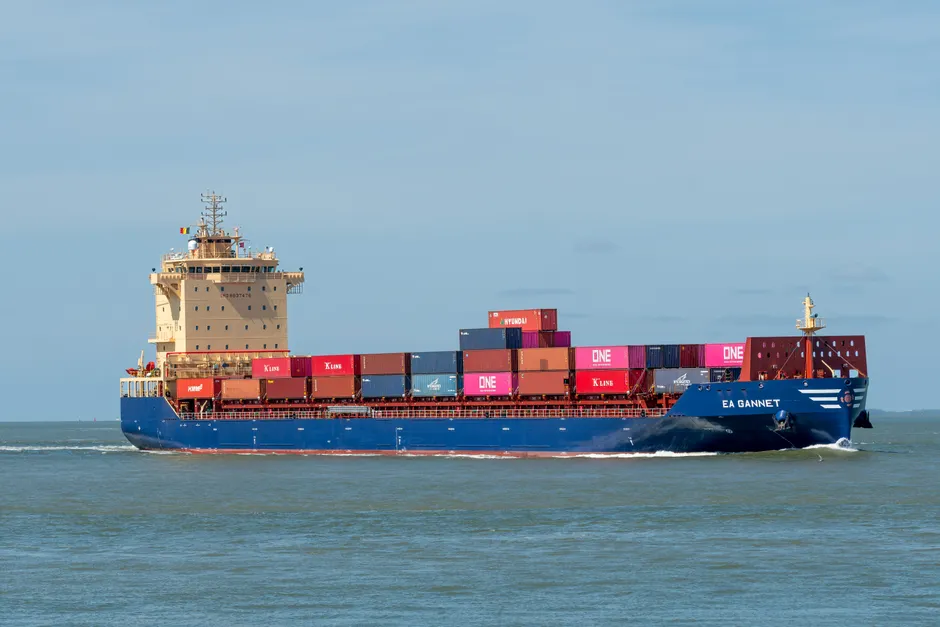
On July 26, 2026, Iran's government publicly condemned what it called a Ukrainian military attack on an Iranian commercial ship in the Caspian Sea. The attack killed one sailor and injured several others. Iran's foreign ministry said Ukraine's leader had openly admitted to the strike (Iranian MFA). Reuters first reported the casualty details on July 25 (Reuters), and The Guardian confirmed the death toll the next day (The Guardian). Arab News reported that Iran said the attack caused the ship "to explode, killing one sailor and injuring several others" (Arab News).
By July 27, Iran was threatening retaliation. Al Jazeera reported that Tehran called the attack a "criminal act" and warned Ukraine to expect consequences (Al Jazeera).
The New York Times published an analysis on July 28 titled "Ukraine's Strike on an Iranian Ship Could Bring Two Wars Closer" (NYT). The title points to the main worry: the Caspian Sea has been a shipping route connecting Iran and Russia, and a Ukrainian attack there pushes the Russia-Ukraine war into waters where Iran has its own military presence and interests.
Ukraine's reason for the strike, according to the Times, is that the Iranian ship was carrying military supplies between Iran and Russia (NYT). This fits with earlier reporting from May 2026, when the Times reported that U.S. officials said Russia was shipping drone parts to Iran through the Caspian Sea, helping Iran rebuild its military strength (NYT). That earlier reporting showed a pattern of military goods moving along this route, which Ukraine appears to have treated as a valid target in its broader effort to cut off Russian supply lines.
The Caspian Sea is a large body of water surrounded by five countries: Russia, Iran, Kazakhstan, Azerbaijan, and Turkmenistan. It is completely landlocked, meaning it has no connection to the world's oceans. In 2018, those five countries signed an agreement to manage the sea together, assuming it would be used for peaceful trade, not warfare. The other three countries have not publicly commented on the incident.
Iran and Ukraine disagree on a basic point: what kind of ship was hit. Iran calls it a "commercial vessel," meaning a civilian ship. Ukraine says it was carrying military cargo. This matters because international law gives different protections to civilian ships versus military ones. Attacking a civilian ship on open water has more serious legal consequences than attacking a ship that is part of a military supply chain. Iran's statement uses the phrase "commercial vessel" throughout, which helps its argument that the ship should have been protected.
Iran also referred to Ukraine's leadership as "the head of the Ukrainian regime" instead of naming President Volodymyr Zelensky. In diplomacy, this kind of language is a deliberate signal that Iran does not fully recognize Ukraine's government as legitimate. It fits with Iran's general support for Russia's side of the conflict.
The broader context here is that two major conflicts could be converging. The Russia-Ukraine war and Iran's network of military activity across the Middle East have mostly operated in separate places. Iran has been supplying Russia with weapons, especially Shahed drones that Russia has used against Ukrainian targets. By striking an Iranian ship rather than a Russian one, Ukraine is showing it will go after Iranian assets directly when it believes they are helping Russia's war effort. If Ukraine does this again, Iran may respond by targeting Ukrainian interests in places far from the Caspian Sea.
Whether Iran actually follows through on its retaliation threat is uncertain. Iran and Ukraine do not share a border and are about 1,500 kilometers apart at their closest points, which makes direct military action difficult. Iran is more likely to respond through armed groups it supports in the region, or by sending even more weapons to Russia. But the Caspian Sea is a place where Iran has naval forces, and similar incidents could happen again if military cargo keeps moving through those waters and Ukraine keeps trying to stop it.
The timing of the strike also lines up with that May 2026 U.S. intelligence finding about drone parts being shipped to Iran. If Ukraine used that intelligence to plan the attack, it suggests Kyiv is willing to act on intelligence about Iranian supply chains, not just Russian ones. That expands the scope of the war in a way that could have lasting consequences.


