Bird Flu Is Spreading in South Australia's Wild Seabirds — Here's What's Happening
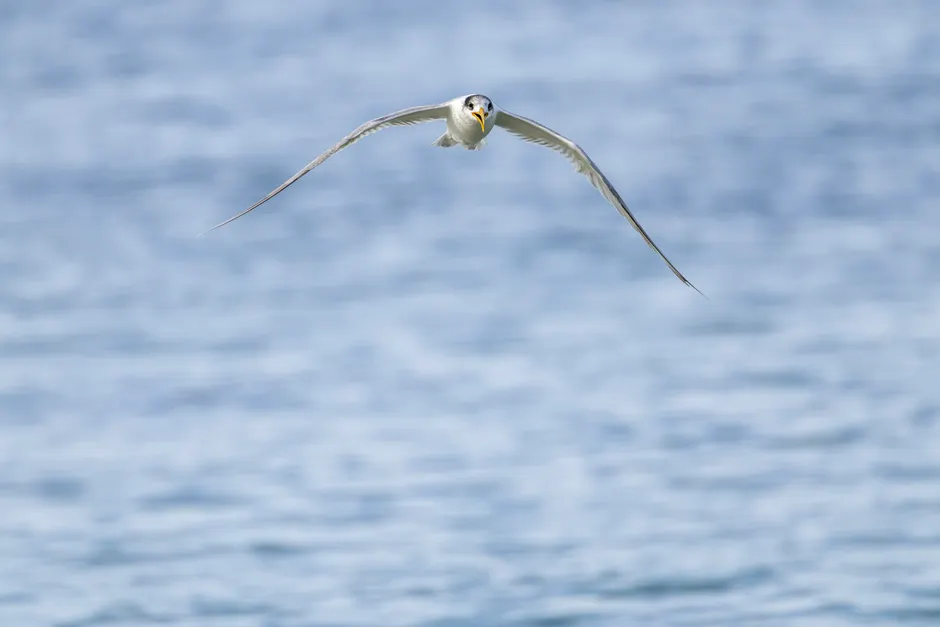
South Australia reported seven suspected new bird flu cases in greater crested terns along the Limestone Coast on July 27, 2026. The outbreak has now reached metropolitan Adelaide and crept within 20 kilometres of the Victorian border (The Guardian).
Bird flu, also called avian influenza, is a virus that mainly affects birds. The strain involved here is called H5N1, which is particularly dangerous to birds and spreads easily among them. The greater crested tern is a seabird commonly found along Australia's southern coast.
Of the seven suspected cases, one bird was found at Cape Jaffa, five around Southend Jetty near Beachport, and one at Port MacDonnell. Port MacDonnell sits just over 20 km from the Victorian border. Of the five birds collected from Southend Jetty, four were sick and one was dead. The birds found at Cape Jaffa and Port MacDonnell were both dead (The Guardian).
These seven follow two confirmed H5 detections in greater crested terns in South Australia over the weekend prior to July 27. One of those weekend-confirmed cases was the first positive H5 detection in metropolitan Adelaide. If CSIRO verifies the seven suspected cases, the total number of H5 bird flu cases in South Australia would reach 14. Ten of those 14 would be in greater crested terns (The Guardian).
CSIRO is Australia's national science agency, and it runs the lab tests that confirm whether a bird truly has H5N1. Federal agriculture minister Julie Collins stated that samples from the suspected cases were sent to CSIRO for analysis. South Australia's primary industries minister Clare Scriven addressed the suspected cases publicly on July 27. The state's chief veterinary officer, Dr Skye Fruean, is coordinating the veterinary response (The Guardian).
As of July 27, 2026, there were no H5 detections in poultry or the broader agricultural industry in South Australia. The SA government announced it was stepping up monitoring, including targeted surveillance of areas frequented by greater crested terns (The Guardian).
The national picture is also widening. As of 9:00 am AEST on July 27, Australia had 20 confirmed detections of H5 bird flu in wild seabirds, according to the federal Department of Agriculture (Agriculture.gov.au). Greater crested terns confirmed with H5 were also found at Robe, South Australia, in the state's southeast. South Australia had earlier conducted the largest aerial survey of its coastline in decades in response to the bird flu situation, an effort announced when the state recorded its second confirmed case (PIRSA). A presentation regarding bird flu was also delivered to South Australia's State Emergency Centre, as recorded in PIRSA's freedom of information disclosure log (PIRSA FOI disclosure log).
BirdLife Australia chief executive Kate Millar stated the outbreak was "now taking hold and is evidence of spread." Greater crested terns nest in colonies and roost in large flocks, making them particularly vulnerable to H5 bird flu, according to BirdLife Australia. The suspected cases along the Limestone Coast were located not far from colonies of endangered fairy terns, raising concerns about spread into already threatened species (The Guardian).
Millar warned that the approaching spring breeding season could create an "engine room of viral spread" as birds gather in large groups at coastal breeding grounds (The Guardian).
The broader context here is that the cases are clustered along a connected stretch of coastline from Cape Jaffa through Beachport to Port MacDonnell, which is also core breeding habitat for seabirds. The Port MacDonnell detection is just over 20 km from the Victorian border, and wild birds do not respect state lines, so Victorian biosecurity authorities will be watching it closely. The outbreak has also reached metropolitan Adelaide, hundreds of kilometres from the Limestone Coast cluster, which suggests the virus is not limited to one area.
The concentration of cases in greater crested terns fits a pattern seen in other H5N1 outbreaks among seabirds that nest in colonies. When birds crowd together to nest, a virus can pass from bird to bird quickly, much like a cold spreading through a crowded classroom. If the virus reaches the nearby fairy tern colonies, the consequences for that endangered species could be severe because fairy terns have smaller populations and less genetic resilience.
The fact that no H5 has been detected in commercial poultry is the critical buffer between a wildlife problem and an agricultural crisis. Australia's poultry industry has dealt with H7 outbreaks, a different strain of bird flu, in recent years, but an H5N1 outbreak in commercial flocks would carry different biosecurity and trade consequences. The CSIRO confirmation process typically takes days rather than hours, so the suspected cases remain provisional. If all seven are confirmed, South Australia's case count would double in a single reporting cycle, and the national total would rise to 27.
The spring breeding season that Millar flags is weeks away in the southern hemisphere. Seabirds gathering at coastal breeding grounds could speed up transmission just as monitoring resources are stretched across a growing area. The SA government's targeted surveillance of greater crested tern habitats, combined with the earlier aerial coastline survey, shows the scale of the monitoring effort. Whether it proves sufficient to detect and contain the spread before spring arrives is the operational question facing Dr Fruean's team and their interstate counterparts.