Apple Just Hit $5 Trillion in Value — Here's What That Means and Why It Matters

On July 28, 2026, Apple became the second company ever to be worth $5 trillion on the stock market. Its shares rose as high as $342.89 during the day before settling at $339.71 — up 0.83% — and ended the day just below the $5 trillion mark (The Guardian; Bloomberg).
A company's "market value" is basically the total price tag that investors put on it. You find it by multiplying the price of one share by the total number of shares that exist. So when we say Apple is worth $5 trillion, that means investors collectively believe the entire company is worth that much. For context, $5 trillion is more than the yearly economic output of most countries. Only one other company, Nvidia, had ever crossed that line before.
Apple's big moment came on a rough day for the broader tech sector. The Nasdaq 100, a popular stock market index that tracks 100 major technology companies, fell as much as 1.8% — putting it more than 10% below its recent high from early June 2026. A drop of 10% or more from a peak is called a "technical correction," and it signals that investors are pulling back. Major US chip companies including Intel, AMD, SanDisk, Western Digital, and Seagate Technology all dropped more than 4% right at the start of trading. In South Korea, two of the biggest chipmakers in the world, SK Hynix and Samsung Electronics, each fell more than 10% (The Guardian).
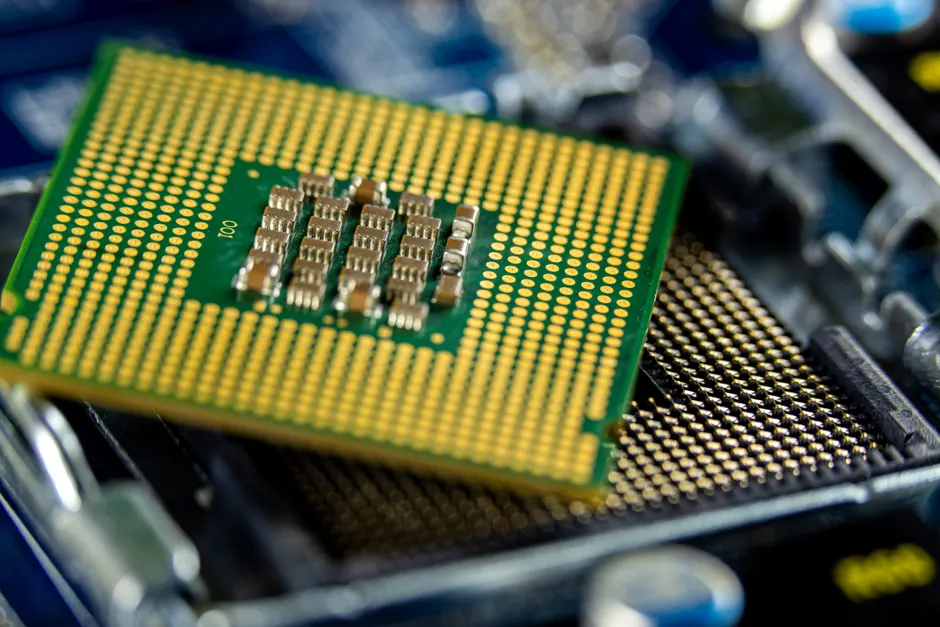
What caused the panic? A news report from The Information said that China had started mass-producing its own machines for making computer chips. These machines, called lithography tools, are like ultra-precise printers that stamp incredibly tiny patterns onto silicon wafers to create the circuits inside chips. Until now, companies in the US, the Netherlands, and South Korea have dominated this business. If China can make its own, those companies could lose a lot of customers. The very next day, July 27, a Chinese chip company called CXMT saw its shares jump 466% on its first day of trading on the Shanghai stock exchange — a sign that China's homegrown chip industry may be growing faster than investors expected (The Guardian).
Apple's rise to the top has been building for a while. Back in October 2025, Apple first crossed $4 trillion in value — on the very same day that Nvidia became the first company ever to pass $5 trillion (CNBC). Nvidia, a company that makes specialized chips for artificial intelligence, had been the world's most valuable company since June 2025. As recently as May 2026, Nvidia was worth about $5.2 trillion, and Apple was still in second place as of mid-June (CNBC; CNBC).
Apple overtook Nvidia earlier in July 2026. According to a July 17 report from Reuters, Apple was worth $4.88 trillion and Nvidia about $4.86 trillion at that point, with Nvidia's shares down 3.5% (Reuters). By July 28, Apple had pulled far enough ahead to briefly touch $5 trillion.
Two main factors explain Apple's outperformance. First, people are still buying lots of iPhones, which keeps Apple's revenue strong. Apple even kept iPhone prices the same after raising prices on MacBooks and iPads the month before. Second, and perhaps more importantly, Apple chose not to pour money into building its own AI infrastructure — the giant data centers and computing systems that power artificial intelligence. Companies like Nvidia, Microsoft, and Alphabet (Google's parent company) have spent enormous sums on this, which has squeezed their cash flow. Apple instead partnered with Google to use Google's AI technology for features like a revamped Siri, avoiding those massive costs (The Guardian).
The picture that emerges from all this is one of investors rethinking the AI boom. As of January 2026, only three companies had ever been worth more than $4 trillion: Nvidia, Apple, and Microsoft (Bloomberg). Nvidia crossed $5 trillion in October 2025 on the back of soaring demand for its AI chips. Less than nine months later, that same demand is being questioned as China's chip capabilities advance and the broader tech market pulls back. Apple first hit $3 trillion back in July 2023 (Reuters). Now it has matched Nvidia's peak, but from a very different position — not as the company selling the tools for an AI gold rush, but as the one that decided to rent those tools instead of building them.
One quiet detail: Apple's own newsroom made no mention of the $5 trillion milestone as of the search date (Apple Newsroom). The company was scheduled to report its quarterly earnings the week of July 28, 2026 (CNBC), meaning the record valuation came just before investors would get a look at the actual financial results behind the enthusiasm.
The broader context here is a possible turning point in the AI story that has been driving the stock market since mid-2025. Nvidia's time as the world's most valuable company lasted just over a year, from June 2025 to July 2026. During that stretch, investors consistently rewarded companies for spending heavily on AI. The fact that chip stocks are tumbling while Apple is soaring suggests a shift: investors may now prefer companies that benefit from AI without taking on the huge costs of building it. Whether that shift lasts depends on two things — whether China's new chipmaking tools seriously weaken the established chip companies, and whether Apple's partnership with Google actually delivers AI features that everyday consumers find useful.
The $5 trillion club is still very small. Nvidia got there first, in October 2025, because of massive demand for AI chips. Apple arrived nine months later, partly because the very AI spending that lifted Nvidia started to look more like a risk than a reward. For a stock market that has spent two years betting on an AI revolution, the fact that these two companies reached the same milestone from opposite directions is worth thinking about carefully.