Chip Stocks Got Crushed — Here's What Happened and Why It Matters

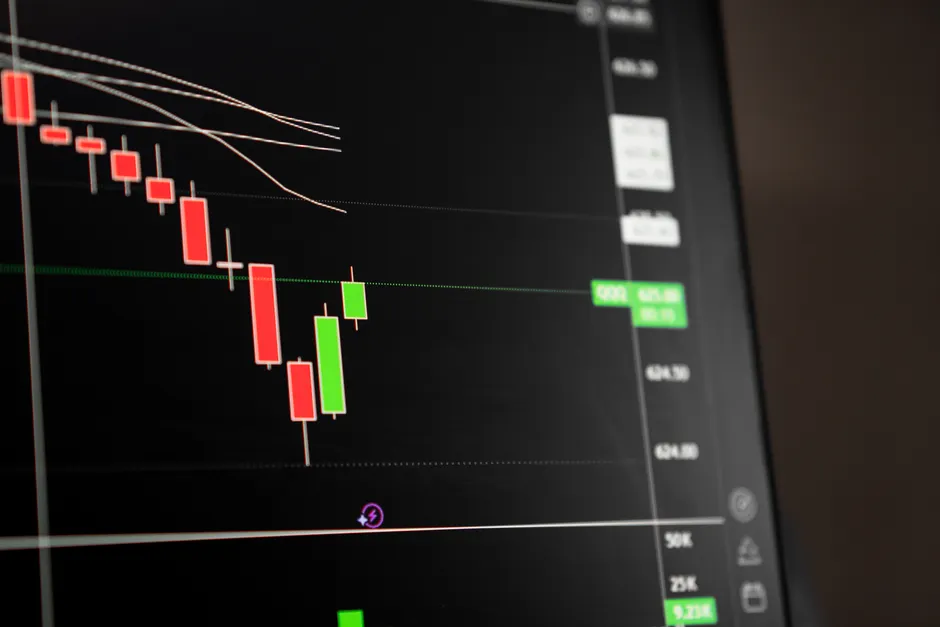
SK Hynix, one of the world's biggest memory chip makers, saw its shares fall 14.7% on July 28, 2026. The drop was part of a worldwide selloff that hit chip companies across Asia, the United States, and Europe all on the same day.
SK Hynix's U.S.-listed shares closed 7.5% lower at $143.02, dropping below the $149 price the company set when it first sold shares on the Nasdaq earlier in July. Samsung Electronics fell 6.40%. Micron and Sandisk each dropped more than 5%. European chip stocks also fell. According to Reuters and the LA Times, investors were spooked by a new Chinese competitor called CXMT (ChangXin Memory Technologies) entering the market, and by questions about whether spending on AI chips was sustainable. Worries about NVIDIA's financing also played a role.
Chip stocks have had a rough month. The sector was already down over 18% in July as of July 17, even though it was still up nearly 65% for the year at that point. SK Hynix has been especially volatile: its shares dropped 5.2% on July 8, then fell 7.9% on July 13, triggering a trading halt after a 9% decline. Two days later, shares surged 13% on positive AI sentiment. That rebound has now been fully erased.
How leveraged ETFs made things worse
Goldman Sachs said a big reason the selloff was so severe in South Korean chip stocks was the unwinding of newly launched leveraged products. Several 2x leveraged ETFs tied to SK Hynix debuted in July.
A leveraged ETF is a type of investment fund that tries to double the daily moves of a stock. If the stock goes up 5% in a day, the 2x ETF aims to go up 10%. But it works in reverse too — if the stock falls 5%, the ETF falls roughly 10%. Three such funds launched in July: the Leverage Shares 2x Long SK Hynix Daily ETF (SKHX), the Direxion Daily SK Hynix Bull 2X ETF (SKHL, listed July 15), and CorgiFunds' 2x SK Hynix Daily Leveraged ETF (SK, tracking SKHY ADRs). According to ProShares, there are $15 billion to $20 billion in non-U.S. leveraged ETF assets tied to SK Hynix as of mid-2026. SK Hynix generated $92.8 billion in revenue over the twelve months through Q1 2026.
Here's the problem. These funds have to rebalance every day. When the stock rises, they buy more to maintain their double exposure. When it falls, they sell. So when the stock drops sharply, the ETFs are forced to sell more shares, which pushes the price down further. Barron's reported on July 27 that this dynamic amplified volatility in South Korean markets. It's like a feedback loop: falling prices force selling, which makes prices fall more.
These ETFs launched near the peak of a sector that had returned roughly 65% year-to-date by mid-July. Investors who bought double exposure at that level have now taken heavy losses, and the forced selling has added pressure to a market already hit by the CXMT competitive threat and circular funding concerns. That mix of a shifting fundamental story and mechanical selling pressure is a particularly toxic combination for sentiment.
What happened in June: the "chip wreck"
This isn't the first selloff. In June, Investing.com described a "chip wreck" during which SK Hynix shares fell 9.92% and Samsung dropped 6.40%. Broadcom was cited as the trigger that "lit the fuse." At the time, people saw it as part of a broader shift in the market, not a problem specific to chips.
The July 28 episode is harder to dismiss that way. The issues are now structural: a new competitor in CXMT threatening the small group of companies that dominate memory chips, questions about whether AI infrastructure spending is sustainable, and a leveraged ETF complex that did not exist during prior downturns but now magnifies every move. SK Hynix shares falling below their IPO price — set just weeks ago — tells us that demand has been overwhelmed by supply.
The key question now is whether the leveraged ETF asset base stabilizes or keeps shrinking. Forced selling is self-limiting in the sense that once positions are fully unwound, the selling stops. But during the unwind, the selling pressure feeds on itself. How quickly that $15–20 billion in leveraged assets tied to SK Hynix contracts will largely determine whether chip stocks can find a bottom — or face more turbulence.