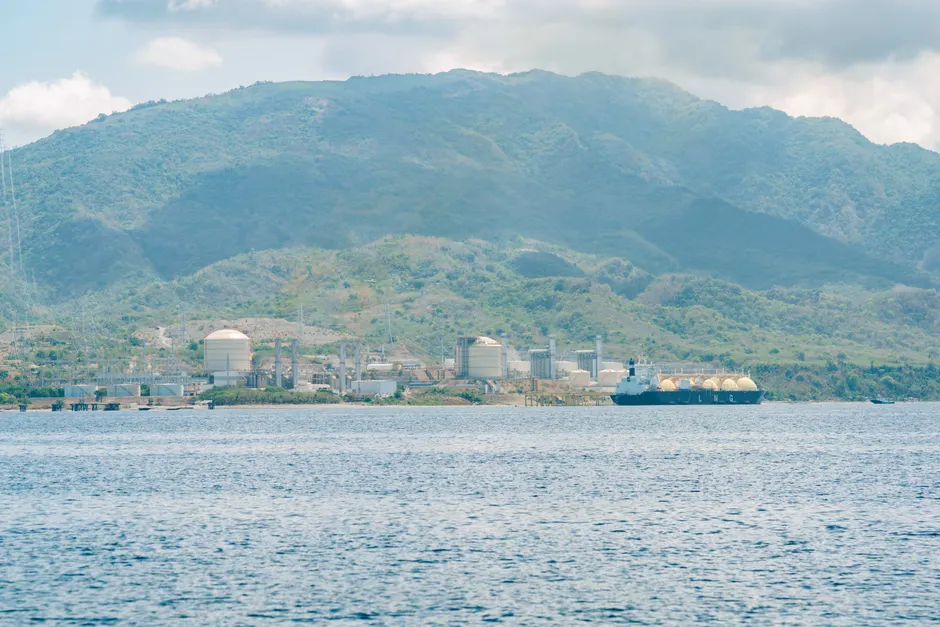
The Government Wants to Build a New Oil Refinery. Here's the Catch.

The Albanese government has committed $4 million to study whether a new oil refinery could be built in the Pilbara, in Western Australia. Prime Minister Anthony Albanese announced the plan in Karratha on 28 July 2026, alongside WA Premier Roger Cook. He said it would be Australia's third oil refinery and the first new one since the 1960s. The company behind the proposal is called Perdaman, which would build and run the refinery if it goes ahead. (ABC News, Nine, pm.gov.au)
The study costs A$4 million, or about US$2.8 million. That money pays for a pre-feasibility assessment — an early check to see whether the idea is worth pursuing at all. It is not money to actually build anything. The study is co-funded by the WA government. (Reuters)
Federal Resources Minister Madeleine King promoted the plan on radio on 28 July, speaking to ABC Perth's Mark Gibson and 6PR's Simon Beaumont, and at a press appearance in Rockingham. The government's pitch is about sovereign fuel security — basically, making sure Australia can look after its own fuel needs instead of relying on other countries. (minister.industry.gov.au, minister.industry.gov.au)
The problem is that the numbers behind that pitch are not encouraging. According to the Superpower Institute, Australia already imports 95% of its fuel, and only 4% is refined here from Australian oil. Geoscience Australia's 2025 report says domestic oil production is falling fast. Without new discoveries, it could stop entirely within seven years. A refinery with no local oil to process would have to ship crude in from overseas. (The Guardian)
Baethan Mullen, who heads the Superpower Institute, said it plainly. A new Pilbara refinery, he said, would almost certainly refine imported oil only, and would do little to make Australia more self-sufficient on fuel. That matters because the government is selling this as a national security measure. But if the oil is imported, the supply chain is no more independent than it is now — it is just arriving at a different port.
Greg Bourne, a Climate Council member who used to run BP's operations in Australia, went further. Any new refinery, he said, was unlikely to make money. That is a serious claim from someone who ran one of the big oil companies in this country. The global refining business has been concentrating in big, efficient plants in Asia and the Middle East. A brand-new refinery in the Pilbara would be up against those established competitors, with less and less local oil to work with.
Then there is the clean energy angle. Professor Frank Jotzo, a climate and energy policy expert at ANU, criticised the spending at the Clean Energy Summit in Sydney, calling it a signal against the shift to clean energy. This matters because the government has passed laws to cut emissions by 43% by 2030 and has presented itself as committed to that transition. Spending public money on a new oil refinery sits awkwardly with that position, and Jotzo is unlikely to be the only one saying so. (The Guardian)
The political logic is not hard to read. WA is a mining state. The Pilbara is where the action is. A refinery means jobs, local processing, and adding value to raw materials before they leave the country. That plays well in a state where resources are the main economic story. The $4 million for a study is cheap enough to be low-risk politically, while the announcement itself generates headlines. If the study says the project is no good, the government walks away having spent very little. If it shows promise, the government has something to point to.
What the government is not addressing is the tension the critics have flagged. Its own agency says domestic oil production could end within seven years. The Superpower Institute says a new refinery would run on imported oil. A former BP Australia chief says it probably would not turn a profit. And a leading climate economist says it sends the wrong message on clean energy.
The feasibility study will take time. In the meantime, the announcement sits in the space where most Australian energy policy lives: big on ambition, shorter on the uncomfortable details. Whether a Pilbara refinery can overcome the commercial and geological hurdles is exactly what the $4 million is meant to find out. The answers will need to address the specific problems critics have raised — not just the general idea that Australia would rather not depend on imported fuel. Everyone agrees on the destination. The disagreement is about whether this particular road gets there.