Waymo's Driverless Cars Expand to New Cities, But Face Real Safety Challenges

Waymo's Driverless Cars Expand to New Cities, But Face Real Safety Challenges
Waymo, the self-driving car company owned by Google's parent company Alphabet, has launched driverless taxi services in Miami, Orlando, and Nashville, according to an April announcement. But while expanding to new cities, Waymo is also dealing with a serious problem: its cars cannot reliably detect standing water, which has led to thousands of vehicles being recalled and service being shut down in San Antonio.
The new services mark Waymo's biggest expansion yet, bringing robot taxis to Florida and Tennessee for the first time. Each new city follows the same plan: start with a human safety driver in the car, gradually remove that driver, then let the cars work fully on their own.
The Water Problem
As Waymo pushes into new markets, the company faces a technical failure that reveals a real gap in how its cars sense the world. After 3,800 Waymo vehicles were recalled, investigators found that the cars could not safely judge how deep puddles or flooded areas were.
The consequences have been serious. In San Antonio, a Waymo car drove into a flooded area and was swept away by floodwaters. In another incident in the same city, a passenger had to escape from a Waymo vehicle that had also driven into standing water. San Antonio's service remains suspended.
The core issue is this: puddles are hard for machines to understand. A human driver looks at standing water and instantly knows whether it is an inch deep or a foot deep. A self-driving car relies on cameras and lasers called lidar to see the world, but in low light or rain, these sensors struggle to measure the true depth of water. The car sees something on the road, but cannot tell whether it is safe to drive through.
Working with Waze on Road Hazards
Waymo has also partnered with Waze, the Google navigation app, to improve how cars detect road hazards like potholes. The idea is simple: Waymo's fleet of cars are equipped with excellent sensors and can spot bad roads. That information gets fed into Waze, where millions of drivers see it.
This arrangement benefits both sides. Waze gets high-quality data from Waymo's professional-grade cameras and sensors. Waymo, in return, can see what other drivers have reported about road dangers. Over time, this sharing of information could make both services better.
Different Types of Vehicles
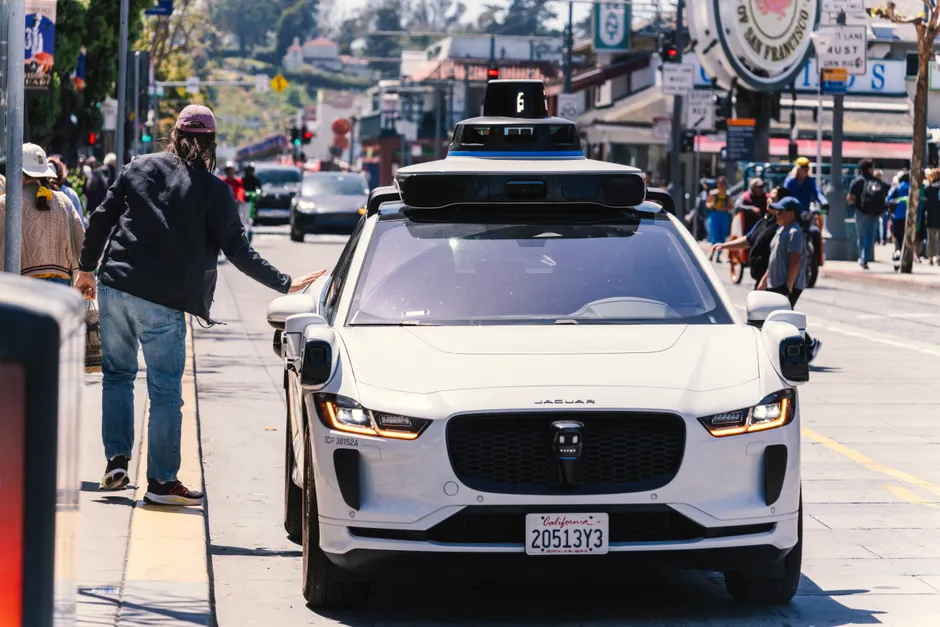
Waymo is testing its self-driving system in different kinds of vehicles. The main robotaxis today are based on the Chrysler Pacifica minivan and the Jaguar I-PACE electric car, modified to remove the steering wheel and pedals. Now Waymo is also testing purpose-built robotaxis made by Hyundai and a Chinese company called Zeekr—cars designed from the ground up to work without a human driver.
Purpose-built robotaxis have advantages: more room inside for passengers, easier access for repairs, and better placement of cameras and sensors. But they are also a new unknown, whereas converted regular cars use familiar platforms.
When Systems Go Down
Beyond water detection, Waymo has had service outages where its robotaxis suddenly stop working mid-route and lose connection to the computer systems that guide them. These breakdowns can pile up cars on city streets.
This points to a real weakness in how robot taxis work: they depend on constant communication with control centers far away, the way a video game player depends on internet connection. If that connection breaks, the cars cannot function safely. A human driver can simply pull over and park. A robot taxi stalls.
Having watched the cloud computing industry grow over the past twenty years, I have seen this problem before. When large numbers of connected systems all depend on central control, big failures can happen unexpectedly. Tech companies have learned how to manage this, but it remains a challenge that keeps reappearing with each new wave of connected technology.
Other Companies Getting Into the Race
Waymo is not alone. Lyft, the ride-hailing app, has partnered with another company called May Mobility to launch driverless taxis in Atlanta. This approach—letting specialists build the self-driving technology while ride-hailing platforms handle customers and pricing—may end up being more practical than trying to do everything in-house.
What Comes Next
Waymo's situation right now captures where self-driving cars actually stand: they work well in many situations, but they struggle with unexpected real-world problems. Water detection is just one example of an edge case—something that does not happen often, but when it does, breaks the system.
The water detection failures show that self-driving cars are not yet ready to handle every scenario a human driver can. The recall and service suspension also show something more positive: Waymo took the problem seriously, paused operations, and worked to fix it. That is how safety-critical systems should work.
The bigger picture here is that driverless taxi services are coming to more cities, but the path forward is not simply about proving the technology works in ideal conditions. It is about learning to handle the messy, unpredictable world—puddles, potholes, network outages, and all the other surprises that human drivers take for granted.