A Drone Strike Hit a Village Court in Sudan, Killing 35 People — Here's Why It Matters
At least 35 people were killed and several wounded when Sudanese army drones struck a traditional court in the village of Garra al-Zawaya, in North Darfur, on Sunday, August 2, 2026. The report comes from the Emergency Lawyers rights group. The strike hit around 1 p.m. local time (11:00 GMT) as civilians gathered for hearings on local cases and disputes Al Jazeera.
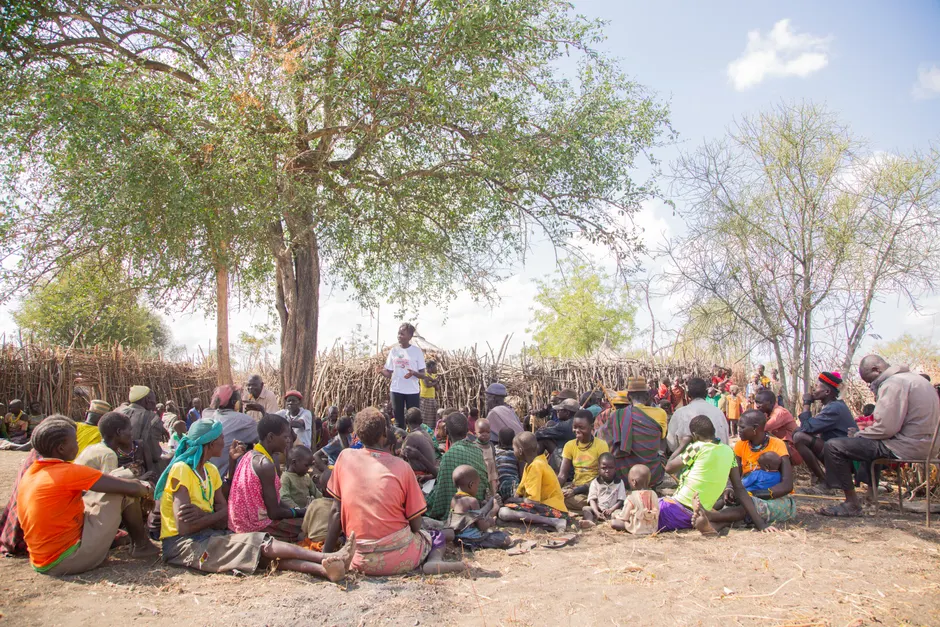
Garra al-Zawaya is near the town of Kabkabiya, about 150 kilometers west of el-Fasher. El-Fasher was the Sudanese army's last stronghold in the Darfur region before a rival armed group called the Rapid Support Forces (RSF) captured it in October 2025. The village is currently under RSF control. The court that was struck is a traditional institution where local leaders help settle disputes. A witness from the area told AFP, on condition of anonymity, that the court session was being held under a tree with local community leaders participating. Among those killed, according to the witness, were four tribal leaders and two RSF commanders Arab News.
The fact that RSF commanders were present alongside tribal leaders and civilians at a community court session raises questions about what the Sudanese army was aiming at. The army has not publicly commented on the specific strike. Emergency Lawyers, a group that has been documenting violations by both sides of the conflict, said the attack was carried out by the army's drone fleet.
The strike fits a larger pattern. Both sides in Sudan's war have been using armed drones — unmanned aircraft that can drop bombs or fire missiles — to strike deep behind enemy lines, often hitting civilian areas in the process. According to the UN, more than 1,000 civilians were killed in drone strikes in Sudan during the first five months of 2026 alone. The UN has also described the broader Sudan conflict as the world's largest humanitarian crisis, with millions forced from their homes.
Drone attacks this year have hit a widening range of targets. In June 2026, drone strikes on the central Sudanese city of el-Obeid killed up to 23 people. In April, Doctors Without Borders (known by its French name, Médecins Sans Frontières or MSF) teams in Darfur treated 56 wounded and recorded two deaths following five drone attacks carried out by the Sudanese army. The Sudan INGO Forum, a network of aid organizations, condemned a March drone attack on Ed Dain Teaching Hospital in East Darfur as a "grave escalation in attacks on healthcare." Drone strikes on trucks contracted by the UN refugee agency in North Darfur on April 24 destroyed life-saving aid meant for over 1,314 families. MSF was forced to withdraw from the towns of Kornoi and Tine following drone strikes on November 3, 2025, and has called for the immediate protection of civilians and humanitarian workers Reliefweb.
The RSF is not only on the receiving end of drone strikes. It has carried them out too. A drone attack by a paramilitary group in Sudan killed 24 people, including eight children, in early February 2026. A separate drone attack on a World Food Programme aid convoy in North Kordofan province killed one person and wounded several others, according to UN official Denise Brown PBS.
The broader context here is a war now in its fourth year with no real peace process in sight. The war began in April 2023 when RSF commander Mohamed Hamdan Dagalo turned against his former ally, Sudanese army chief Abdel Fattah al-Burhan. Tens of thousands have been killed. The RSF grew out of a government-backed militia called the Janjaweed, which was accused of atrocities in Darfur in the early 2000s. After capturing el-Fasher, the RSF consolidated control over much of the Darfur region. UN investigators said the violence linked to the RSF siege and capture of el-Fasher bore "the hallmarks of genocide" — meaning it showed signs of a deliberate attempt to destroy a specific group of people.
What makes the Garra al-Zawaya strike stand out is the target. It was not a military base or a supply convoy. It was a traditional court — a place where community leaders gather under a tree to settle local disputes peacefully. In Darfur, these courts are one of the few working systems for resolving conflicts in areas where government institutions have collapsed. Striking one, whether or not RSF personnel were present, removes a structure that communities depend on to keep disputes from turning violent.
The killing of tribal leaders makes the damage worse. In Darfur, tribal leaders often act as go-betweens — connecting rival armed groups, or connecting communities with whatever authority controls their area. When these leaders are killed, there are fewer people left to mediate disputes peacefully. That raises the likelihood that disagreements escalate into armed fighting, a pattern the region has seen repeatedly over two decades of conflict.
Both sides in this war have shown they are willing to accept civilian deaths as a cost of military operations. Neither side has faced meaningful international pressure strong enough to change that approach. The Garra al-Zawaya strike, like the attacks on hospitals, aid convoys, and markets that came before it, is unlikely to be the last.