DJI's Tiny New Wireless Mic Can Save Your Audio When Things Get Too Loud
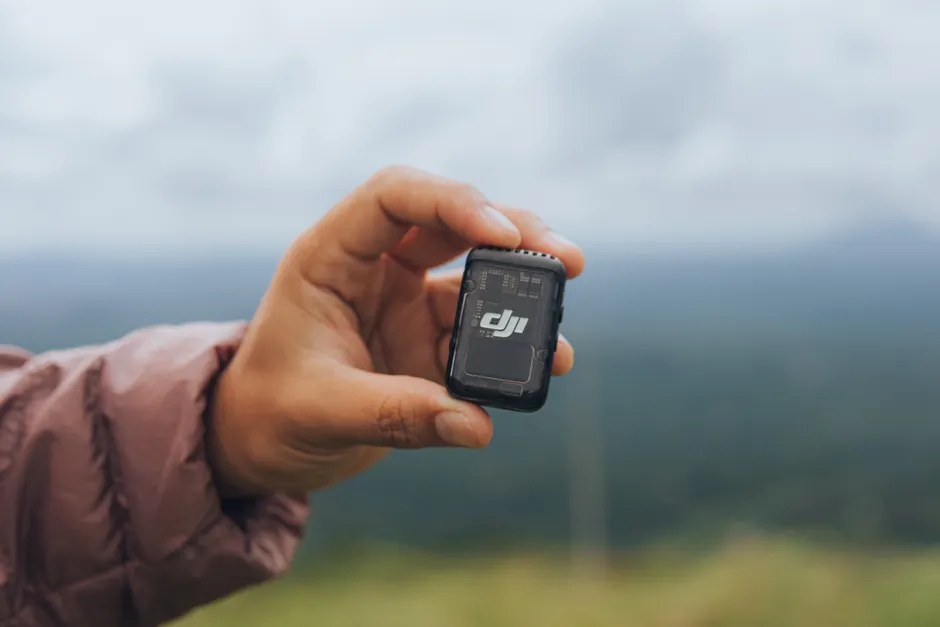
DJI's Mic Mini 2S is the first model in the Mic Mini lineup to offer 32-bit float internal audio recording, a format that prevents distortion even when recording levels are set too high. Each transmitter — the small clip-on piece that captures sound — carries 14.5GB of built-in storage, enough for roughly 28 hours of standard audio or about 21 hours of this higher-quality 32-bit float audio (Engadget).
If you have ever recorded someone speaking and had a sudden loud moment ruin the audio, 32-bit float solves that problem. It captures such a wide range of volumes that you can adjust the levels later on your computer instead of worrying about getting them exactly right during recording. Having this feature in a device that weighs just 12 grams is worth noting.
The recording format can be set to standard or 32-bit float using the receiver, the DJI Mimo app, or connected DJI OsmoAudio devices. Standard is the default (DJI Support).
Physically, the Mic Mini 2S is nearly identical to its predecessor, the Mic Mini 2. The transmitters weigh 12 grams, up one gram from the earlier model. The device can work as a phone microphone or as a clip-on lavalier mic attached to a camera (DJI).
The features go well beyond the recording format. The Mic Mini 2S offers two levels of AI noise cancellation, called Basic and Strong, along with Clipping Control, Loudness Balance for evening out audio levels, and three tone presets: Regular, Bright, and Rich. A single receiver can connect to up to four transmitters at once, letting you record multiple people without buying extra receivers.
Compatibility is broad. The Mic Mini 2S works with previous-generation DJI mics including the Mic 2, Mic 3, Mic Mini, and Mic Mini 2. Transmitters connect directly to select DJI cameras via OsmoAudio Direct Connection, covering the Osmo Pocket 4P, Osmo Pocket 4, Osmo 360, Osmo Nano, and Osmo Action 6. The receiver also connects to any camera with a standard 3.5mm microphone input, or to smartphones via an included adapter.
Power management centers on a charging case that charges two transmitters and a receiver approximately 3.2 times over a roughly two-hour charging cycle. DJI rates the total operating time at about 42 hours when using the case across multiple recharges.
The broader context here is that 32-bit float recording was, until recently, found only in larger professional audio gear from companies like Sound Devices and Zoom. It is now arriving in a tiny device aimed at everyday creators and journalists. The 14.5GB of storage in each transmitter is generous for what this device is designed for. Twenty-one hours of this audio format in a 12-gram package would have been hard to build even two years ago.
The ability to connect four transmitters to one receiver is also notable. Wireless audio systems that handle multiple people at this size and price have usually required compromises. DJI's approach — tying the mic to its own Osmo camera line while still supporting standard camera and smartphone connections — makes the Mic Mini 2S a flexible tool rather than something locked to one brand.
The one-gram weight increase over the Mic Mini 2 is barely noticeable in practice but suggests that the internal hardware, likely the storage and possibly the audio components, required physical changes. DJI has not detailed the specific differences, and the near-identical exterior suggests the engineering effort went into internals rather than the outside design.
For creators already using DJI's Osmo cameras, the Mic Mini 2S tightens that integration considerably. For those using other camera brands, the standard audio output and broad compatibility keep it accessible. The addition of 32-bit float recording removes one of the most common ways audio gets ruined during fast-paced shooting, and that alone may justify the upgrade for anyone who has lost a recording to sudden distortion.


