Eli Lilly's Weight-Loss Drugs Are Making a Lot of Money. Here's What Else Happened.
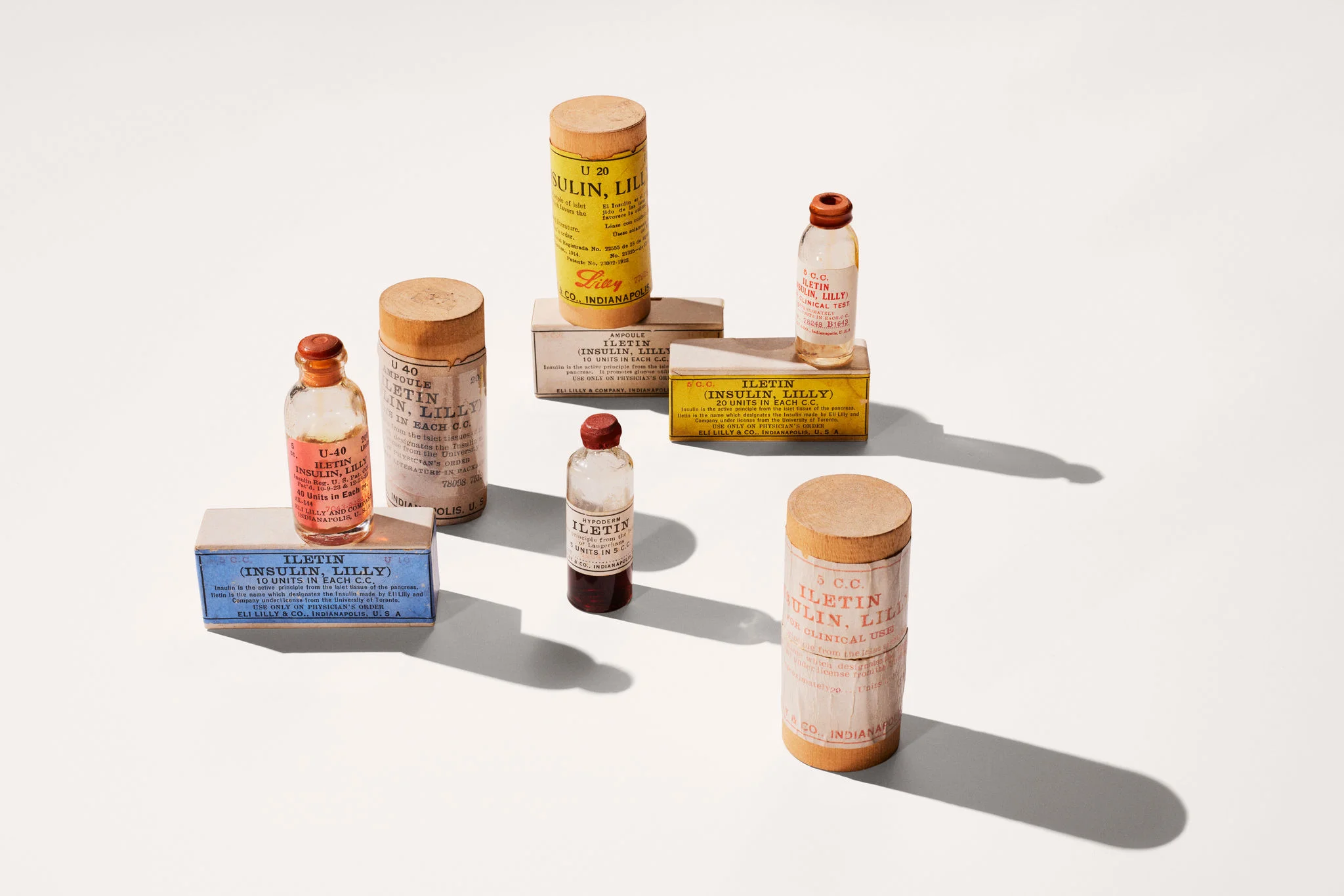
Eli Lilly reported $23.0 billion in revenue for the second quarter of 2026 on August 5, 2026. That's a 48% increase from the same period a year earlier, driven mainly by higher sales of two drugs: Mounjaro and Zepbound. The company also raised its forecast for the full year. (Eli Lilly)
Earnings per share, or EPS — how much profit the company made for each share of its stock — rose 26% to $7.94. Another version of profit, called non-GAAP EPS, which leaves out certain costs the company considers unusual, climbed 33% to $8.38. Both numbers included $3.03 in charges related to buying rights to experimental drugs that are still in development. These charges reduce the profit figure that follows standard accounting rules. Take them out, and the company's underlying business is growing even faster than the headlines suggest.
The Q2 result follows a strong first quarter. In Q1, Lilly's Key Products revenue reached $13.4 billion, which was 68% of total revenue for that quarter. U.S. revenue alone grew 43% to $12.1 billion (PR Newswire, April 30, 2026). Mounjaro, Omvoh, and Zepbound led the group in Q1, and Q2 confirms that Mounjaro and Zepbound are still the main growth engines.
Mounjaro's sales have been climbing fast. The drug brought in $3.09 billion in Q2 2024 (Reuters, August 8, 2024), $5.20 billion in Q2 2025 (Reuters, August 7, 2025), and $8.7 billion in Q1 2026 (Reuters, April 30, 2026). That Q1 2026 figure alone beat what analysts had expected a year earlier — $4.74 billion.
Beyond the quarterly numbers, Lilly's pipeline of future drugs moved forward in two important ways. On July 23, 2026, the company said retatrutide succeeded in two late-stage clinical trials for obesity called TRIUMPH-2 and TRIUMPH-3 (Eli Lilly). In TRIUMPH-2, adults with obesity or overweight and type 2 diabetes lost up to an average of 49.6 lbs, or 20.8% of body weight, over 80 weeks on the drug. TRIUMPH-3 tested adults with severe obesity and existing cardiovascular disease, with or without type 2 diabetes.
Getting positive heart-health results in a trial like TRIUMPH-3 matters because it positions the drug as more than a weight-loss treatment. It opens the door to prescribing it for reducing cardiovascular risk, which is the same logic that has been driving demand for GLP-1 drugs — the class of medications that includes Mounjaro and Zepbound, which work by mimicking natural gut hormones that regulate blood sugar and appetite.
On the cancer side, the FDA granted Breakthrough Therapy designation to Lilly's olomorasib on August 3, 2026. The drug is for previously treated patients with advanced pancreatic cancer who have a specific genetic mutation called KRAS G12C (Eli Lilly). Pancreatic cancer is one of the hardest cancers to treat. Breakthrough Therapy designation is a special FDA status that speeds up the review process and may get the drug to patients sooner.
On the access front, Lilly and the U.S. government agreed to expand access to obesity medicines. Under the agreement, people on Medicare — the federal health program primarily for those 65 and older — will pay no more than $50 per month for Zepbound in a multi-dose pen, available as early as April 1, 2026 (Eli Lilly Investor Relations). For a company whose growth depends heavily on two drugs, lowering the cost for Medicare patients directly tackles the affordability barrier that has limited how many people can actually get these drugs since they launched.
The Q2 results cap a stretch in which Lilly has raised its forecast in back-to-back quarters. Full-year 2026 guidance was raised in Q1, and now again. For a sense of how fast demand is growing: Q4 2024 Zepbound sales were $1.91 billion and Mounjaro $3.53 billion (Reuters, February 6, 2025). Mounjaro Q4 2025 sales reached $7.41 billion (Reuters, February 4, 2026). The gap between those two figures — roughly one year apart — shows how quickly demand has accelerated.
One thing worth noting for anyone watching this company: that $3.03 charge for acquired drug rights in Q2 is tied to specific deals, so it won't show up in exactly the same way every quarter. But Lilly keeps buying early-stage drug projects, so similar charges will likely keep appearing. As long as the company fills its pipeline through acquisitions rather than developing everything in-house, the gap between the two profit figures — the standard one and the adjusted one — will stay wide.


