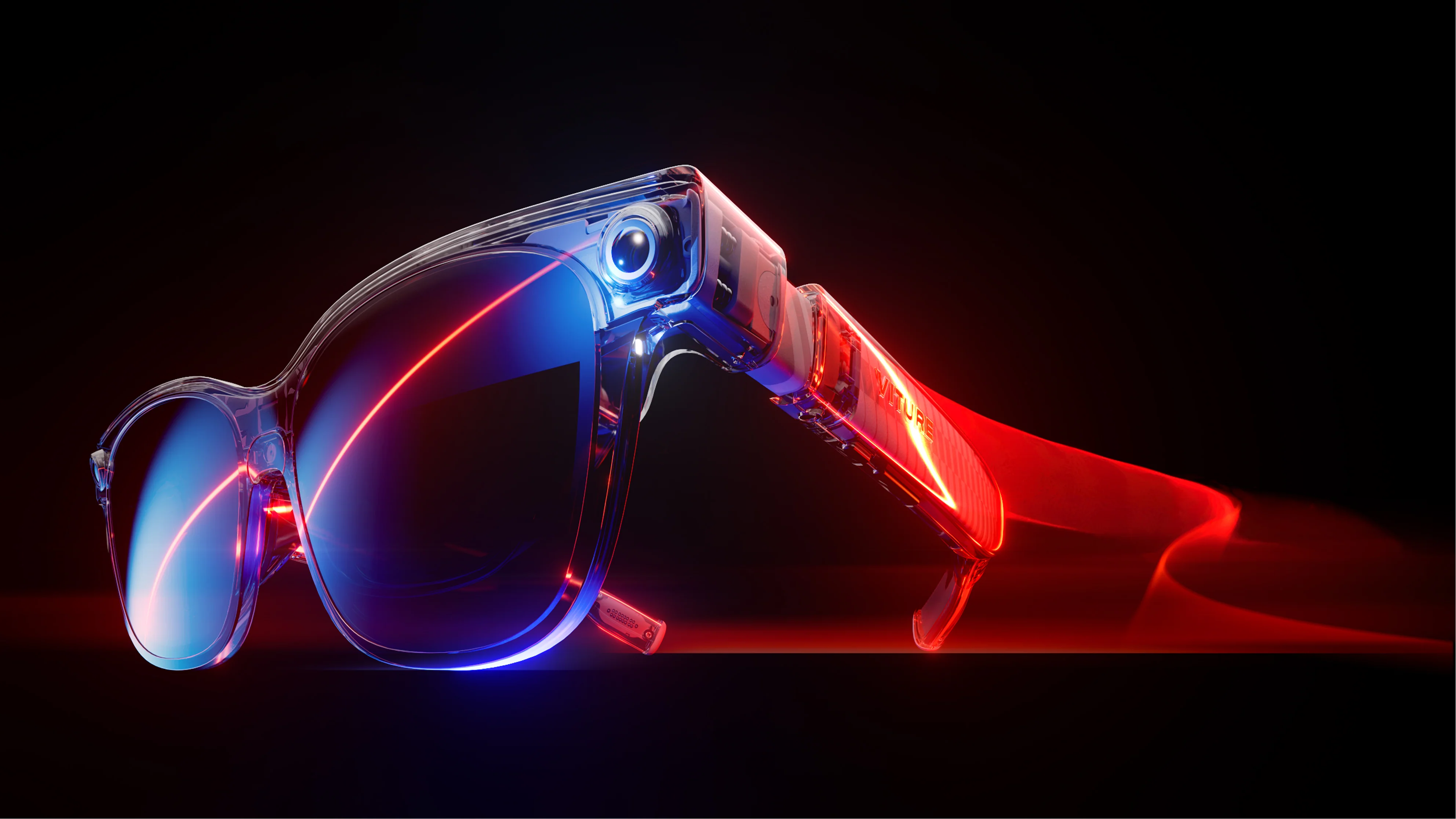
New $300 Smart Glasses Let You Adjust the Focus Yourself
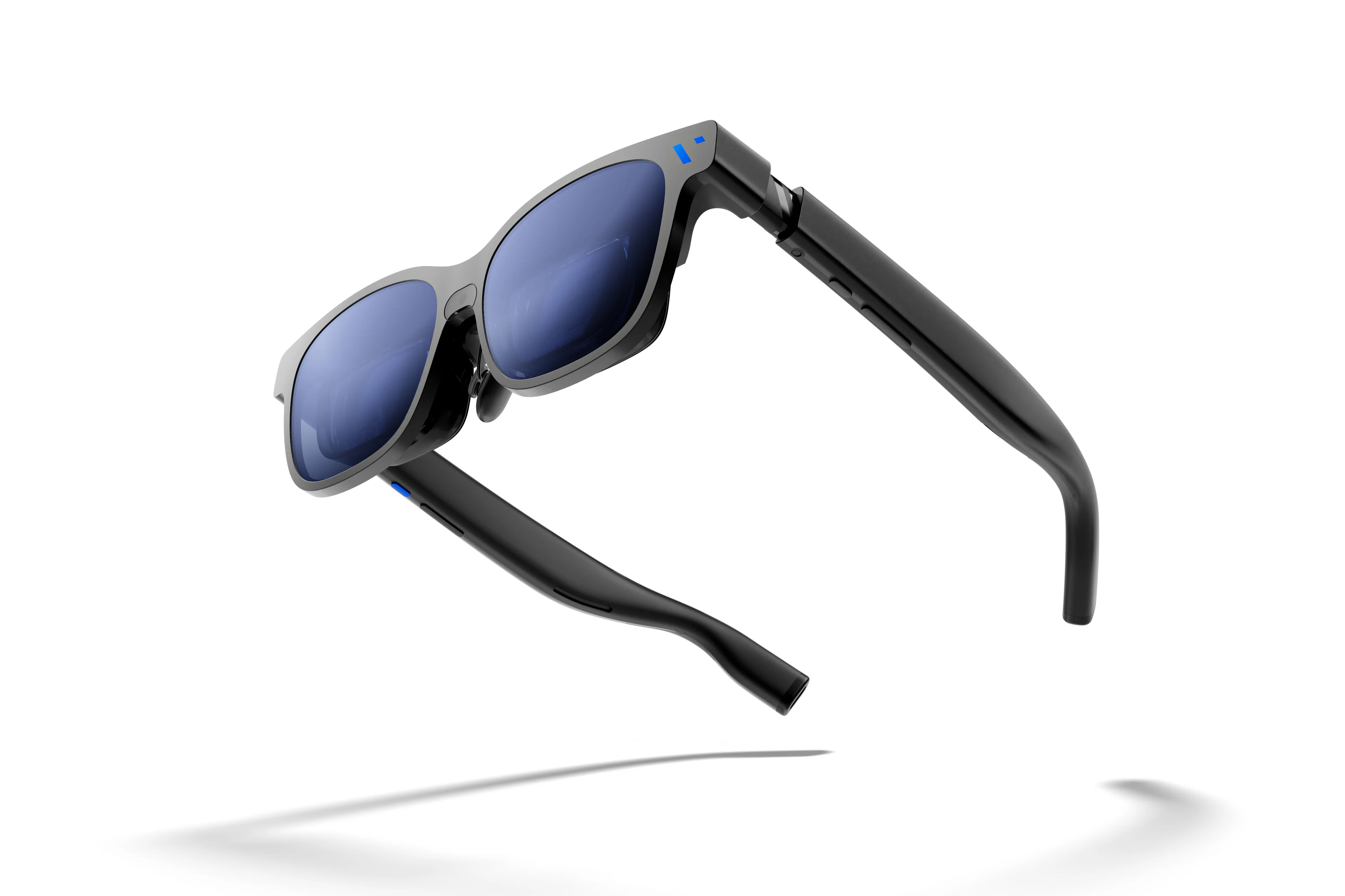
Viture's Pro 2 AR glasses cost $299.99 and come with small dials above each eye that let you adjust the focus to match your own vision. This feature, called diopter adjustment, has previously only appeared on AR glasses priced around $400 or more. According to The Verge's hands-on review, the result is screens that look sharper than models costing hundreds more. (The Verge)
The dials physically move the lenses inside the glasses, so you can correct for nearsightedness or farsightedness without buying separate prescription lens inserts. The Pro 2 does still support prescription inserts for those who need them. The Verge reported consistent sharpness across a 50-degree field of view, without the narrow "sweet spot" problem that makes many AR displays hard to keep in focus. (The Verge)
That 50-degree field of view is narrower than some competitors offer. The Pro 2 also lacks a stabilization feature called 3DoF, which lets the virtual screen stay fixed in space when you move your head. Viture's own Beast AR glasses, launched at CES 2026 in January, include 3DoF along with multiple tinting options and a wider field of view. The Beast XR variant has a 58-degree field of view and costs $549. (The Verge) (Viture)
In practical terms, the Pro 2 works like a wearable external monitor. Its small OLED screens mirror or extend another device's screen over a USB-C cable, at up to 1080p resolution with a 120Hz refresh rate, meaning the image updates 120 times per second for smooth motion. The glasses show a fixed virtual display — they do not change the screen's size or position based on where you look. Physical controls include buttons for volume, brightness, and color temperature. The glasses weigh 63 grams. (The Verge)
Build quality reflects the lower price. The Verge noted that the temple arms have more flex than pricier models, and reported heat on the right temple arm during extended testing sessions. (The Verge)
Viture's broader lineup shows where the Pro 2 fits. The Beast XR, at $549, offers a 4K-like display at 120Hz, a 58-degree field of view, a contrast ratio of at least 100,000:1, and 108% sRGB color coverage, with per-eye resolutions of 3840x1200 and 1920x1200. (Viture) Viture's Luma series — the Luma, Luma Pro, and Luma Ultra XR — features 4K-like Sony micro-OLED displays, electrochromic dimming (the lenses can darken electronically), and HARMAN audio. The Luma Pro is described by Viture as the first XR glasses with customizable RGB lighting, a 152-inch virtual screen, and visuals 50% sharper than other Viture glasses. (Viture) (Viture)
The product hierarchy is straightforward. The Pro 2 trades advanced features for a lower price, while the Beast and Luma lines carry the higher-end optical and display specifications.
The broader context here is a pattern we have seen before in consumer technology. Features that start out as premium extras, like diopter adjustment, gradually move to cheaper models as manufacturing improves and component costs fall. The combination of focus-adjusting dials, a 50-degree field of view, and OLED screens at 1080p with a 120Hz refresh rate for under $300 would have been hard to achieve even a year ago. Whether that matters depends on what you want the glasses to do. The Pro 2 is a personal display, not a full augmented reality platform. It mirrors and extends screens. For someone who mainly wants a private, portable monitor, the sharpness and price are a genuine value. For anyone who wants the virtual screen to move with their head, stay anchored to the environment, or fill a wider view, the Pro 2 falls short.
One concern worth noting is the heat on the right temple arm. Managing heat in devices you wear on your face is a difficult engineering problem, and noticeable warmth during long use is the kind of thing that turns a comfortable second screen into something you put down after half an hour. How much this matters will depend on how long you use the glasses at a stretch and your personal tolerance.
The broader direction for this category, though, is encouraging. AR glasses are getting lighter, sharper, and cheaper, and the Pro 2 is a concrete example of that trend. The 63-gram weight, the focus dials, and the sub-$300 price together lower the barrier for people who want to try a personal display without paying for a premium device. That is not a transformation of what AR glasses can do. It is a widening of who can afford to find out.