Japan's Stock Market Keeps Falling — Here's What's Behind It
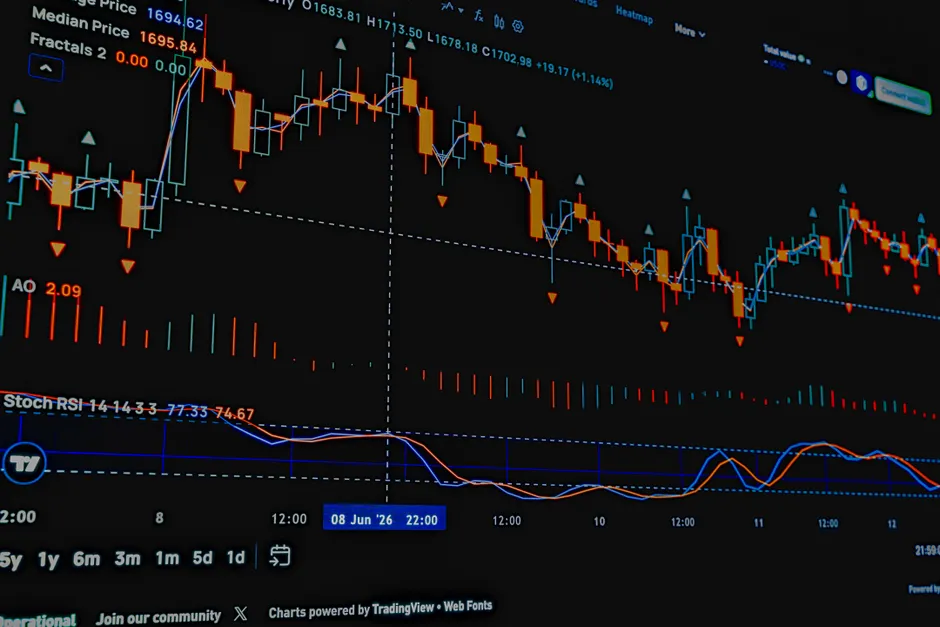
Japan's Nikkei 225, the country's main stock market index, fell 648 points, or 0.98%, to close at 65,652 on August 7, 2026. Two companies led the drop: Taiyo Yuden, which makes electronic parts, fell 11.24%, and GS Yuasa, which makes batteries, fell 10.07% (TradingEconomics).
This is part of a longer slide. On July 17, the Nikkei fell into what's called a "correction" — a drop of about 10% from a recent high. That happened because semiconductor (computer chip) companies around the world were selling off and the Middle East conflict was getting worse (Reuters). The day before that, the Nikkei had already fallen 2.6%, pulled down by chip and metals stocks, according to The Wall Street Journal (WSJ). Data from FRED, a public economic database, shows how the index bounced around in late July: it closed at 61,434 on July 29, climbed to 64,362 by July 31, slipped to 63,755 on August 3 (FRED). On August 5, it opened at 64,565 and closed at 66,300 (Yahoo Finance). The August 7 close at 65,652 means the index gave back about 650 points from that level.
Other Asian markets are falling too. In the same session, South Korea's Kospi dropped 0.9% and Hong Kong's Hang Seng declined 0.9% as the Middle East war continued, according to The Japan Times (Japan Times). On July 17, stock indexes around the world fell as chip stocks dropped for a third day in a row, while oil prices rose on Middle East tensions (Reuters). U.S. markets also felt it: the S&P 500 closed lower and the Nasdaq fell more than 1% on July 16 as chip stocks suffered, following a decline in chipmakers while the U.S. continued to strike Iran overnight (CNBC).
The Middle East conflict has been a constant background pressure. Around June 7, the Nikkei dropped 3.9% as the AI rally stalled, while oil rose on Middle East uncertainties but settled below its highs for the day (Reuters). By July 20, global stock indexes fell as investors stayed cautious about the U.S.-Iran war and waited for company earnings reports (Reuters).
The other big factor is the semiconductor, or computer chip, industry. On August 5, AMD's shares slipped even though the company's results beat analysts' official forecasts (Reuters). That sounds contradictory, so here is why it matters. Analysts publish earnings predictions, but investors often expect even more than those predictions. When a company beats the published forecast and its stock still drops, it means investors had set their expectations even higher.
The companies that fell hardest on August 7 tell a similar story. Taiyo Yuden makes electronic components, and GS Yuasa makes batteries. Neither is a famous chip company, but both depend on the same supply chain. When the selling spreads from the big chip designers to the parts and battery makers that feed into the same chain, it suggests investors are cutting risk across the whole technology manufacturing sector, not just trimming a few stocks.
The Nikkei's path from the June 7 plunge through the July correction and into August shows a market caught between two forces that are not letting up. Middle East fighting keeps pushing oil prices up and making investors nervous across Asia. At the same time, the chip sector, which has been the engine of Japan's market rally, is losing steam as the AI boom fades and earnings expectations have gotten ahead of reality. The data showing the index climbing from 61,434 on July 29 to above 66,000 on August 5, then dropping 650 points by August 7, captures a market bouncing around without a clear direction — searching for a bottom it has not found yet.
The key question for investors is whether these two problems are connected or separate. If the Middle East conflict keeps raising energy costs while also slowing global growth and chip demand, the Nikkei could face pressure on two fronts at once. But if the chip selloff is just a reset for that one sector and the Middle East situation stabilizes, the damage may be more limited than the recent swings suggest. The data through August 7 does not answer that question yet.