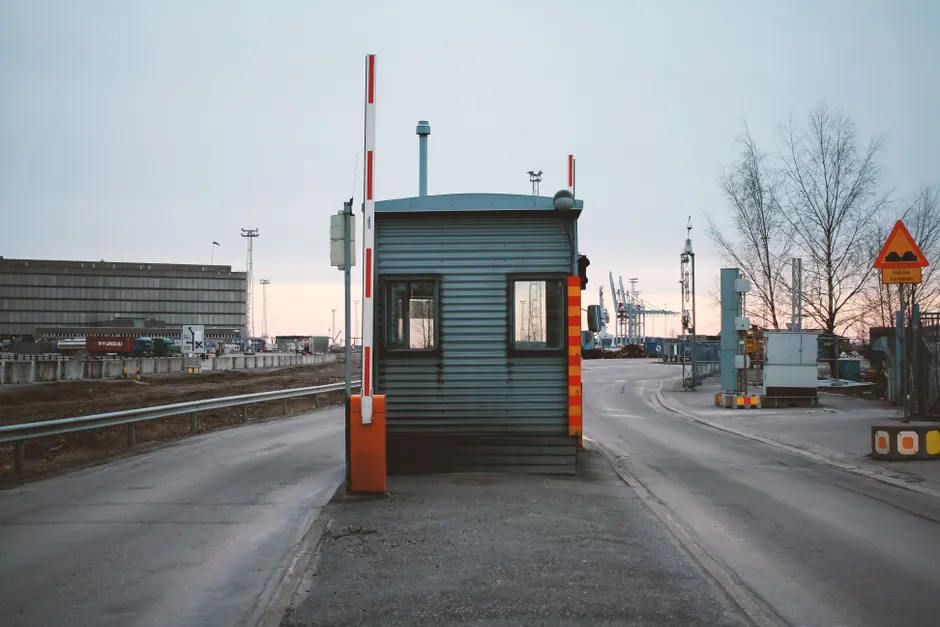
Why Spain and Italy Are Now Checking Each Other's Borders

Spain will start checking travelers arriving from Italy beginning midnight Saturday through 7 September. It is a direct response to Italy's own border checks, which Italy introduced after a massive wave of people rushed into a Spanish territory in North Africa called Ceuta The Guardian.
The standoff built up over 24 hours. Spain first warned Italy to lift its checks by Sunday or face "proportional measures." Italian Prime Minister Giorgia Meloni's government refused, saying it would not change its decision before 15 August. Hours later, Spain followed through with its own checks.
The crisis started on 30–31 July, when tens of thousands of people crossed from Morocco into Ceuta, a small piece of Spanish territory on the North African coast. Spanish authorities say 72,000 people entered during the two-day rush, and 70,000 have since returned to Morocco. Spain puts the death toll at 80. Two human rights groups — the Moroccan Association for Human Rights and the European Coordination for Human Rights in Morocco — say at least 141 people died The Guardian.
Italy reacted to the Ceuta rush by introducing border controls on 31 July for non-EU citizens arriving from Spain by air or sea. The U.S. Embassy in Italy confirmed to American citizens that the Italian government put a 30-day border control change in place for travelers from Spain starting 1 August U.S. Embassy in Italy. The European Commission lists Italy's temporary controls as running from 1 August to 1 September 2026, citing threats to public policy, internal security, and migration management due to events in Ceuta European Commission. Spain and Italy do not share a land border, so the checks apply to flights and ferry arrivals.
Spain's foreign minister, José Manuel Albares, called Italy's checks "a torpedo fired at the hull of European unity" and urged Rome to reverse course. Spain's interior ministry described its own checks as a response, pointing to ongoing irregular migration pressure facing Italy The Guardian.
Meloni was not alone in pushing for a tough response. She was among several EU leaders who called for Spain to be suspended from the Schengen travel zone. Schengen is the agreement that lets people travel between most European countries without showing a passport. Suspending a country from it would be a serious step. Schengen rules do allow countries to temporarily bring back border checks for security reasons, but two countries imposing checks on each other — each saying the other caused the problem — is highly unusual. The European Commission has formally recorded Italy's measures, but Spain's response does not appear to have a separate Commission notification on record.
On the ground, Spain's National Police and FRONTEX, the EU's border agency, launched Operation MINERVA17 at the ports of Algeciras, Tarifa, and Ceuta to carry out inspections. Spain's interior ministry has also kept land border posts partially closed for entry and exit through Ceuta and Melilla, another Spanish territory in North Africa Spanish Interior Ministry.
The crisis also comes ahead of a new EU border system launching 12 October called the Entry/Exit System, which will electronically register non-EU citizens crossing into the Schengen area from outside it Spanish Interior Ministry. That system was already expected to test countries' border-management capacity. The Spain-Italy dispute adds a problem it was not built to solve, since it deals with external borders, not disagreements between member states.
The broader context here is that the Schengen system is being squeezed from two sides. Outside pressure comes from irregular migration at places like Ceuta. Inside the EU, countries disagree over who is responsible when external borders are seen as failing. Italy's choice to check arrivals from Spain, rather than strengthen its own southern border, reflects a political view that the Ceuta incident revealed a weakness in Europe's outer frontier and that Spain should bear the consequences. Spain's response is more of a diplomatic message than a real security measure, since the two countries' migration routes and geography are very different.
It is still unclear whether the European Commission will do anything beyond recording Italy's notification. The gap between the official Spanish death toll of 80 and the human rights groups' figure of at least 141 also leaves the human cost of the Ceuta rush in dispute. That gap could affect accountability in Spain and the wider EU debate about how to manage external borders.
The timeline is tight. Spain's checks run until 7 September. Italy's Commission-listed measures expire 1 September, though Rome has said it may not change its stance before 15 August. Whether the two sides find a way out before the new EU border system launches in October will depend on diplomacy that, so far, shows little sign of progress.