Mount Etna Erupted and Stopped Flights From Landing in Sicily — Here's What's Going On
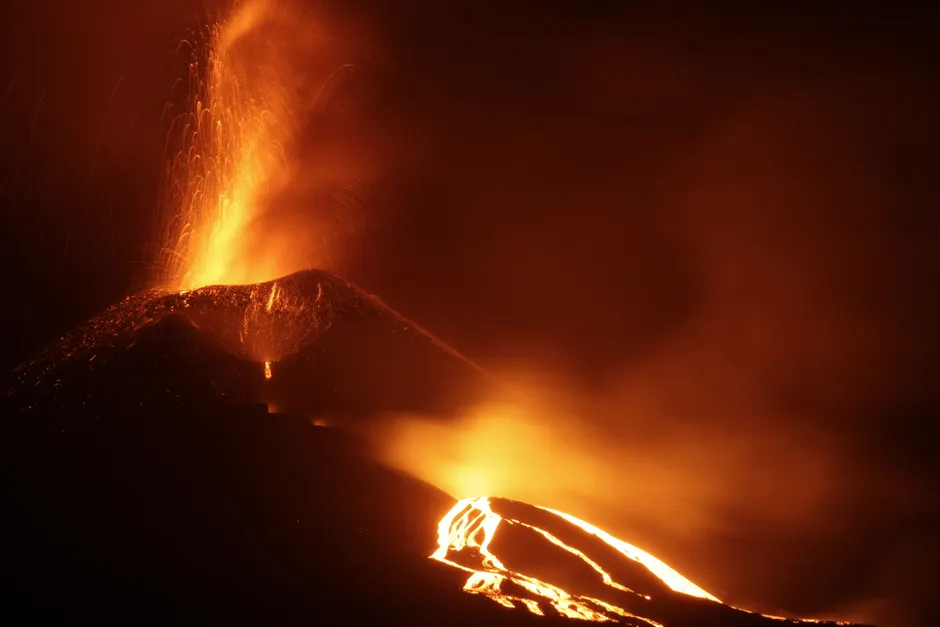
Mount Etna, a large volcano in Sicily, erupted on August 8, 2026, sending a cloud of smoke and ash into the sky. The ash made it unsafe for planes to land, so Catania international airport suspended all arriving flights Al Jazeera. Arrivals were paused until 12:00 local time (10:00 GMT). Planes already on the ground were still allowed to take off.
Catania airport serves the eastern side of Sicily, one of Italy's most popular tourist spots. The disruption came during the busiest travel season of the year, adding strain to an airport that has already dealt with several volcano-related closures in recent years.
Mount Etna stands at 3,324 metres, making it the tallest active volcano in Europe. It has erupted frequently for hundreds of thousands of years. A webcam run by Italy's National Institute of Geophysics and Volcanology (INGV), which keeps a constant watch on the volcano, showed smoke rising from the top.
The eruption did not come as a complete surprise. INGV's observatory in Sicily had published a bulletin on August 4, 2026 — four days earlier — reporting that one of Etna's craters, called the Voragine, was already showing escalating activity. The bulletin described a type of eruption called Strombolian activity (short, explosive bursts of lava) that was intensifying into lava fountaining (a more powerful, continuous spray of molten rock) INGV. INGV publishes weekly updates on Italy's volcanoes, tracking signs like earthquakes and gas emissions.
Tough restrictions and ash warnings have been in place around Catania since July 2025 because of Etna's increasing activity. This has led to protests by tour guides who make a living taking visitors up the mountain. In January 2026, local authorities suspended or limited trips to see Etna's lava flows, and guides demonstrated for the first time at the gate where lava-viewing excursions begin. INGV said at the time that the lava was cooling and not moving further.
Catania airport has gone through this before. In May 2023, an Etna eruption stopped all flights to and from the airport until it was safe to resume Reuters. In August 2023, another eruption disrupted flights until the following Tuesday Reuters. On July 5, 2024, two volcanoes — Etna and nearby Stromboli — erupted at the same time, forcing the airport to close entirely until operations could restart Reuters.
The broader context here is that Sicily is struggling to balance safety with the needs of its tourism economy. INGV's bulletins showed clear warning signs in the days before August 8, giving aviation authorities time to prepare. Yet the airport's response still follows a reactive pattern: shutting down arrivals only after ash is already in the air, rather than reducing traffic ahead of time based on the volcano's escalating behavior. For an airport that is the main gateway to eastern Sicily, every closure affects tourism revenue, airline schedules, and travelers' confidence during the busiest time of year.
One thing stands out about the August 8 event compared to earlier disruptions. In July 2024, both arrivals and departures were suspended because two volcanoes erupted at once. This time, only arrivals were stopped, while planes already at the airport could still leave. That difference suggests the ash cloud was blowing mainly into the paths that incoming flights use. Whether that is due to better ash-cloud tracking, favorable winds, or a more targeted closing procedure is not clear. What is clear is that Etna has been erupting more intensely over the past thirteen months, and the tension between keeping people safe and protecting the livelihoods of people like the tour guides remains unresolved.