Dell's 2026 XPS 13: A Premium Name on a Budget Machine

Dell's 2026 XPS 13 ships with 8GB of RAM in its base configuration and runs on Intel's Core 5 320 processor, a notable step down from the hardware offered in the 2024 XPS lineup. According to Engadget's review, the new machine is effectively an "XPS Neo" variant — a product compromised to reach a low starting price of $599 for students or $699 for everyone else.
The trade-offs show up clearly in benchmarks. In Engadget's Geekbench 6 graphics testing, the 2024 Snapdragon X Elite-based XPS 13 was nearly twice as fast as the 2026 model, and the 2024 Intel Core Ultra 7 155H version was three times faster. Geekbench 6 is a widely used cross-platform benchmark that tests CPU and GPU performance with standardized workloads; the gap here is not marginal. Both of the 2024 XPS processor options — the Core Ultra 7 155H and the Snapdragon X Elite — were substantially more capable chips than the Core 5 320 now shipping in the base 2026 unit.
The price target explains the regression. Dell announced the new XPS 13 at CES 2026 in January, describing it as expected to be "the thinnest and lightest XPS laptop ever, offered at the most accessible XPS price yet." A Dell blog post from May 31 confirmed the student pricing at $599 and the standard price at $699, with Intel Core Series 3 processors. The XPS 13 had been Dell's most well-known flagship laptop for more than a decade, and the 2026 model positions itself as Dell's answer to Apple's MacBook Neo rather than as a continuation of the premium ultraportable line.
Against that MacBook Neo, the XPS 13 holds some advantages. It starts with 512GB of storage versus the Neo's 256GB. Its display is a 120Hz 1440p panel — meaning it refreshes 120 times per second for smoother motion and offers a resolution of 2560×1440 pixels — bright enough for direct sunlight use, while the Neo offers a 60Hz screen. The XPS 13 can be configured with up to 32GB of RAM and 1TB of SSD storage per Dell's product page, and Dell specifies up to 17 hours of streaming battery life. The MacBook Neo, by contrast, cannot be configured with 16GB of RAM, requiring a jump to the $1,299 MacBook Air for more memory.
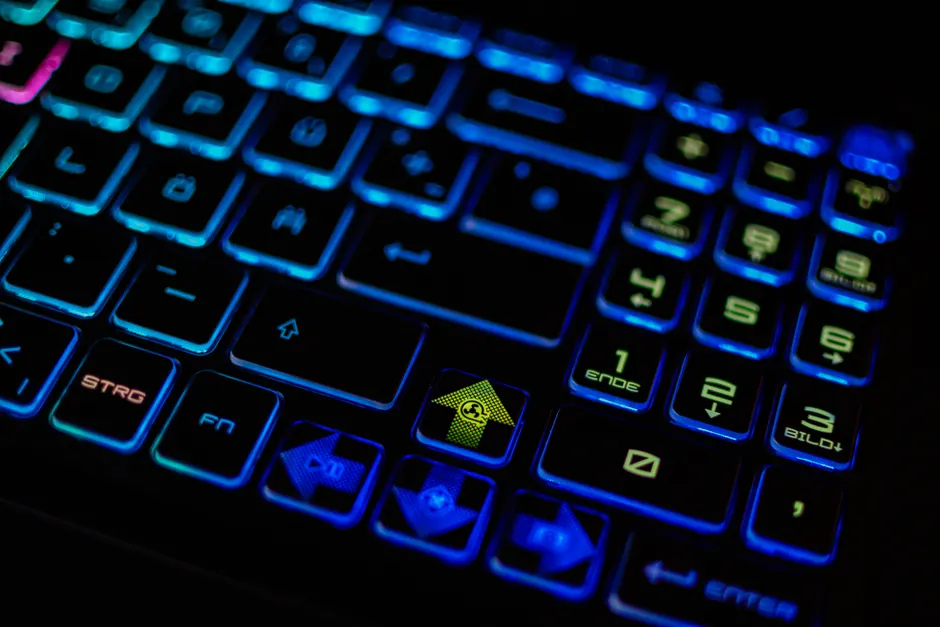
But the XPS 13 has its own compromises beyond the processor. The trackpad does not register clicks in its top third — a notable input flaw for a laptop at any price. Dell has, however, returned to traditional chiclet-style keys, where each key is separated and slightly raised, a course correction from the divisive keyboard designs on recent XPS models. The XPS 14 (2026) review from March noted that the 14-inch model "excels at almost everything except typing," so the return to a more conventional key design on the 13 may address a complaint that has lingered across the lineup.
The broader context here is that Dell reimagined the entire XPS family for 2026. A blog post titled "This is XPS Now" published January 5 declared that XPS was back and had been reimagined. The XPS 16 (2026) review from March called it a worthy flagbearer for premium 16-inch productivity laptops with a beautiful OLED display. The XPS 14 was praised as gorgeous and light with a lovely OLED screen, fixing previous design mistakes. Both larger models landed well. The XPS 13, aimed at a very different price tier, carries the brand name but not the same hardware ambition.
Dell markets the machine as its lightest 13-inch XPS laptop, with a 2.5K touch display, 8W quad speakers, and Copilot+ PC certification, per Dell's product listing. Copilot+ PC is Microsoft's certification for Windows machines meeting specific AI-acceleration requirements. The quad-speaker array is confirmed in Engadget's review. Port selection is minimal: one USB-C port on each side of the system, nothing else. The display's 120Hz refresh and 1440p resolution are genuine highlights at this price, and the brightness is not a spec-sheet claim but a real-world observation from Engadget's testing.
The tension in this product is straightforward. The XPS 13 name carried a specific meaning for over a decade: a premium, no-compromise 13-inch ultraportable. The 2026 model is a $599-to-$699 machine that beats the MacBook Neo on storage and display specs, loses decisively on graphics performance to its own 2024 predecessor, and ships with 8GB of RAM in an era where even mid-range phones are pushing past that figure. The trackpad issue is the kind of thing that should have been caught before shipping.
What the 2026 XPS 13 does well — a bright, high-refresh display, adequate storage, a light chassis, and a sub-$700 entry point — genuinely matters for the student and budget buyer Dell is targeting. The question is whether the XPS branding helps or hurts that pitch. Buyers who remember what the XPS 13 was will find a different machine. Buyers who never knew that history get a reasonably specced laptop at a competitive price, trackpad aside, with the best display in its price class.