Joby Aviation to Acquire Defense Firm Resonant Sciences for $500 Million

Joby Aviation announced it is acquiring Dayton, Ohio-based defense firm Resonant Sciences in a $500 million deal, financed with $450 million in cash and $50 million in equity. The acquisition is expected to close in early 2027, after which Resonant Sciences will continue its existing work as Joby's dedicated defense division The Verge.
Founded in 2015, Resonant Sciences employs around 250 people and develops systems that help aircraft see, communicate, and operate in complex environments, including war zones. Its products are qualified across more than 20 commercial and defense airframes. Many of the company's employees hold military clearance due to the classified nature of their work The Verge.
The phrase "systems that help aircraft see and communicate" refers to a range of technologies: sensors that detect other aircraft and obstacles, communication links that resist jamming or interception, and electronic warfare gear that can confuse adversary radar. These are the kinds of components that allow military aircraft to function in contested airspace where ordinary commercial systems would fail.
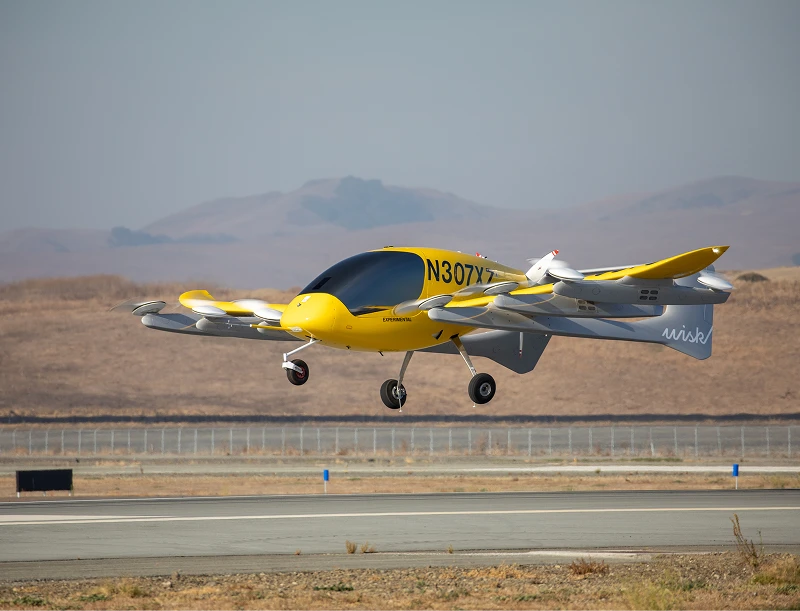
Joby intends to design and build stealth aircraft using Resonant Sciences' acquired systems. The move adds a classified, defense-oriented R&D pipeline to a company best known for its commercial eVTOL ambitions. eVTOL stands for electric vertical takeoff and landing — essentially, electric aircraft that can hover and fly like a helicopter but without the noise, emissions, and operating costs of traditional rotorcraft. Joby's commercial division will remain focused on air taxis, the first of which are expected to launch in 2026 The Verge.
Joby's relationship with the Department of Defense is not new. The company participated in the Defense Innovation Unit project starting in 2016. The DIU is a Pentagon office that fast-tracks commercial technology into military use, bypassing some of the traditional, slower procurement process. In 2020, Joby became the first eVTOL developer to secure an airworthiness approval and flight clearance certificate from the US Air Force for government-led testing. In 2023, the company delivered its first aircraft to Edwards Air Force Base for testing The Verge.
The Resonant Sciences acquisition arrives alongside Joby's commercial manufacturing push. On June 30, 2026, Joby and Toyota Motor Corporation launched the initial phase of a strategic manufacturing alliance aimed at realizing air mobility for all Joby Aviation. That partnership builds on Toyota's October 2024 announcement that it would invest an additional $500 million in Joby to support certification and commercial production of the company's electric air taxi, on top of Toyota's existing stake Joby Aviation.
Joby reported a net loss of $245.4 million in the second quarter of 2026 on $38.6 million in revenue The Verge. The cash-and-equity structure of the Resonant Sciences deal, weighted heavily toward cash, signals that Joby is deploying substantial liquidity toward defense capabilities even as its commercial air taxi operations approach their expected 2026 launch window.
The competitive landscape is shifting rapidly. Last month, San Jose-based Archer Aviation unveiled a new aircraft it codeveloped with defense technology company Anduril. Boeing also said it was selling three of its eVTOL subsidiaries to Archer as part of a blockbuster deal The Verge.
The convergence of electric aviation and defense contracting is accelerating across multiple players simultaneously. Joby's acquisition of Resonant Sciences and Archer's partnerships with Anduril and Boeing point to a sector-wide reorientation where commercial eVTOL technology is increasingly viewed as a dual-use asset — meaning the same aircraft and systems can serve both civilian and military purposes. For Joby, the appeal of Resonant Sciences is clear: the target brings 250 cleared employees, systems already qualified on more than 20 airframes, and deep integration with classified defense programs. That is not a capability set built overnight, and acquiring it outright is faster than developing it internally.
In my view, the financial profile bears attention. Joby's Q2 2026 net loss of $245.4 million against $38.6 million in revenue is a stark reminder of the capital intensity of the eVTOL sector. Spending $450 million in cash for a defense acquisition, even one with established revenue streams and cleared personnel, is a substantial allocation for a company still in pre-commercial-launch mode. The defense contracts Resonant Sciences brings may offset some of that burden over time, but the near-term cash deployment is significant.
The timing is also worth noting. Joby expects its first commercial air taxis to launch in 2026, the same year it is committing $500 million to acquire a defense firm whose deal will not close until early 2027. The company is simultaneously pursuing commercial launch, a Toyota manufacturing alliance, and a major defense acquisition. Each of these is a significant operational challenge on its own; together they test whether a company of Joby's scale can execute across multiple demanding fronts without any one of them slipping.
The stealth aircraft ambition is the most technically aggressive element. Resonant Sciences develops systems for aircraft to see, communicate, and operate in war zones, and Joby intends to use that expertise to design and build stealth aircraft. That positions Joby beyond the eVTOL air taxi category and into fixed-wing or hybrid defense aircraft development, a market with established primes and long acquisition cycles. Whether Joby can compete there depends on how well it integrates Resonant Sciences' cleared workforce and qualified product lines into its own engineering culture.
The broader pattern is familiar to anyone who tracked the commercial drone sector a decade ago: civilian electric aviation companies repeatedly found that defense contracts offered earlier revenue, longer development horizons, and a customer base willing to fund R&D at scale. Joby's defense relationships through the DIU, Air Force airworthiness certification, and Edwards AFB deliveries provided an early foothold. Acquiring Resonant Sciences substantially deepens that position, moving Joby from a participant in defense testing programs to a company with its own dedicated defense division and classified cleared workforce. For the eVTOL sector, the message is that the path to commercial viability may run increasingly through Pentagon budgets.