Joby's 3,199-Mile Autonomous Flight Tests a Retrofit Future

Joby Aviation said on September 18, 2026 it had completed the first fully autonomous flight across the United States. A converted Cessna Caravan flew 3,199 miles with no control inputs from its onboard safety pilot, according to the company account reported by the Wall Street Journal.
The flight covered more than 3,100 miles coast to coast. It included autonomous taxiing, takeoffs, navigation and landings. Taxiing means moving under its own power on the ground, and each phase was handled by the software. The aircraft was supervised remotely from two sites, Joby's headquarters in California and Shaw Air Force Base in South Carolina. A pilot stayed on board to meet regulations, but Joby said the aircraft flew the entire operation by itself, as reported by TechCrunch.
A retrofit kit, not an air taxi
The platform was not Joby's electric air taxi. It was a standard Cessna Caravan fitted with Joby's autonomy stack, a package of sensors, computers and controls designed to be retrofitted onto a wide range of conventional aircraft. The same system powered a flight over the San Francisco Bay Area on September 7, 2026. Joby said the cross-country aircraft will return to the West Coast over the next two weeks, with stops including Louisville, Kentucky and Salt Lake City.
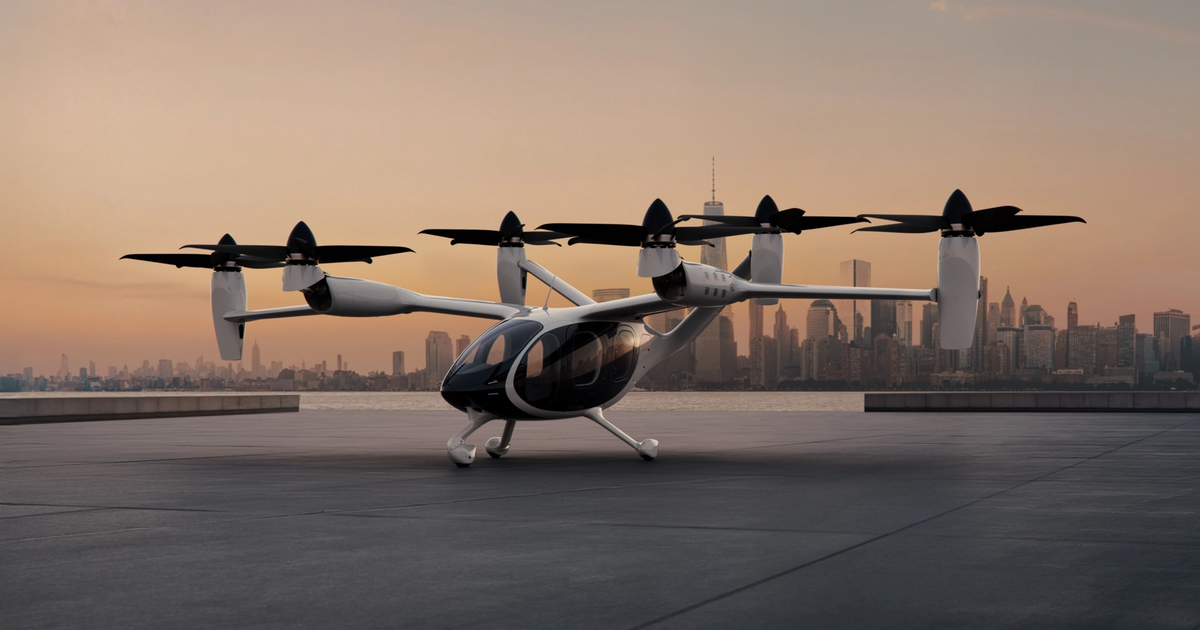
Joby introduced the cross-country tour in a September 10, 2026 press release titled 'Joby Autonomous Aircraft Begins Cross-Country Tour'. On the same date it published a second release titled 'Joby Launches eIPP Flights in Texas'. Its all-electric aircraft, the separate piloted platform at the center of its air-taxi program, is designed to carry a pilot and four passengers at speeds of up to 200 mph.
The defense connection
The autonomy work has defense funding and partners. It has been supported by a $17 million Air Force contract with AFWERX. The company previously logged more than 7,000 autonomous miles in a U.S. defense exercise using Superpilot technology. It has signed an agreement with L3Harris Technologies to explore a gas-turbine hybrid vertical take-off and landing aircraft that can fly autonomously for defense applications. Joby also acquired Resonant Sciences for $500 million in cash and stock.
The broader context here is that Joby is solving two different problems in parallel. Certifying a new electric vertical take-off aircraft for piloted passenger service is one problem. Fielding an autonomy kit for existing airframes under remote supervision is a different problem, with different regulators, customers and failure modes.
In my view, the operational details matter more than the mileage total. The flight handled taxi, takeoff, en route flying and landing under autonomy, with handoff between supervisory nodes on opposite coasts. That exercises the full loop, including command link continuity, airspace integration and contingency handling across multiple Flight Information Regions. Doing it in a Caravan is pragmatic. It is a known airframe with known handling qualities, which isolates the variable under test.
Looking at what this means for adoption, retrofit changes the deployment logic. Operators do not need to wait for a new type certificate and new ground infrastructure to use supervised autonomy for cargo, repositioning or defense logistics. They can instrument aircraft they already maintain and fly. That helps explain why the near-term traction is military. The tolerance for supervised uncrewed operations, and the supervisory infrastructure to support them, already exists there.
Worth flagging is what remains unproven. The compliance pilot on board still absorbs a large share of regulatory and safety risk. Removing that person, even while retaining ground supervision, will require a different evidentiary bar for detect-and-avoid, link loss and degraded-state autonomy. The return leg west, with additional airports and weather, will add useful data. The long arc still points toward lower crew workload and eventually crew-optional operations on routine routes, which would expand what regional air transport can do with current fleets.