Somalia's 2021 Power Crisis: When a President's Bid to Stay Longer Sparked Violence

Somalia's 2021 Power Crisis: When a President's Bid to Stay Longer Sparked Violence
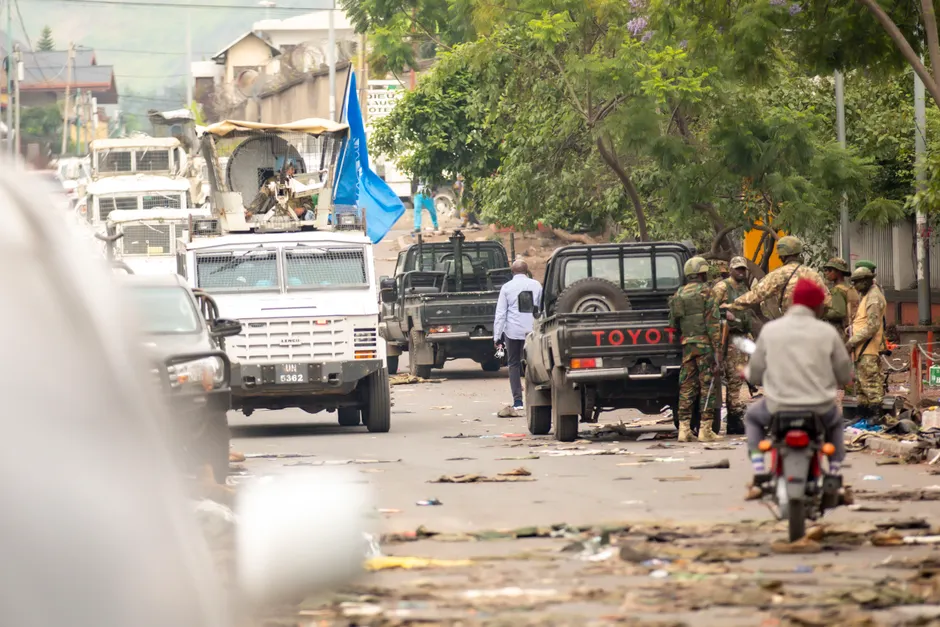
In April 2021, gunfire and explosions tore through Mogadishu, Somalia's capital. The cause was a political dispute: President Mohamed Abdullahi Mohamed had asked parliament to extend his time in office by two years beyond his term limit. His supporters in the lower house approved it. The move outraged opposition leaders and soldiers, leading to armed clashes between government forces and protesters in the streets, according to the Associated Press.
The violence escalated after the president signed the extension into law. Soldiers angry at the move seized control of key positions throughout the capital. Across the city, opposition supporters burned photographs of the president. On April 25, 2021, clashes erupted in the Fagah district, the Associated Press reported. Police described the armed incidents as coordinated attacks that threatened the capital's safety and stability.
Why Parliament and the World Objected
The parliamentary extension angered leaders in Somalia's upper house, the Senate, and provoked sharp criticism from international organizations. The UN Assistance Mission in Somalia condemned the violence and warned that extending mandates without proper democratic process would create serious political problems, UN News reported. International partners—including the UN—cautioned that this move would undermine Somalia's fragile peace and security.
What made this so contentious? To understand that, you need to know the backstory.
The Delayed Elections Problem
Somalia's elections had been scheduled for 2020 but kept getting postponed. By 2021, President Mohamed's constitutional term had expired, but no new elections had been held. This created a legal gray area: without elections, did his term simply continue, or did he need parliament's approval to stay in office? The government and international partners had agreed in September 2020 on an indirect electoral model—meaning political parties and regional representatives would select the president, rather than a direct popular vote. But the elections kept slipping further behind schedule.
Opposition leaders had planned protests to demand the delayed elections finally happen. After the week's violent clashes, however, they postponed their demonstrations, Reuters reported. The streets of Mogadishu had become too dangerous.
When the Military Split Apart
One of the most alarming consequences of the president's move was that it fractured the armed forces. When he signed the extension into law, soldiers stationed throughout the capital revolted against their commanders' orders. They seized strategic positions—military barracks, government buildings—signaling a breakdown in the chain of command. This was particularly dangerous because Somalia, which had endured a catastrophic civil war in the 1990s, depends on international help to rebuild its military.
The crisis was serious enough that senior UN diplomatic officials, including Rosemary DiCarlo from the UN's political affairs office, joined emergency meetings to address it.
To grasp why this mattered so much, it helps to know the broader pattern. Across the Horn of Africa—a region that includes Ethiopia, Kenya, and Somalia—leaders facing uncertain elections have repeatedly tried to extend their own terms. Ethiopia attempted a similar constitutional maneuver in 2020. Leaders in the Sahel region (the semi-arid belt across West Africa) have turned this into a standard playbook: rewrite the rules to stay in power.
Somalia's situation was particularly precarious because the country's institutions are still fragile. When civil war tore Somalia apart in the 1990s, it destroyed the state's basic functions. International donors and partners have spent decades trying to rebuild those institutions from scratch. When the military splintered in 2021, it threatened to undo much of that rebuilding work.
How It Eventually Resolved
Despite the violence and constitutional chaos, Somalia did hold elections. In May 2022—more than a year after the crisis—parliament chose a new president in a vote held behind protective blast walls, reflecting just how volatile the capital remained, Reuters reported. The two-year delay had worn on Somalia's credibility. When international partners reviewed the country's development programs in 2023, the delayed electoral cycle remained a reference point for the challenges the country faced.
What This Crisis Revealed—and What It Threatens
The 2021 crisis exposed a critical weakness in Somalia's democratic system: the lower house of parliament could unilaterally extend the president's term without approval from the upper house. This violated basic checks and balances that international partners had tried to establish when rebuilding the Somali state. No single branch of government should have unchecked power.
The military's splintering was especially alarming. Security experts and international observers worried that political disputes would keep triggering military unrest, destabilizing the very security reforms that Somalia's recovery depends on.
The underlying problem remains unsolved. Somalia successfully held elections in 2022, which is progress. But the structural weaknesses that allowed the 2021 crisis to happen in the first place are still there. The international community—the UN, donor countries, regional partners—coordinated diplomatic pressure and warnings about cutting aid to push back against the extension. That united front helped end the crisis. But it also exposed just how dependent Somalia's democracy is on outside pressure. When international attention fades, will the same temptations to bend the rules resurface? That question will likely define Somalia's next electoral cycle.