Gunfire in Mogadishu: Why Somalia's Protest Crisis Keeps Repeating

Gunfire in Mogadishu: Why Somalia's Protest Crisis Keeps Repeating
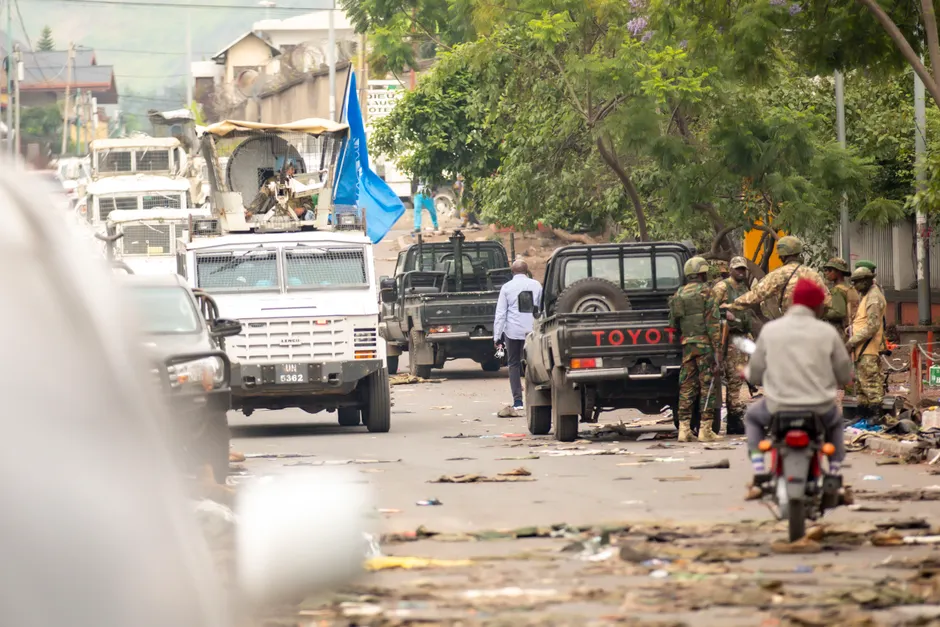
Heavy gunfire broke out across Somalia's capital, Mogadishu, as security forces clashed with hundreds of protesters demanding an end to President Hassan Sheikh Mohamud's rule. According to protest organizers, people died in the confrontations, though exact numbers were unclear immediately after. These clashes are the latest episode in a political crisis that traces back to problems with Somalia's electoral process.
The security forces opened fire on demonstrators who had gathered to voice opposition to the current government. A protest leader said some participants were killed, though precise casualty figures remained uncertain.
The Electoral Context
The current unrest didn't happen overnight. It builds on months of tension that began when Somalia's scheduled elections were repeatedly delayed. During those earlier delays, security forces also fired on protesters demanding that voting happen on time. Those demonstrations showed widespread frustration with how the political leadership was handling the democratic process.
Hassan Sheikh Mohamud became president in an election held in Mogadishu. He had previously held the job from 2012 to 2017, which illustrates a common pattern in Somali politics: former leaders cycle back into power as the country struggles with unstable institutions.
During his first time as president, Mohamud dealt with major challenges: the ongoing conflict with the militant group al-Shabaab, rebuilding government institutions, and navigating Somalia's complex clan-based political system. His return to office raised hopes that his experience could help address these long-standing problems.
Security Force Response
When Somali citizens protest, the government's response follows a predictable pattern: security forces are deployed to disperse crowds, often with lethal results. This has happened repeatedly in recent Somali political history.
The use of live ammunition against civilians suggests the government viewed the demonstrations as a direct threat to its hold on power. This reflects a deeper reality: central authority in Somalia is fragile, and political legitimacy is constantly contested. When institutions are weak, rulers often resort to force.
Hassan Ali Khaire, who previously served as Prime Minister, represents part of the political elite that has struggled to build functional government systems capable of handling dissent peacefully.
Broader Political Dynamics
Somalia's political system is fragmented. Regional authorities, clan leaders, and the central government all compete for influence and power. The president's authority, while written into the constitution, actually depends on holding together delicate political coalitions that can shift based on economic interests and security threats.
The current protests fit into this pattern of structural instability. Opposition groups have repeatedly challenged the fairness of elections, pointing to delays, irregularities, and weak international oversight. These concerns resonate strongly in Mogadishu, where ordinary people experience the cost of political chaos directly—through violence and economic hardship.
International actors, including the African Union Mission in Somalia (AMISOM) and UN agencies, have significant influence over Somalia's politics. However, their ability to mediate local disputes is limited by the tangled web of local interests and the ongoing threat from al-Shabaab.
Historical Patterns and Precedents
This cycle has played out before. In 2021, frustrated citizens took to the streets over delayed elections, and security forces met them with force. The pattern has become routine: elections are delayed, people protest, government uses force to break up demonstrations. This isn't a string of disconnected incidents—it reflects fundamental failures in how Somalia's government is structured and functions.
The repeated cycle suggests that Somalia's current institutions lack both the credibility and the capacity to manage political transitions without violence. Each time the cycle repeats, public trust in democratic processes erodes further, and authorities become more likely to rely on force to maintain control.
Regional Implications
What happens in Mogadishu affects more than just Somalia. The country is strategically important for East African security: it hosts international military missions and is where many countries test counterterrorism strategies. Political instability in the capital complicates these broader efforts.
Neighboring countries—especially Kenya and Ethiopia—have major interests in Somalia's politics. Both have invested significantly in supporting particular political factions and protecting their own borders from security threats. The current unrest may force these countries to reassess their strategies.
Looking Forward
The immediate problem facing President Mohamud is containing the current unrest while addressing the legitimate grievances that fuel opposition. This requires balancing security concerns with the need to maintain some credibility as a democratic leader.
The international community faces its own dilemma. Supporting the government risks appearing to endorse the use of force against civilians. But backing opposition demands could destabilize an already fragile state.
The broader context here is troubling: Somalia's history suggests that without real changes to how government actually works, the country will likely see more cycles of this violence. Each new eruption further damages both democratic institutions and long-term stability. Without fundamental reforms—like building institutions that can actually manage dissent through dialogue rather than force—Somalia appears trapped in a pattern where periodic political violence becomes almost inevitable.
The pattern of delayed elections, street protests, and security force crackdowns points to a deeper problem. It's not a weakness that can be fixed with the next election or the next president. It's a structural issue: Somalia's governing institutions lack the legitimacy and the actual capacity to manage political change peacefully. Until that changes, expect this cycle to repeat.