How Europe's New Energy Strategy Will Shape Markets in 2026

How Europe's New Energy Strategy Will Shape Markets in 2026
Europe's economy in 2026 will depend less on decisions made by European policymakers and more on forces beyond the continent's control, according to TD Securities analysis. This reflects a fundamental shift: since Russia invaded Ukraine in 2022, Europe has completely reshaped how it gets energy and buys goods. Those changes are now permanent features of the market landscape.
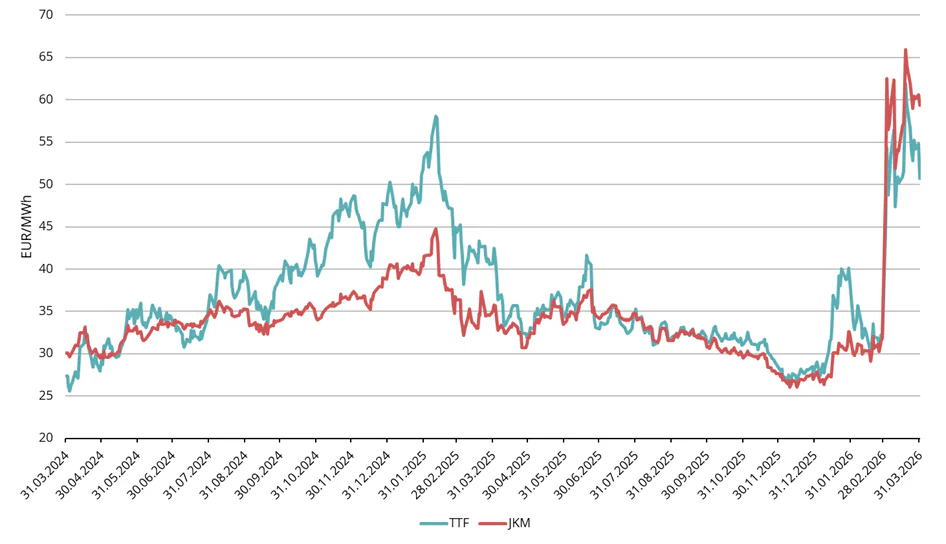
The clearest sign: Europe today uses less natural gas than it did before Russia's invasion. For decades, demand for gas only went up. That trend has broken. Gulf states now supply Europe with energy, but in a very different way than Russia once did—and that matters for both security and markets.
The Numbers Behind Europe's Energy Turnaround
Natural gas consumption has fallen from pre-2022 levels. Two things drove this: higher prices made Europe use less gas, and factories invested in efficiency measures that cut their gas needs. Heavy industrial users—chemical plants, steelmakers, aluminum producers—either cut production, moved operations abroad, or switched to different heating systems.
At the same time, Europe completely rewired where it gets energy. New liquefied natural gas (LNG) terminals appeared across European ports. LNG is natural gas cooled until it becomes liquid so it can travel by ship. These terminals now receive shipments from Qatar, the United States, and other countries. The infrastructure is built to last: the long-term supply contracts typically lock in for 15 to 20 years.
But the Gulf's role differs from Russia's old position. Russia controlled pipeline valves that could be shut off for political reasons. Gulf LNG operates differently: cargoes move through global markets where prices determine where the gas goes—to Europe, Asia, or elsewhere. Political pressure matters less when supply flows through open markets rather than a single government's pipelines.
Why Europe's Options Are Limited by the Outside World
When TD Securities says external forces will shape 2026, they mean several things. The European Central Bank sets interest rates with one eye always on what the U.S. Federal Reserve does, because the dollar dominates global finance. Energy prices—now set globally rather than by one supplier—influence how much inflation Europeans expect, which affects spending and government budgets.
China's economy matters more to European companies than European consumers' own choices do. German carmakers, Italian luxury producers, and Dutch tech equipment makers all depend on Chinese demand. Europe's leaders cannot change that.
European governments also face hard limits on how much they can spend. Bond markets—the global investors who lend to European governments—set the terms. Italy's debt burden and France's deficits interact with worldwide investor confidence in ways that restrict what these governments can actually do.
The broader context here is worth stepping back for: Europe completed one of the fastest energy infrastructure rewires in modern industrial history. In under four years, the continent untangled itself from Russian gas dependence. That required absorbing real economic costs upfront—higher energy prices, factory closures, investment in new equipment. The political commitment to pay those costs for long-term security was stronger than many market watchers expected when this began.
What This Means for Bond and Stock Markets
European government bond yields now move differently than they did before 2022. Budget priorities have shifted: governments now spend heavily on defense and energy infrastructure, which means less money for other things. This changes which bonds look attractive to investors.
Corporate credit markets—the market for company debt—also reflect Europe's new energy costs. Companies that cut gas use or switched fuels have stronger credit profiles. Companies still dependent on expensive gas face permanently higher costs. This split between energy-efficient and energy-intensive firms has become a lasting factor in how investors pick corporate bonds.
The euro's value also reflects Europe's improved position on the global stage. LNG imports cost more than Russian pipeline gas did in 2021, but the arrangement is more stable. Markets now value that stability.
What's worth flagging: European stock markets have clear winners and losers from this energy shift. Utilities that built renewable capacity and energy storage early gained competitive advantage. Industrial companies that retrofitted their operations or switched fuels outperform rivals that delayed. Chemical companies face the starkest adjustment: they lost access to cheap Russian gas as a raw material. Some production has moved to places with cheaper energy. The chemical companies still operating in Europe need either premium pricing or superior efficiency to survive—or both.
Banks also benefit. They finance the massive infrastructure being built: solar farms, wind projects, LNG terminals, power lines connecting countries. Project finance teams stay busy for years.
New Risks, Different Shape
The Gulf's role as supplier introduces different risks than Russian dependence did. The Strait of Hormuz—the narrow waterway through which much Gulf oil and LNG passes—is a potential chokepoint. But Europe feels this pressure through global markets, not bilateral relationships. If Hormuz tensions spike, all LNG prices rise globally.
Weather now influences European energy costs more than it did when pipelines supplied Russian gas. LNG ships respond to seasonal demand swings across multiple continents. Asian winters, American summer cooling demand, and European seasons all affect the price Europe pays. That creates more volatility.
European companies also shifted how they manage currency risk. Russian gas was priced in euros and rubles. LNG is priced in dollars. Companies now need different hedging strategies—insurance against currency swings—because their energy bills come in dollars.
The 2026 outlook rests on these permanent structural changes. Europe paid a cost to reduce energy vulnerability. Markets have priced in the view that this trade-off—paying more for energy but gaining independence—increased Europe's long-term stability. That matters for how investors value European assets.