Justice Alito's Oil and Gas Holdings Under Scrutiny Ahead of Major Climate Case
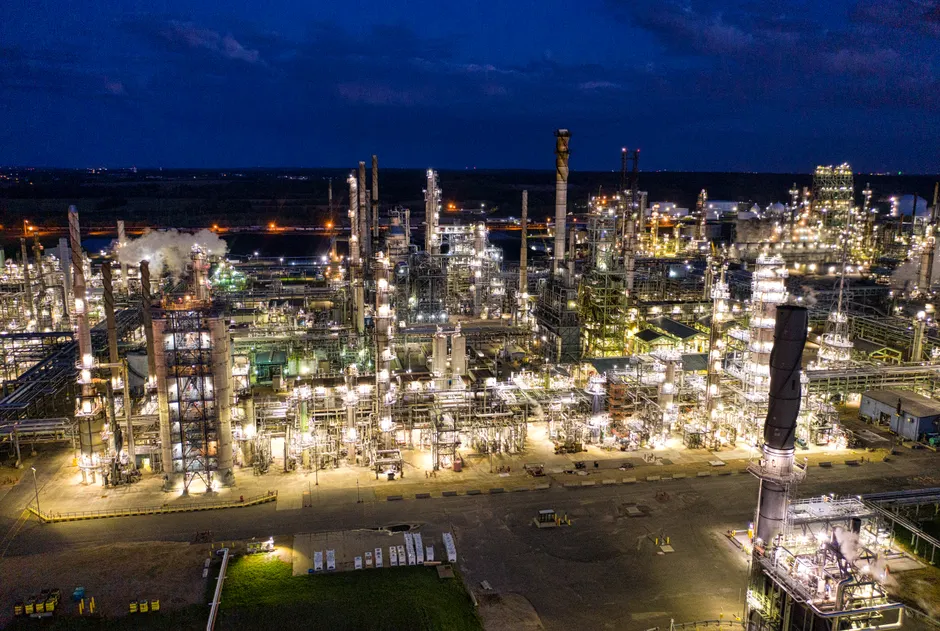
Justice Samuel Alito gained between $390,000 and $2.9 million from his oil and gas holdings between 2005 and 2024, according to an analysis by the judicial watchdog group Court Accountability, shared exclusively with The Guardian and published on August 11, 2026.
The analysis, authored by Court Accountability co-founder Lisa Graves, examined Alito's financial disclosures from the time of his nomination to the Supreme Court by George W. Bush in 2005 through 2024. Even at the most conservative end of the estimates, the findings indicate Alito accrued nearly $400,000 from fossil fuel interests over that two-decade span. His reported assets, excluding his home and other personal property, grew from approximately $1.1 million in 2005 to between $3.4 million and $8.4 million by 2024.
The bulk of Alito's oil and gas gains trace to a property in Grady County, Oklahoma, in which his wife Martha-Ann Alito holds a mineral interest — meaning a legal right to profit from the oil, gas, or other resources extracted beneath the land. Martha-Ann Alito agreed to lease the plot to Citizen Energy, a private oil and gas company. Alito reported two large payments from rental income on the property, in 2019 and 2022, each yielding between $100,000 and $1 million.
Graves said Alito may have undervalued the Oklahoma property in his disclosures, continuing to report its value at $100,000 to $250,000. In 2017, a relative of the Alito family sold an adjacent plot in Grady County for $800,000, which Court Accountability cites as a comparable data point suggesting the reported valuation may understate the property's market worth.
The findings arrive as the Supreme Court prepares to hear oral arguments on October 5, the opening day of its new term, in a case brought by Suncor Energy and ExxonMobil. The oil companies have asked the justices to rule that federal law prevents lower levels of government — states, cities, counties — from filing lawsuits against fossil fuel producers for the climate-warming effects of their products. The Trump administration, siding with the oil companies, has requested ten minutes of argument time in the case.
Court Accountability and other advocacy groups have called for a Senate committee to investigate Alito and urged him to recuse himself — that is, to step aside from deciding a case due to a potential conflict of interest — from the Suncor/Exxon case, noting that he is the sole Supreme Court justice with holdings in energy companies. Alito and the court have rejected those calls. In May 2026, a Supreme Court spokesperson told NBC News that Alito is not required to recuse himself from the Suncor lawsuit because his holdings do not include Suncor or ExxonMobil directly. Supreme Court ethics rules focus specifically on investments in companies named as parties in cases before the court.
Graves argues that Alito's oil-tied wealth provides grounds to question whether he can impartially weigh in on cases affecting the entire fossil fuel sector, even when the specific companies in his portfolio are not named parties. The Guardian contacted the Supreme Court and Alito for comment on the Court Accountability analysis.
Prior reporting adds context to Alito's energy-sector holdings. As of January 2026, Alito owned $15,000 or less in ConocoPhillips stock, according to Inside Climate News. He recused himself from 10 cases during the current Supreme Court term and has recused himself 53 times over his tenure on the court.
The broader context here is a judiciary whose recusal standards turn on a narrow, name-based test for financial conflicts rather than a sector-wide one. Under the current framework, a justice may participate in a case with sweeping implications for an industry from which they have derived substantial personal income, provided the specific corporate parties in the litigation do not appear in their portfolio. Think of it as a system designed to catch direct conflicts — a justice owning stock in a company that is suing or being sued — while leaving indirect but potentially significant ones unaddressed. The Suncor/Exxon case is precisely such a dispute: its outcome will shape the legal exposure of fossil fuel producers across the United States, yet Alito's financial interests lie in the same sector whose regulatory and liability landscape the case will help define.
Whether that structural gap between ethics rules and economic exposure will pressure Congress or the Judicial Conference — the policymaking body for the federal courts — to revisit recusal standards is an open question. What the Court Accountability analysis establishes is a quantitative baseline: a sitting justice derived up to $2.9 million from the industry whose legal liabilities he may soon adjudicate, and the existing ethical architecture does not require him to step aside.


