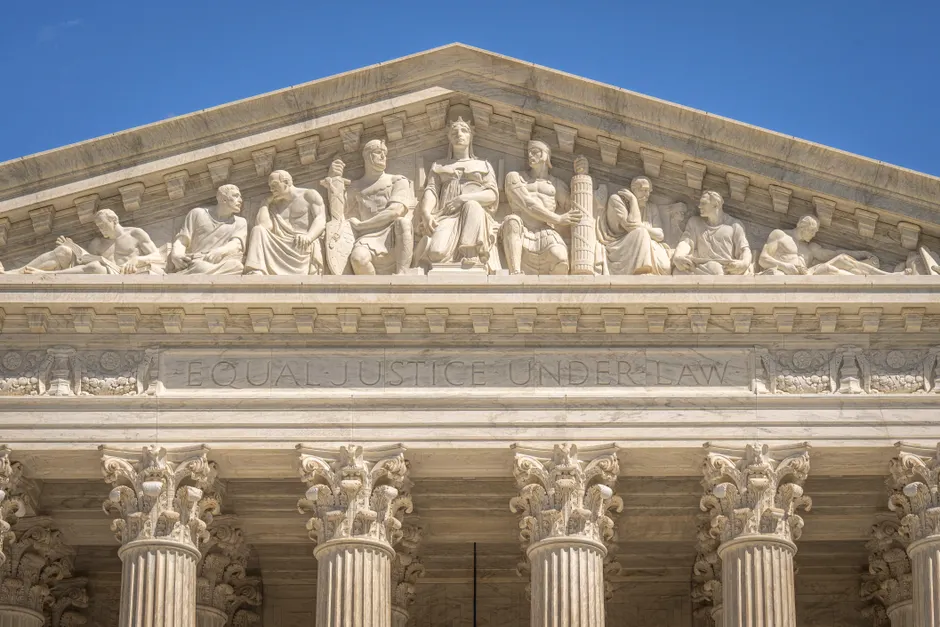
Supreme Court Again Rejects Trump's Bid to Revisit E. Jean Carroll Verdict

The US Supreme Court denied President Donald Trump's request for a rehearing in Trump v. Carroll (No. 25-573) on August 17, 2026 — the second time the justices have refused to revisit the 2023 civil verdict that found him liable for sexually abusing and defaming writer E. Jean Carroll (Al Jazeera; SCOTUSblog).
The denial appeared on the Court's August 17 order list, which cleared 33 pending requests in a single batch with no written explanation. That practice is standard when the justices act on rehearing petitions during their summer recess (Al Jazeera). The case originated in the Second Circuit (No. 23-793), whose decision was issued on December 30, 2024 (Supreme Court docket).
A rehearing petition is essentially a request that the Court reconsider a decision it has already made. Trump first asked the Supreme Court to take up the case on November 10, 2025. His petition challenged the trial court's decision to admit what he called Carroll's "impermissible propensity evidence" — testimony about prior behavior that, Trump argued, should not have been allowed because it could lead jurors to believe he had a pattern of misconduct (petition and appendix). The justices declined to hear the appeal in June 2026, and Trump then filed a request for rehearing of that denial. The August 17 order rejects that rehearing request (Al Jazeera).
The 2023 jury verdict held Trump liable for $5 million in damages tied to statements he made in 2022, when he called Carroll's allegation a "hoax" and a "con job" in a social media post. The jury found him liable for sexual abuse and defamation — the legal term for publishing a false statement that harms someone's reputation (Al Jazeera). After the Supreme Court declined to hear Trump's appeal in June, Carroll collected the $5 million judgment plus accrued interest, bringing the total payout to approximately $5.8 million (Al Jazeera).
Carroll's attorney, Roberta Kaplan, stated that the jury's unanimous verdict is now final and cannot be challenged in any court (Al Jazeera). The litigation between Trump and Carroll began in 2019, when Carroll published an excerpt from her memoir alleging that Trump had raped her in a Bergdorf Goodman department store dressing room in Manhattan in 1996 (Al Jazeera).
The $5 million verdict is one of two separate defamation suits Carroll has won against Trump. A second jury awarded Carroll $83.3 million in a 2024 lawsuit, and Trump is currently appealing that judgment to the Supreme Court, arguing that presidential immunity — the legal doctrine that shields a president from certain lawsuits arising from official acts — protects statements he made while in office (Al Jazeera).
The broader context here is the legal architecture Trump has built around presidential immunity as a litigation strategy. The $5 million case turned on statements Trump made in 2022 as a private citizen, which offered no immunity defense. The $83.3 million appeal, by contrast, targets statements made while Trump was president, placing it squarely within the immunity framework the Supreme Court established in its 2024 ruling on presidential immunity in the election interference case. If the Court applies that doctrine strictly, the second Carroll appeal raises questions about the scope of immunity for public statements made by a sitting president about a private citizen.
The August 17 denial does not affect the $83.3 million appeal, which remains pending before the Court. What the order does settle is the finality of the first Carroll verdict. With the rehearing petition denied and the judgment collected, that case is procedurally exhausted.