How the 2014 Ebola Epidemic Changed Global Health Security

The Outbreak That Changed Everything
The Ebola epidemic that swept through West Africa from 2014 to 2016 killed more than 11,000 people across Guinea, Sierra Leone, and Liberia. But its impact went far beyond the death toll. The outbreak stressed-tested the entire global health system — the networks of hospitals, agencies, and protocols meant to catch and stop diseases before they spread. What came out of that crisis was a precise record of what worked, what failed, and a wave of institutional reforms that the international health community still builds on today.
Understanding what actually happened during those three years matters now, because the same gaps that allowed Ebola to spread unchecked are still present in many parts of the world. The challenge remains: can we catch an outbreak before it becomes a pandemic?
How It Started: The Role of Misdiagnosis
The epidemic's opening chapter hinges on a diagnostic failure — a failure that was entirely predictable.
Research from the CDC confirms that early Ebola cases in Guinea were not recognized as Ebola. Instead, they were mistaken for other common febrile illnesses — diseases like malaria that produce similar fever and symptoms. By the time the virus was correctly identified, the chains of transmission had already seeded neighboring countries.
This diagnostic lag is a recurring vulnerability. Many resource-limited health systems lack the molecular diagnostic tools — essentially, the laboratory equipment and tests needed — to rapidly distinguish Ebola from malaria, Lassa fever, or other hemorrhagic fevers. Guinea's delay was not an exception caused by carelessness; it was predictable because the infrastructure was missing. That predictability is what makes what came next so significant.
The Four-Pillar Response
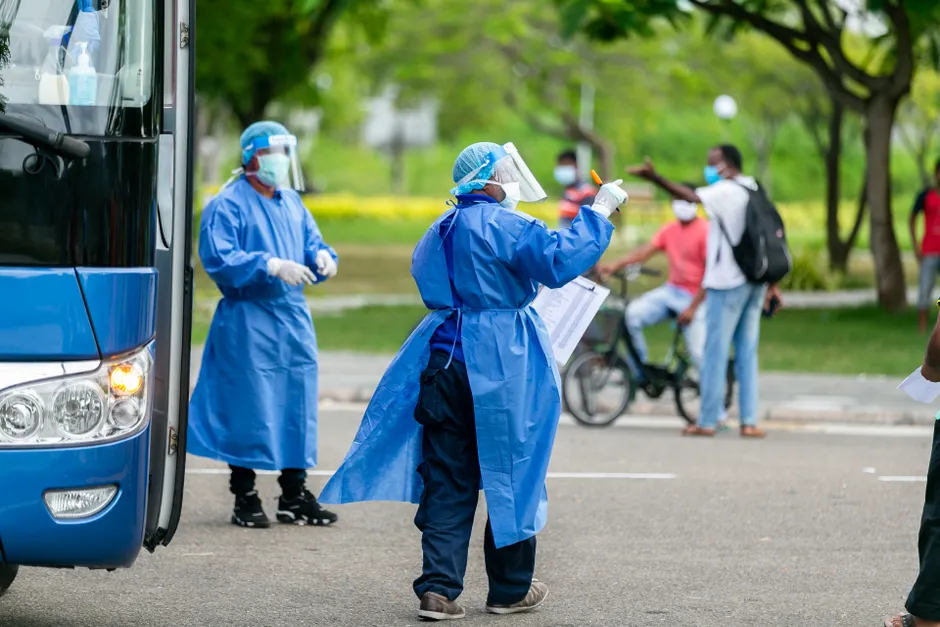
Once the epidemic was recognized at scale, the CDC coordinated with the World Health Organization and a coalition of international partners to construct a containment effort built on four key strategies.
The first was case management — identifying people with confirmed Ebola and isolating them to prevent onward transmission. The second was contact tracing: tracking down and monitoring anyone who had been in contact with an infected person, before those contacts developed symptoms. The third was early supportive care. Ebola is a virus; there is no cure. But doctors learned that providing fluids, electrolyte management, and treatment for secondary infections could keep patients alive longer — sometimes long enough for their immune system to fight back. That meant lower death rates.
The fourth pillar was perhaps the most culturally complex: social mobilization. In the affected region, traditional burial practices involved direct contact with the deceased — a transmission pathway perfectly suited to a virus like Ebola. Shifting those practices required sustained engagement with communities, not orders from outside. It required trust, explanation, and respect.
Each pillar addressed a specific transmission vector. Together, they are what epidemiologists call a "proven public health strategy" — not new, but demanding to execute in field conditions that included insecure environments, broken infrastructure, and communities skeptical of outside responders.
The RITE Strategy: Pushing Power Down
One of the most operationally significant adaptations to emerge from the Liberia response was something called the Rapid Isolation and Treatment of Ebola (RITE) strategy. Documented by the CDC, RITE was designed to address a structural bottleneck: remote and rural outbreak responses depend on local capacity that frequently does not exist when a crisis begins.
The basic idea was decentralization. Instead of waiting for central governments or international surge teams to arrive from the capital, RITE gave county-level health teams the protocols, training, and decision-making authority to investigate and lead coordinated outbreak responses independently. It was rapid deployment, community-level triage, and power pushed down to frontline officials.
This reflects a broader insight about how health systems work. Centralized response models — where expertise flows from capital cities or international bodies outward — have a built-in lag. The farther a community sits from that center, the longer the delay. RITE was designed as a counter-model: push the protocols and the authority down to the county level. It became a template that subsequent outbreak responses in sub-Saharan Africa drew from, including later Ebola responses in the Democratic Republic of Congo.
The broader context here is that other regions have learned similar lessons. In Southeast Asia in the early 2000s, after the original SARS outbreak, countries like Vietnam discovered that national-level surveillance bottlenecks consistently delayed local action. But it took years for that insight to spread. In West Africa, RITE compressed that learning cycle into the middle of the crisis itself.
The Vaccine Achievement
The epidemic's scientific legacy extends into the lab. The urgency of 2014–2016 accelerated the development of an Ebola vaccine that had been stalled in early-stage development for over a decade with no commercial incentive to move it forward.
The vaccine, called ERVEBO, targets the specific Ebola strain responsible for the West African epidemic. It was field-tested during the crisis itself, including a landmark trial in Guinea that demonstrated high efficacy under real-world outbreak conditions. Wellcome committed over £41 million to support the global response following the epidemic, funding a pipeline that produced ERVEBO and sparked research into vaccines targeting other Ebola species — notably Sudan ebolavirus, for which no licensed vaccine yet exists.
This gap is significant. When Sudan ebolavirus outbreaks occurred in Uganda in 2022, ERVEBO offered no protection. The vaccine story illustrates a deeper problem in pandemic preparedness: waiting for an outbreak to fund expensive Phase III clinical trials means the vaccine arrives mid-crisis or too late. The Coalition for Epidemic Preparedness Innovations (CEPI), launched in 2017 partly because of lessons from West Africa, was built explicitly to break that cycle by funding vaccines against priority pathogens before emergencies occur.
What We've Learned
Several durable conclusions emerge from the full 2014–2016 record.
Early detection is not merely a surveillance question — it is an infrastructure and training problem at the primary care level. Guinea's diagnostic delay cascaded into everything that followed. Investments in point-of-care molecular diagnostics and clinician training for hemorrhagic fever recognition in endemic zones directly reduce the time between spillover and containment.
Response capacity cannot be centralized. RITE demonstrated that surge models dependent on international or national teams reaching remote communities consistently arrive too late. Durable preparedness requires local capacity that already exists — trained personnel, protocols, and supply chains positioned at the county or district level before an outbreak occurs.
Vaccine development requires pre-epidemic investment. The ERVEBO timeline is a case study: waiting for an outbreak to fund late-stage trials means the vaccine arrives mid-crisis. CEPI exists to solve this timing failure.
Community engagement is not a supplementary communication task. Social mobilization was a core operational pillar, not an add-on. Outbreaks that collide with communities' burial, care, and trust frameworks require sustained, culturally-specific engagement that cannot be imported; it has to be built before the crisis.
The Work That Remains
The structural gaps exposed by 2014–2016 have not been fully closed. Health system strengthening in Guinea, Sierra Leone, and Liberia has moved forward unevenly. The Democratic Republic of Congo has faced repeated Ebola outbreaks, some involving Sudan ebolavirus strains outside ERVEBO's protective range. Global health security funding still rises sharply during emergencies and contracts during quiet periods, rather than remaining steady.
The operational and scientific frameworks built during the West Africa response — RITE, ring vaccination, integrated case management — constitute a genuine advance in how we contain outbreaks. Whether they endure depends on whether the institutions and funding structures that apply them survive the political cycles that govern global health budgets. That is the variable the scientific record cannot answer.