Wisconsin's Primary Sets Up a Swing-State Showdown: Progressive Hong vs. Republican Tiffany

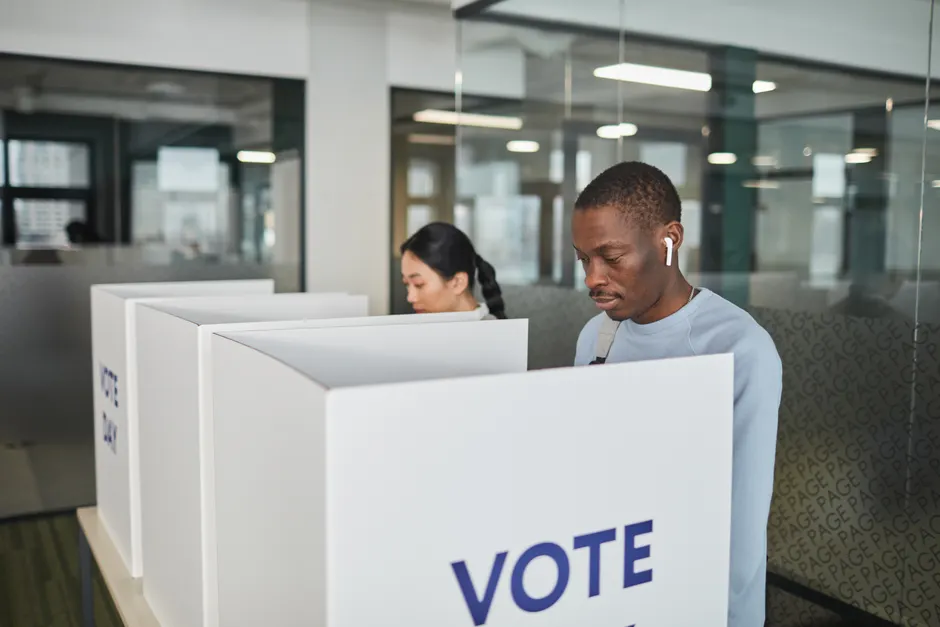
Wisconsin voters cast their ballots on Tuesday, August 11, 2026, in a partisan primary that shaped the November race for governor. Democratic socialist state lawmaker Francesca Hong led the four-way Democratic primary, while U.S. Representative Tom Tiffany secured the Republican nomination, with the Associated Press calling his race at 8:21 p.m. Eastern JSONline.
A partisan primary is an election in which each political party selects its candidate for the general election. Only voters registered with a given party can participate in that party's primary in some states, though Wisconsin holds open primaries where any registered voter can choose either party's ballot.
Hong, 37, is a chef, bartender, and former restaurant owner from Madison who was first elected to the Wisconsin State Assembly in 2020. She chose not to seek re-election to her District 76 seat in 2026, instead running statewide. A Marquette University Law School poll conducted in late July found her leading the Democratic field, and she held that position through primary day The Guardian.
Her platform centered on childcare for all, free school meals, and a one-year moratorium on new datacenter construction, a proposal with particular resonance given the infrastructure pressures tech investment has placed on Wisconsin communities. A moratorium is a temporary ban, meaning no new permits for datacenter projects would be issued for a full year. Her campaign, organized under the slogan "We Make Better Possible," described itself as a grassroots effort focused on working families and public services francescahong.com. During a 2026 Democratic primary debate in Milwaukee, Hong pitched herself as a unifying candidate capable of building bipartisan support Facebook/FrancescaHongWI.
The Democratic field saw significant turnover in the closing weeks. Incumbent Governor Tony Evers, a Democrat, is not seeking another term and endorsed Milwaukee County Executive David Crowley. Crowley's path to the ballot was itself turbulent: he had previously exited the race, re-entering on July 18 after Sara Rodriguez departed following campaign finance irregularities. Former Lieutenant Governor Mandela Barnes dropped out on July 31. The final four-candidate field consisted of Hong, Crowley, state senator Kelda Roys, and former state administration department head Joel Brennan The Guardian.
On the Republican side, Tiffany defeated challenger Dennis Williams to claim the GOP nomination Ballotpedia. Tiffany, who has represented Wisconsin's 7th Congressional District, was widely regarded as the likely nominee heading into the primary Wisconsin Examiner.
Hong's emergence as the Democratic standard-bearer carries clear general-election vulnerabilities. Republicans, led by Donald Trump, have already seized on her past social media commentary, including a tweet suggesting cancelling Thanksgiving and prior statements supporting defunding the police The Guardian. Those attacks will likely intensify in a state where margins for statewide office have been razor-thin across recent cycles.
The broader context here is a pattern visible across the 2026 Democratic primary map. In Michigan, Abdul El-Sayed, running on a progressive platform, won the Democratic primary for U.S. Senate in early August The Guardian. The simultaneous rise of candidates like Hong and El-Sayed suggests the Democratic base in the Midwest is gravitating toward candidates who combine economic populist messaging with unapologetically progressive social policy, even as party moderates worry about general-electability in swing states. Think of a swing state as a seesaw that can tilt either way depending on turnout and enthusiasm, which is why both parties invest heavily in places like Wisconsin.
Wisconsin's general election is scheduled for November 3, 2026. The Hong-Tiffany matchup will test whether a democratic socialist with a background in hospitality and grassroots activism can hold a swing-state governor's office for Democrats, or whether Tiffany's congressional profile and the Republican attack apparatus will prove decisive. The April 7 spring election already provided early signals about turnout dynamics, but the August primary is the first true read on voter enthusiasm heading into November PBS Wisconsin.