Honor's Robot Phone: A 200MP Camera on a Motorized Gimbal, Built Into a Smartphone
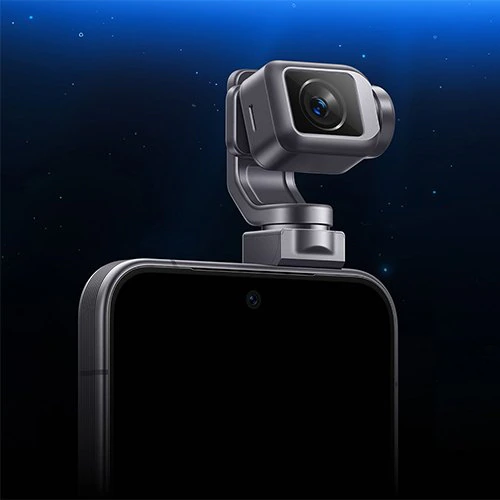
Honor launched its Robot Phone in China on August 12, 2026 — an Android smartphone whose standout feature is a main camera mounted on a motorized 3-axis gimbal that folds out from the back of the device. The Verge published hands-on impressions the same day.
A gimbal, for those less familiar, is a motorized mount that keeps a camera steady by counteracting movement along multiple axes — the same technology used in handheld camera stabilizers from companies like DJI. Honor's version is a 3-axis unit with nearly 360 degrees of movement, and the company claims it is the smallest gimbal in the world, smaller than DJI's Osmo Pocket compact gimbals. A plastic cover must be manually slid off before the camera arm unfolds automatically, triggered by software. Honor's official product page describes the system as pairing three-axis mechanical stabilization with an AI stabilization engine (Honor). The gimbal supports several tracking modes: FPV (first-person view), spin shot, super steady, and subject tracking that detects people and objects.
The main camera uses a 200-megapixel sensor with a 1/1.28-inch-type format — a sensor size that is reasonably large for a phone but smaller than the sensors in dedicated cameras. A 200-megapixel periscope telephoto (a lens design that folds the optical path sideways inside the phone body to achieve longer zoom) and a 50-megapixel ultrawide round out the rear array. Honor partnered with Arri, the company behind cinema cameras used in professional film production, to offer film-inspired looks and Arri's LogC3 format on the device.
Physically, the Robot Phone measures 9.6mm thick excluding the camera section and weighs 248g. The display is 6.3 inches. The device supports 120W fast charging. Prior to launch, the phone passed two final Chinese certifications (Memeburn).
Beyond the imaging hardware, the "Robot" branding extends to personality features. The device includes a chat interface powered by Honor's Yoyo AI assistant, and the gimbal-mounted camera can nod, shake its "head," and dance to music. Honor first unveiled a prototype of the robot phone concept on March 1, 2026, at which point Reuters described it as featuring an integrated motorized gimbal and artificial intelligence designed to interact with users (Reuters).
The specs describe a device stacking aggressive sensor hardware alongside a mechanical stabilization approach that no other smartphone currently ships. Two 200-megapixel sensors in a single device is unusual; pairing one of them with a motorized gimbal arm is unprecedented in a shipping phone. The 9.6mm body thickness (before accounting for the camera module) and 248g weight place this firmly in the large-and-heavy category, but not absurdly so for a device packing this much hardware.
The Arri partnership is the detail worth pausing on. Arri's LogC3 is a logarithmic encoding curve — a way of recording video that preserves more detail in shadows and highlights so that the footage can be color-graded (adjusted for color and tone) in post-production, rather than locking in a final look as most phones do. Bringing it to a smartphone sensor is not a gimmick; it signals Honor is positioning the Robot Phone for creators who intend to color-grade footage rather than accept baked-in looks. Whether the 1/1.28-inch sensor can deliver the dynamic range that makes LogC3 meaningful in practice is a separate question that hands-on testing will need to address over time.
The gimbal itself addresses a real constraint in smartphone video. Most phones rely on optical image stabilization (tiny physical lens adjustments) and computational methods (software-based frame analysis and cropping) to smooth out shaky footage. Both approaches crop the sensor frame and can introduce digital artifacts under aggressive motion. A mechanical 3-axis gimbal sidesteps those limitations entirely. The tradeoff is the physical assembly: a motorized arm with moving parts adds potential failure points, takes up internal space, and requires the manual cover-removal step before each use. Honor's claim that it is smaller than DJI's Osmo Pocket sets a concrete benchmark, though the Osmo Pocket is a dedicated device without a 6.3-inch display and battery stack behind it.
The "robot" personality features, the Yoyo AI chat interface, and the dancing camera are harder to evaluate from specs alone. They read as differentiation aimed at a consumer market that responds to novelty. Whether they have staying power or become features users disable after the first week is a question only extended use can answer.
What is clear is that Honor has shipped a device that combines several ambitious hardware choices into a single product: dual 200-megapixel sensors, a motorized gimbal, professional-grade color encoding, and 120W charging in a sub-10mm body. The Robot Phone is available now in China. International availability has not been announced.