Colombia Earthquake: Rising Death Toll and the Race to Reach Remote Chocó
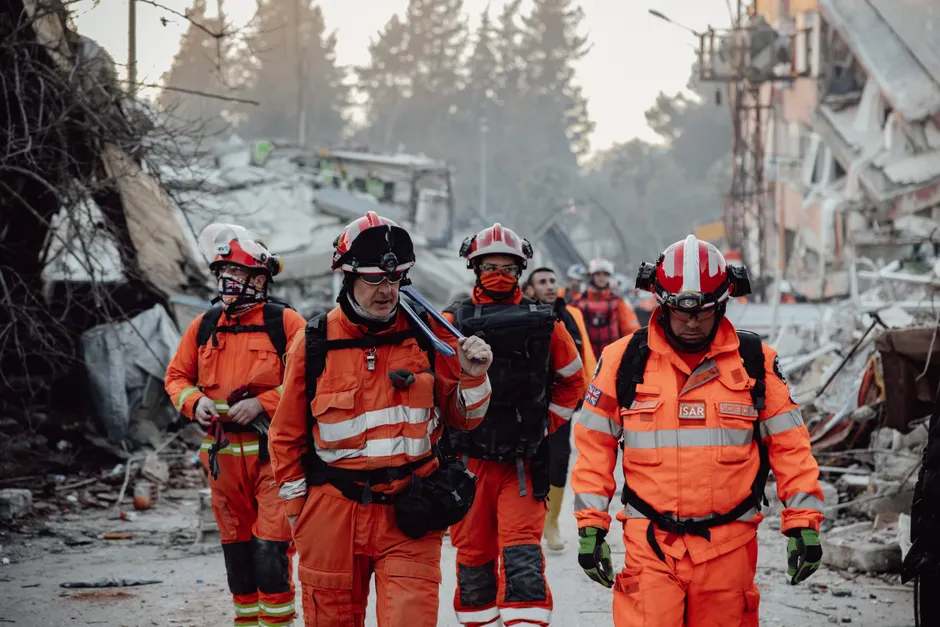
A magnitude 7.4 earthquake struck the department of Chocó in western Colombia on August 10, 2026, killing at least 254 people by the following morning. The Colombian government declared a national emergency, and international rescue teams — including Mexico's Topos Azteca brigade — have joined the search-and-rescue effort. Reuters
The death toll climbed fast. It went from an initial count of at least 20 reported on August 10 to 132 later that same day, before reaching at least 254 by the morning of August 11, according to Reuters. The same report indicated the toll was expected to climb further as rescue teams reached collapsed structures in more remote zones. Colombia's national government declared an emergency shortly after the quake, as reported by Al Jazeera. Reuters, Al Jazeera
The national disaster-response operation was announced on August 10 by Colombia's Unidad Nacional para la Gestión del Riesgo de Desastres (UNGRD) — the country's national disaster risk management agency — carried out under the leadership of President Abelardo de la Espriella. The quake's epicenter in Chocó places it in one of Colombia's most geologically active and infrastructure-fragile regions, where the Inter-American Development Bank has long flagged hospital and road-network vulnerability as a compounding risk in seismic events. UNGRD
Topos Azteca, the Mexican volunteer rescue group, arrived in Cali, Colombia to join the search-and-rescue operations. The brigade's leader was reported present in Cali, coordinating with Colombian authorities on the ground, per N+ Media's August 12 coverage. A Topos Azteca team member told N+ that "hay todas las posibilidades" of finding survivors, a posture consistent with collapsed-structure search protocols, which maintain hope within the initial 72-hour window after a quake. N+ Media, Canal Trece
The Topos Azteca brigade had already been in Colombia on August 10, according to N+ Media, meaning the Mexican team mobilized and deployed within hours of the earthquake's impact. Cali, situated roughly 300 kilometers south of Chocó's epicentral zone, serves as a logistical staging point for rescue operations pushing westward into the affected department, where degraded road infrastructure complicates access.
The broader context here matters for understanding the speed and character of the response. Chocó is one of Colombia's least-connected departments, with limited paved-road networks and dispersed rural populations along the Pacific coast. A 7.4-magnitude event in this geography compounds search-and-rescue challenges that urban epicenters do not face: longer travel times for teams, satellite-dependent communications where cellular infrastructure fails, and a thinner hospital network to absorb the injured. The death toll's rapid trajectory from 20 to 254 within roughly 24 hours reflects these access constraints as much as the quake's physical intensity.
The deployment of Topos Azteca also carries a diplomatic dimension worth noting. The brigade, composed of civilian volunteers, functions as a de facto instrument of Mexican soft power — the use of cultural and humanitarian influence rather than military or economic pressure — in Latin American disaster response. Its presence in Colombia signals bilateral cooperation channels that operate independently of formal intergovernmental disaster-assistance frameworks, which typically require longer activation timelines. For the de la Espriella administration, the arrival of international rescue teams within 48 hours also serves a domestic political purpose, showing that the state can mobilize external resources even when national infrastructure is strained.
The UNGRD's announcement framed the response as a coordinated national operation under presidential authority. That framing places the political chain of command with the presidency, a posture consistent with Colombia's disaster-management statute, which designates the head of state as the ultimate decision-maker for national emergency declarations. UNGRD
What comes next hinges on two factors: whether rescue teams can penetrate Chocó's remote zones before the 72-hour survival window closes, and whether the death toll stabilizes or continues its steep upward trajectory. Reuters reported that the toll was expected to rise, a forecast consistent with the pattern observed in comparable seismic events in difficult terrain, where initial casualty counts undercount victims in inaccessible collapse sites. The involvement of international teams like Topos Azteca may extend search operations beyond what Colombian national resources alone could sustain, though no verified figures on additional international deployments are available at this stage. Reuters


