Europe's Summer of Fires: Arrests, Evacuations, and Old Munitions

France's interior ministry reported on 14 August that 474 people, including 183 minors, had been detained on suspicion of starting wildfires since 1 July. About 70% of those arrested were suspected of deliberate arson — meaning they intentionally set fires — while the rest were accused of accidental fire-starting, such as negligence with campfires or discarded cigarettes. The figures mark a sharp rise from earlier reporting: Interior Minister Laurent Nunez announced on 31 July that more than 300 people had been arrested, and the BBC reported on 8 August that the ministry had confirmed 420 detentions. The latest figure of 474, confirmed by the French interior ministry and reported by both The Guardian and the Insurance Journal, replaces those earlier counts.
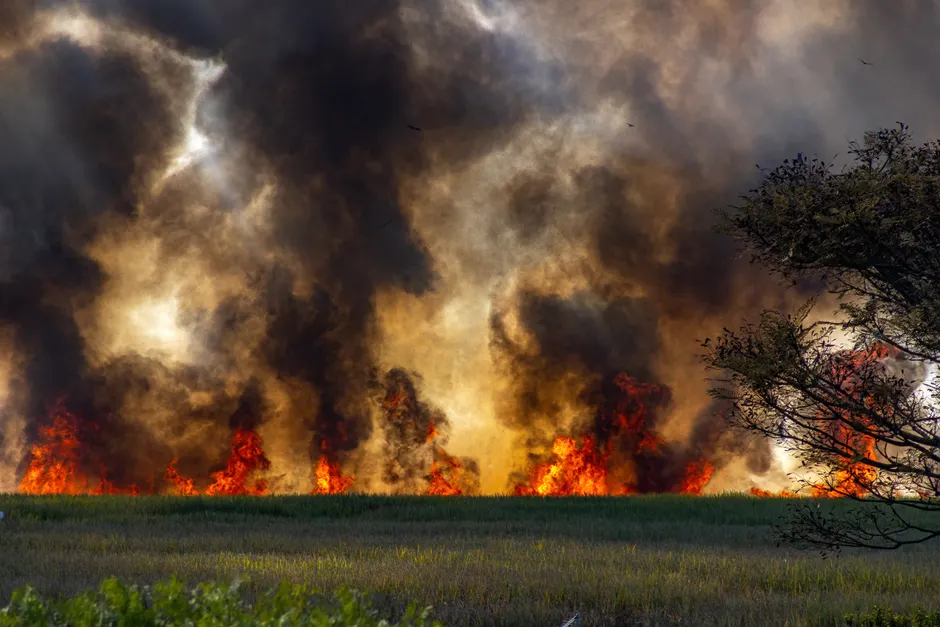
The detentions span a fire season that has pushed southern France's emergency capacity to its limits. A 15-year-old boy was detained in connection with a fire near Bordeaux airport that killed two firefighters in July. In the Landes region, authorities evacuated more than 525 people from the village of Luglon after a wildfire consumed almost 1,100 hectares (roughly 2,700 acres) of pine forest in under 24 hours. Regional official Gilles Clavreul said 500 firefighters were deployed to the Luglon blaze, supported by six water-dropping aircraft.
Luglon sits roughly 100 kilometres south-east of Arcachon Bay and the Lège-Cap-Ferret peninsula, where two major wildfires destroyed more than 50,000 hectares in late July and forced the evacuation of up to 220,000 people. That earlier disaster set the stage for the current enforcement posture: French authorities are treating wildfire ignition, whether intentional or negligent, as a criminal matter rather than a routine civil offense.
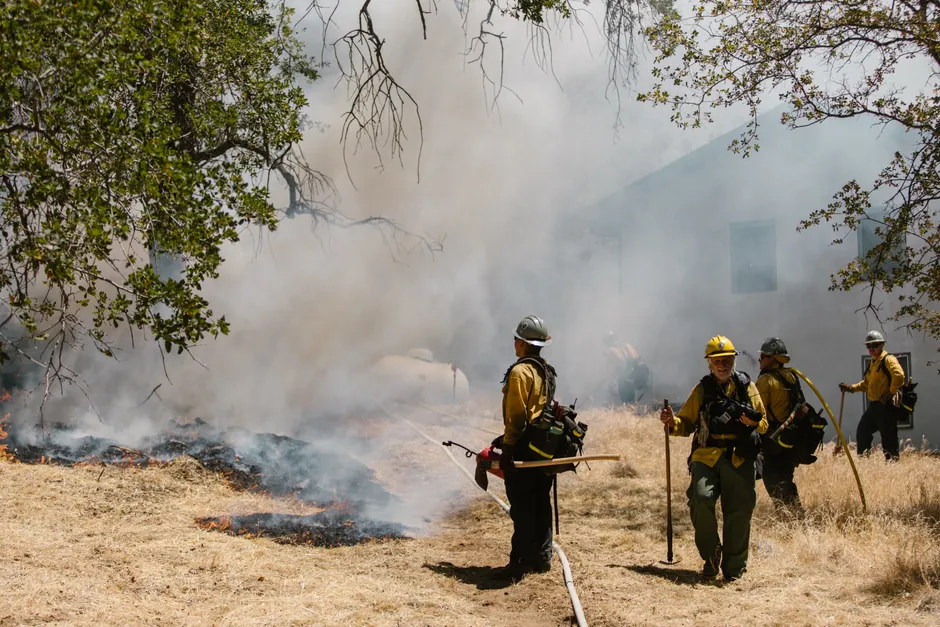
The crisis extends well beyond France's borders. In Germany, more than 2,000 people fled their homes after a wildfire in the Hürtgen forest spread to within a few hundred metres of the village of Gey. Mona Neubaur, deputy premier of North Rhine-Westphalia, said the fire threatened to hit the local community hard. The Hürtgen forest, near the Belgian border, presented an unusual operational hazard: unexploded Second World War ordnance — buried munitions that never detonated — exploded as flames advanced, forcing firefighters to withdraw. The German news agency dpa reported that explosions from detonating munitions kept ground crews out, with German army tanks and helicopters providing support. The Hürtgen forest was the site of intense fighting during the winter of 1944–45, leaving a legacy of buried explosives that now complicates modern emergency response.
In Croatia, a wind-driven wildfire descended on the tourist town of Lokva Rogoznica on the Dalmatian coast, engulfing houses and forcing roughly 1,000 people to evacuate. Several dozen people were injured. Of 36 people treated by ambulance services in the nearby city of Split, 14 were admitted to hospital. The Dalmatian coast is at the height of its summer tourist season, a period during which local economies depend heavily on continued visitor flows.
The simultaneous outbreaks across France, Germany, and Croatia place several strands of pressure on European emergency coordination. The French arrest figures, with their high proportion of juvenile suspects, point to a deterrent strategy that prosecutors will need to sustain through the courts. The Hürtgen forest fire shows how unexploded ordnance can render standard wildfire suppression tactics inoperable, effectively ceding terrain to the flames until military assets can secure a perimeter. And the Croatian coastal fire, striking at peak tourist season, raises questions about evacuation capacity in densely occupied, wind-exposed Adriatic communities.
The broader context here is that what connects these episodes is not a single causal chain but a convergence of conditions: dry vegetation, high temperatures, and wind patterns that allow ignition, whether deliberate or accidental, to escalate rapidly into multi-front emergencies. France's interior ministry has not published a breakdown of how the 70% classified as deliberate arson was determined, nor has it detailed the charges being brought against detained minors. The gap between the 31 July figure of 300-plus arrests and the 14 August figure of 474 suggests detentions are continuing at a sustained pace as the fire season advances into late summer.