Croatia Battles One of Its Worst Wildfires on the Adriatic Coast

At least one person died and around 40 others were injured when a severe wildfire tore through Croatia's Adriatic coastline on the night of August 13 and the morning of August 14, 2026, forcing the evacuation of roughly 1,200 residents and tourists from villages near the city of Split. Reuters
The fire broke out near the village of Lokva Rogoznica on Thursday evening and advanced about six kilometres toward the tourist town of Omis, according to the BBC. Croatia's firefighting service (HVZ) issued official bulletins on August 14 confirming the blaze and reporting damage to buildings, as well as the evacuation of civilians from the threatened area. BBC HVZ
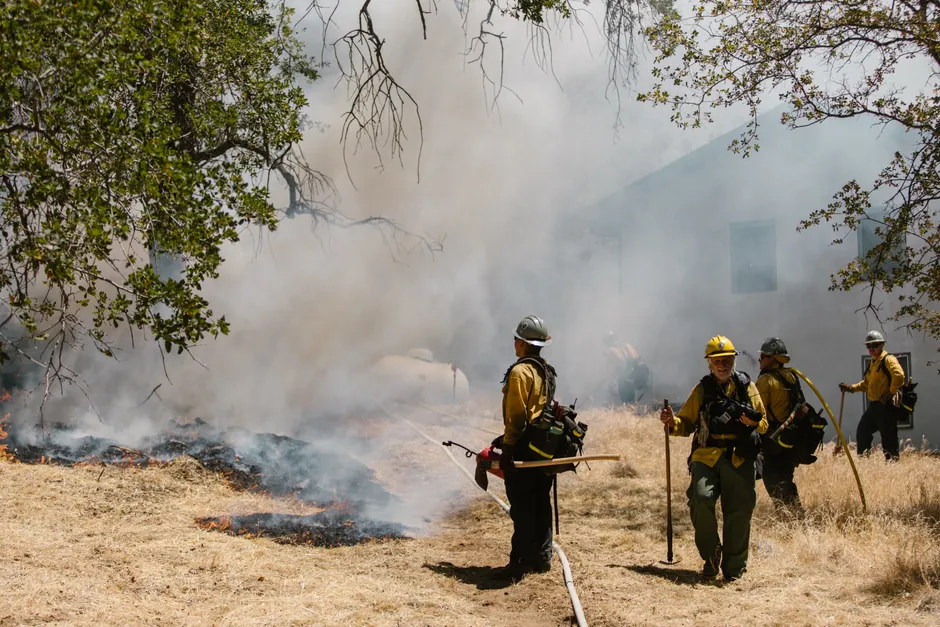
Croatia's fire chief, Slavko Tucakovic, described the blaze as "one of the worst" in the country's history. He said the firestorm consumed 1,000 hectares in just four hours, driven by strong winds. More than 300 firefighters were deployed overnight, with crews at times forced to retreat as the fire advanced. The fire struck villages near the Adriatic city of Split and caused extensive damage to homes and cars in pine forest-lined hillsides. BBC
Croatia's prime minister confirmed that 10 of the injured were in intensive care. Reuters, in an earlier dispatch, had reported at least 36 injured and roughly 1,000 evacuees, with at least seven seriously injured and 14 hospitalised. The later Reuters report revised those figures upward to one fatality, 40 injured, and 1,200 evacuated. BBC Reuters
The evacuation operation involved multiple layers of coordination. Four buses carrying evacuated civilians were dispatched to Omis, and a Croatian Navy (HRM) landing-assault ship was placed on standby in the port of Omis to potentially transport evacuees by sea if the situation required it. HVZ
Croatian Interior Minister Davor Božinović, speaking on the Pelješac peninsula on August 14, stated that the civil protection system functions well and deploys forces where they are most needed. He thanked firefighters of the Dubrovačko-neretvanska county and colleagues who arrived from other parts of Croatia for their response. Civil Protection Authority
The broader context here matters for understanding the operational challenges Croatian authorities faced. The Dalmatian coast is one of the Mediterranean's most fire-prone corridors during the summer months. Its steep hillsides are dense with highly flammable pine and maquis vegetation — the low, scrubby plant cover typical of the Mediterranean — and seasonal winds called the bura and jugo channel through coastal valleys. Together, these factors regularly produce the conditions Tucakovic described: firestorms capable of consuming vast acreage in a matter of hours. When winds push a fire through these corridors at a rate of roughly 250 hectares per hour, firefighters are often left with no option but to retreat and regroup, prioritising life safety over perimeter containment. The deployment of naval assets for potential maritime evacuation points to the specific geography of the Omis area, where the Cetina River gorge and coastal mountains can cut off overland escape routes.
The timing of the fire, in the peak of the Adriatic tourist season, added logistical complexity. Evacuating 1,200 people from a coastal area in August means managing a population mix of permanent residents and seasonal visitors who may lack local knowledge, language proficiency, or familiarity with evacuation procedures. The casualty figures, including the large number requiring intensive care, suggest that some evacuees or residents were caught in the fire's path before containment lines could be established.
The upward revision of casualty and evacuation figures between Reuters' initial and subsequent reports follows a familiar pattern in fast-moving wildfire incidents. Initial counts tend to reflect only those injured or evacuated in the earliest phase; as hospitals complete triage — the process of sorting patients by severity — and evacuation rosters are consolidated, numbers typically climb. The gap between the initial and revised figures, in this case roughly a 20% increase in the injury count and the addition of a fatality, falls within the range that early operational uncertainty would produce.
The simultaneous appearance of wildfires across Southern Europe, including Greece, places this event within a wider regional pattern of summer fire seasons that have grown more intense and more destructive over the past decade. Croatian authorities have not yet released a damage assessment, and the full extent of property destruction in the pine forest-lined hillsides above Omis has yet to be quantified.