Iran Signals Shift to Offensive Operations as US Ceasefire Deal Expires

Iranian authorities signaled a shift toward offensive military operations against the United States on August 17, 2026, as a ceasefire agreement between Tehran and Washington expired Al Jazeera. The agreement, formally called a Memorandum of Understanding (MoU), was struck in June 2026. It established a 60-day ceasefire and set up a framework to reopen the Strait of Hormuz — the narrow waterway at the mouth of the Persian Gulf — and to negotiate a final settlement Al Jazeera. The deal collapsed after fighting resumed and officially lapsed on August 18.
Brigadier General Yadollah Javani, head of the political bureau of the Islamic Revolutionary Guard Corps (IRGC) — Iran's elite military force answerable to the Supreme Leader — told Iranian state television that Iran's war efforts had been defensive but "might take on an offensive aspect" and warned opponents to expect "strategic surprises." Javani said IRGC forces were ready to take whatever action was needed to defend the country.
IRGC spokesman Hossein Mohebbi identified US and regional allies' infrastructure, including energy networks, power plants, and internet-connected systems, as potential targets if the US strikes Iranian civilian infrastructure. The threat extends to the broader region: Iran has warned Gulf states that any new US attack on its territory would trigger retaliation against critical energy infrastructure Reuters.
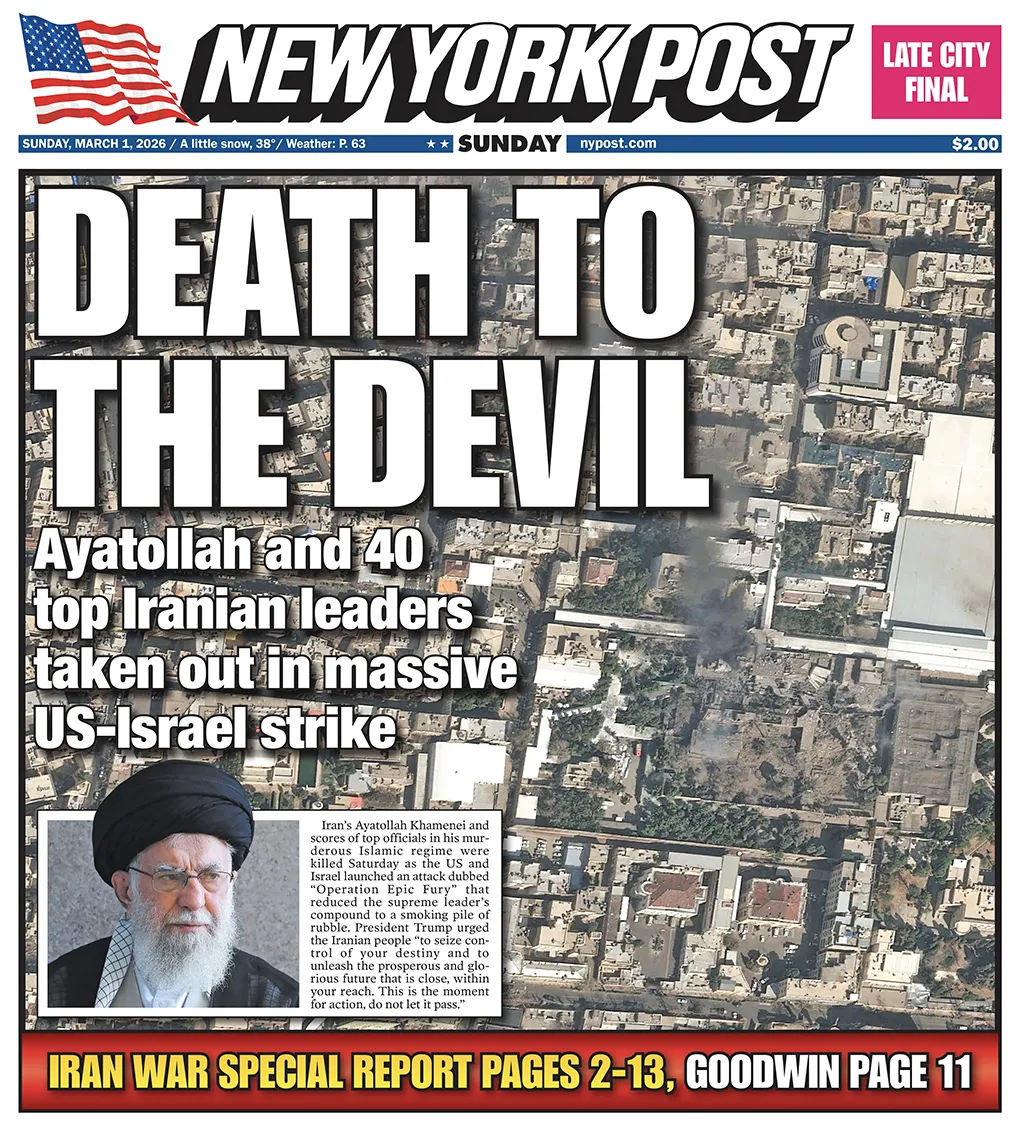
The leadership in Tehran was reshuffled in the days leading up to the MoU's expiration. Supreme Leader Mojtaba Khamenei appointed several IRGC veterans and confidants to key military and security positions in the week before August 17. Among them, Major General Ahmad Vahidi was elevated to commander-in-chief of the IRGC. Khamenei said Vahidi's appointment must represent a combination of "maximum deterrence" — the strategy of building such overwhelming threat capacity that an adversary is discouraged from attacking — with readiness for "powerful offensive operations against the enemy." Vahidi, for his part, claimed that Khamenei's leadership and the Iranian armed forces had managed to "bring to its knees the most heavily-armed army in world history," referring to the US and Israeli strikes on Iran launched on February 28, 2026.
On the US side, President Donald Trump reiterated on August 14 his claim that Iran had been defeated in the war while facing a naval blockade he described as a "wall of steel." Trump also said the Strait of Hormuz would "pretty soon" be declared US territory, though the White House later suggested the remark was intended as a joke. Two days earlier, on August 15, Trump said the United States would "soon" declare the strait its territory "after we finish defeating Iran" Al Jazeera; Fox News.
The Strait of Hormuz carries roughly one-fifth of global oil and LNG (liquefied natural gas) shipments and remains a flashpoint Reuters. As of early August 2026, Iran had halted most traffic through the strait while Washington maintained a blockade of Iran-related shipping and ports Reuters. The UAE reported that Iran attacked two vessels transiting Hormuz in mid-August, and traffic slowed further after the US threatened additional economic pressure on Tehran Reuters. The 2026 Iran war has disrupted global travel and trade, halted flights across the Middle East, and forced shipping reroutes to avoid the region Britannica.
Under the June MoU, Iran was to clear mines from the Strait of Hormuz and allow ships to pass "with no charge" for 60 days Al Jazeera. By mid-August, however, little apparent progress had been made toward that goal Fox News. In early August, US and Iranian officials were reported to be discussing a proposed Hormuz deal that would give Iran control of inbound traffic through the strait Reuters. Iran's position has been that no vessel can enter Hormuz without its permit and that the strait will reopen only when the US accepts Iran's conditions Mehr News.
Iran's army chief, Amir Hatami, announced a $30,000 reward for any man who kills or captures a US soldier involved in a ground operation on Iranian soil, with women offered twice that amount. Hatami referenced recent Iranian attacks on US forces in Jordan, saying, "Our hands are open in terms of reaching the aggressors." Mohsen Rezaee, secretary of Iran's Supreme National Security Council, suggested that the Trump administration may have been considering ground operations on Iranian territory but held off due to "half-baked plans." Rezaee also claimed that US Central Command refrained from hitting Tehran or northern Iran during a two-week flare-up in fighting in July 2026.
The Iranian Army has declared it will no longer allow US weaponry to transit the Strait of Hormuz into regional bases Mehr News, and an Iranian military official named Akraminia said Iran considers no enemy action impossible or unlikely and has upgraded its readiness Mehr News.
The broader context here is a conflict that has cycled through escalation, brief diplomatic pause, and renewed escalation over the course of roughly six months. The June MoU was always a fragile instrument: a 60-day ceasefire layered over unresolved disputes about the Strait of Hormuz, US military presence in the region, and Iran's retaliatory capacity against Gulf infrastructure. The leadership reshuffle by Khamenei, installing IRGC veterans at key command posts days before the MoU's lapse, signals that Tehran's security establishment is positioning for a prolonged confrontation rather than a return to negotiations. Vahidi's elevation in particular places a figure associated with hardline operational doctrine at the head of the IRGC at the precise moment the ceasefire framework dissolves.
On the US side, Trump's rhetorical escalation, whether or not the "US territory" comment was delivered in jest, has practical consequences for any residual diplomatic channel. The threat to unilaterally declare sovereignty over an international waterway is the kind of maximalist position that makes it difficult for Iran to reverse course on Hormuz without appearing to capitulate. Meanwhile, the reported discussions in early August about a deal granting Iran control of inbound traffic suggest that there was, at least at one point, a narrow diplomatic off-ramp. The collapse of the MoU without that deal being finalized closes that window for now.
What comes next likely hinges on whether either side calculates that further military escalation improves its bargaining position. Iran's threats against Gulf energy infrastructure, combined with its attacks on commercial shipping, give it asymmetric leverage — meaning its power to inflict disproportionate damage — even under a US blockade. But the US naval presence and the economic pressure campaign have constrained Iran's freedom of maneuver. The IRGC's promise of "strategic surprises" may foreshadow actions beyond the maritime domain, including cyber operations against the infrastructure Mohebbi identified. For Gulf states caught in the crossfire, the risk of being drawn into a wider exchange has grown materially with the MoU's expiration.