When a French Jet Shot Down a Drone Over Latvia: Why It Matters
When a French Jet Shot Down a Drone Over Latvia: Why It Matters
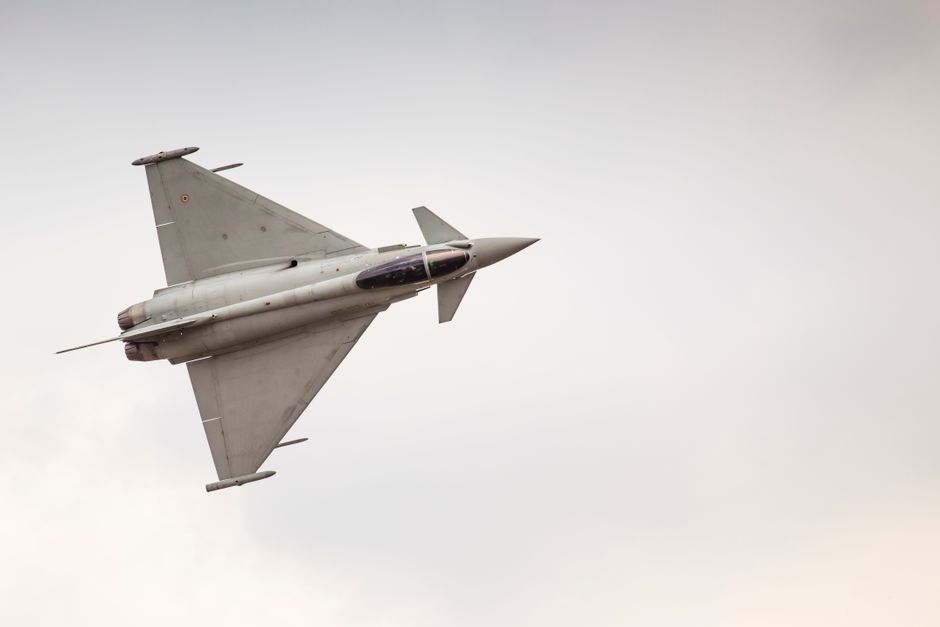
On June 8, 2026, a French military jet called a Rafale intercepted and destroyed a drone that had entered Latvian airspace from Russia. This was the first time a NATO member country had used weapons to shoot down an object coming from Russian territory during the Ukraine conflict. Reuters reported on the Latvian military's alert and confirmed the intercept.
This wasn't just a small incident between two countries. It showed that NATO's collective defence system — which requires all members to defend any one member if attacked — is now being tested in a real, dangerous situation. A NATO member's airspace had been violated, and an ally chose to respond with military force.
The incident connects three separate problems that have been building up: Russia's large-scale attacks on Ukrainian cities using missiles and drones; flying objects regularly crossing borders into NATO territory; and increasingly tense diplomatic relations between Russia and NATO countries on its eastern edge.
The Pattern Behind the Incident: How Drones Are Straying Into NATO Territory
Russia has continued attacking Ukrainian cities with large-scale missile and drone strikes. French, British, and German leaders issued a joint statement on June 7, 2026 specifically noting Russia's use of Oreshnik hypersonic ballistic missiles — advanced weapons that are difficult to shoot down. When Russia launches many different types of weapons at once — cruise missiles, drones that linger in the air before striking (called Shahed-type loitering munitions), and ballistic systems — Ukrainian air defences get overwhelmed. The result is that some of these flying objects end up crossing international borders unintentionally.
Two related patterns have emerged on NATO's eastern flank. First, Ukrainian drones targeting Russian energy infrastructure and military supplies have sometimes drifted near or into the airspace of Latvia, Lithuania, Estonia, and Finland, according to reporting by the Associated Press. Ukraine's explanation, as reported by Reuters, is that Russian electronic jamming — specifically GPS jamming that disables navigation systems — causes Ukrainian drones to veer off course. This explanation is technically reasonable given what we know about Russian jamming capabilities in the Baltic region, but independent verification hasn't been possible for every case.
Second, Russian-origin drones have actually entered NATO territory. In late May 2026, a drone crashed into an apartment building in Galați, Romania, near the Ukraine border, injuring two people, according to reporting by Al Jazeera and Reuters. Romania has reported ongoing drone activity along its border with Ukraine. That crash in Galați — a weapon striking a residential building inside NATO territory — drew strong criticism from multiple NATO members.
Diplomatic Tensions Rise as Accusations Fly
UK Foreign Secretary Yvette Cooper publicly stated that Russia is violating NATO airspace and that Moscow's actions risk leading to armed confrontation between NATO and Russia, according to Ukraine's foreign intelligence service. The same source documented what it called a deliberate Russian drone incursion into Polish airspace.
What matters about these statements isn't just the tough language — that's been escalating for months. What stands out is that a named NATO foreign minister is specifically accusing a nuclear-armed power of violating its territory. That's a significant diplomatic step.
Russia responded in kind. Moscow's ambassador to the United Nations warned in May 2026 that Russia had intelligence about Ukraine planning to launch drones from Latvia and threatened to retaliate against Latvia if that happened, according to Reuters. Russia has accused Baltic countries of helping Ukraine with drone operations and framed potential Russian responses as legitimate self-defence, not escalation.
This exchange matters in terms of international law and strategic consequences. NATO's founding treaty, signed in 1949, has an Article 5 that says an armed attack on one member is considered an attack on all of them. But the treaty was deliberately vague about what exactly counts as an "armed attack" and how members must respond. A drone of unclear origin crashing into an apartment block tests that vagueness in ways that Cold War planners never specifically had to think about.
Historical Parallels and Where This Could Go
Similar kinds of airspace incidents happened during NATO's 1999 military campaign in Kosovo. Back then, NATO planes flying over the former Yugoslavia led to disputes over whether they were in neutral airspace, accidental incidents occurred, and countries disagreed about what rights each side had to operate in other countries' skies. The situation now is different in a crucial way: one side of the current conflict — Russia — is itself a major nuclear power that is directly accused of the intrusions. And the NATO member being affected isn't a minor player but a direct neighbour of the Ukraine war zone.
The broader context here is worth pausing on. During the Kosovo campaign, these kinds of incidents created their own diplomatic crises that sometimes became more important than the underlying dispute. NATO defence planners are managing the same risk right now — the possibility that drone incidents will trigger diplomatic spirals that take on a life of their own, separate from the conflict itself. The French intercept over Latvia on June 8 is the sharpest sign yet that this pattern is accelerating.
What the Shootdown Tells Us About NATO's Next Steps
The decision to actually shoot down the drone, rather than simply track it and report it, sends a message. It shows that France — operating as part of NATO's "enhanced forward presence" (a NATO arrangement that positions military assets in eastern member countries) — is willing to use weapons against objects originating from Russian territory that enter NATO airspace. That's a big threshold to cross.
The fact that NATO chose to do this publicly — rather than handling it quietly — appears deliberate. Alliance members want Russia to see and understand that they will respond with force. This creates a dilemma for Russia. Moscow has claimed that drone activity from Ukraine is NATO complicity if NATO members tolerate it on their soil. But now a NATO country has shot down the drone itself — using a French jet, not just local air defences — which shows NATO unity in responding to airspace violations. The drone is gone, so it can't cause any further incidents.
For Ukraine, this creates a political problem. Repeated drone incidents are making friction with NATO allies, whose citizens are seeing drone wreckage land on their apartment buildings. Kyiv has strong reasons to either better control where its drones fly or provide a clearer explanation of the GPS jamming issue. If the incidents keep happening, it becomes harder for Ukraine to claim that its defensive operations are different from Russia's attacks.
The Risk of Miscalculation Is Growing
Each incident by itself — the Galați crash, drones skirting Baltic airspace, the Latvian intercept, Russian threats — can be handled. But when you add them all together, the space for mistakes has gotten much smaller. A single drone, on any given night, could trigger a response that has to follow NATO treaty rules rather than just diplomatic negotiation.
NATO countries with territory near Russia's war operations — Romania, Latvia, Lithuania, Estonia, Poland, Finland — are no longer simply watching a conflict from a distance. They are now active parts of an air-defence network where the difference between the war zone and NATO territory is becoming blurry in practice, even if the law is still clear.
The question being asked in NATO headquarters in Brussels and in the capitals of Warsaw, Riga, and Bucharest has shifted. Everyone knows these incidents will keep happening — the fighting on both sides is too intense for that to stop. The real question now is whether each new incident means one more step up a ladder of escalation, and whether anyone knows where the top of that ladder is.


