Zareh, a Melbourne Armenian-Lebanese Restaurant, Named Gourmet Traveller's Restaurant of the Year
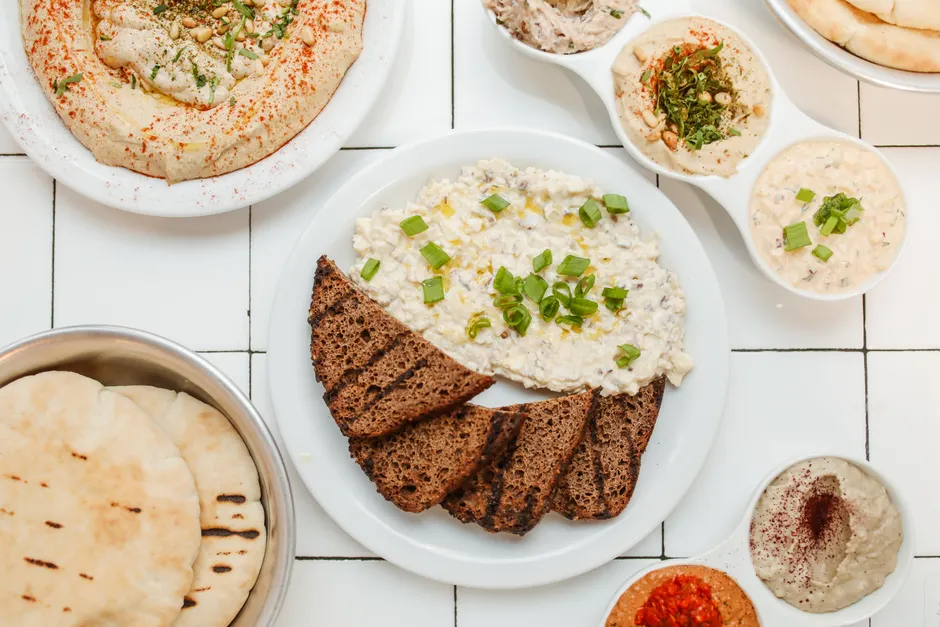
A 40-seat Armenian-Lebanese restaurant in Melbourne's Collingwood has been named Gourmet Traveller's restaurant of the year at the magazine's 2026 annual industry awards, announced at a ceremony in Sydney on Monday 17 August. The awards, also published in the September issue, coincide with the 60th year of the publication, which first went to press in 1966 as the Australian Gourmet Magazine (The Guardian; Gourmet Traveller).
Zareh is co-owned by Tom Sarafian and Jinane Bou-Assi and opened at 368 Smith Street, Collingwood, in August 2025. The room serves dinner Tuesday to Saturday. It is Sarafian's first restaurant and draws from the Armenian, Egyptian, and Lebanese backgrounds of its co-owners. The name honours Sarafian's paternal grandfather (Gourmet Traveller; Gourmet Traveller).
The cooking is regionally specific and locally sourced. The aish baladi — an Egyptian flatbread — is made with flour milled on the Mornington Peninsula. The kafta nayyah, a dish of raw minced lamb, uses meat from Tasmania and Victoria. The hummus is crowned with spanner crab (The Guardian).
Sarafian described the restaurant as "a love letter from us to Lebanon," a framing he tied to the Armenian genocide and Lebanon's acceptance of Armenian refugees. That personal-historical foundation gives the menu a genealogical logic: dishes are not a broad pan-Middle-Eastern blend but are rooted in specific family and diaspora histories, translated through Victorian produce (The Guardian).
Gourmet Traveller called the room "a Collingwood restaurant with an electric identity" (Gourmet Traveller). Alongside the overall restaurant-of-the-year title, Zareh was named Victoria Restaurant of the Year in the same awards cycle, a dual recognition for a venue open barely twelve months (Gourmet Traveller).
Previous restaurant-of-the-year recipients include Saint Peter, Attica, Orana by the late Jock Zonfrillo, and Quay, venues that have served as anchors of Australia's fine-dining canon. Zareh's selection places a first-year, 40-seat Collingwood room in that lineage, pointing to the magazine's willingness to elevate a diasporic, family-driven cooking model over more established or formally ambitious venues (The Guardian).
The broader 2026 awards list carried several other notable results.
Melbourne's Yiaga was named best new restaurant. Christian Ryan of Aloft and Restaurant Maria in Hobart took chef of the year. "Big" Sam Young, co-owner with Grace Chen of Young's Palace and S'more in Sydney, was named restaurant personality of the year for his front-of-house presence. Saavni Krishnan and Aditya Suresh of Melbourne's Saadi won best new talent for their "modern Indian" cooking; the restaurant's seasonally changing menu includes sundarkala, hand-rolled wheat noodles from Uttarakhand topped with wild barramundi from the Northern Territory (The Guardian).
Beppi's, the 70-year-old Sydney Italian restaurant founded by Beppi and Norma Polese, received the reader-voted "enduring excellence" award. Marc Polese accepted on the restaurant's behalf and paid tribute to immigrants in the hospitality industry. Chef and author Stephanie Alexander received the outstanding contribution to hospitality award. Alexander opened her restaurant Stephanie's in Melbourne in 1976 and founded the Stephanie Alexander Kitchen Garden Foundation; her cookbook The Cook's Companion marks its 30th anniversary in 2026 (The Guardian).
The broader context here is that the 2026 results paint a coherent picture of where Gourmet Traveller is directing its institutional weight. Several of the marquee winners — Zareh, Saadi, Yiaga — are Melbourne restaurants rooted in specific non-Anglo culinary lineages, built around family heritage rather than technique-driven fine dining. The "enduring excellence" and "outstanding contribution" awards, given to a seven-decade Italian institution and a foundational Melbourne figure, bookend the list with a recognition of generational immigrant labour in Australian hospitality. Taken together, the awards foreground a model of culinary legitimacy grounded in diaspora narrative, regional Australian sourcing, and familial continuity rather than European formalism or novelty for its own sake.


