Einride to Add 500 Tesla Semis to Its Electric Truck Fleet for Amazon and Other Customers

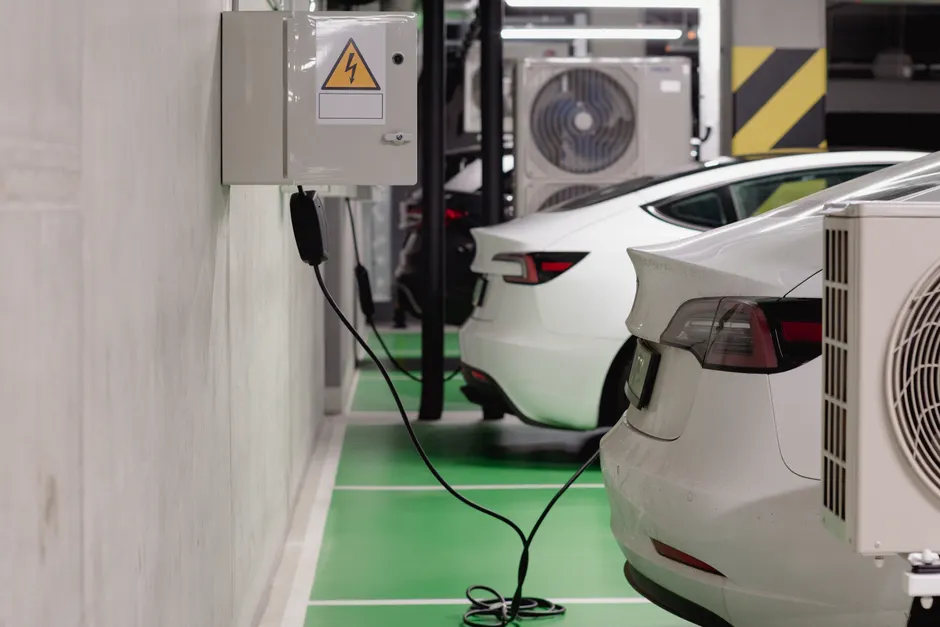
Einride announced Tuesday that it plans to purchase 500 Tesla Semis and make them available to Amazon and other customers across its electric freight network. The trucks will join Einride's fleet in phases over the next 24 months, starting in September, financed through a third party TechCrunch.
The deal will triple the size of Einride's fleet. The Swedish company currently operates about 200 of its own heavy-duty electric trucks for customers including Heineken and PepsiCo. Once fully deployed, the Tesla Semis will extend Einride's electric freight network to corridors in California, Georgia, New Jersey, and Texas. Einride will manage the Tesla trucks through its Saga AI fleet management software — a platform that handles routing, charge scheduling, and fleet coordination.
Einride CEO Roozbeh Charli said the deployment shows the company can operate at the scale its customers demand. The company went public in June. Einride also told TechCrunch the deal could help convert about $800 million in potential long-term annual recurring revenue under joint business plans with shippers into actual revenue.
The Tesla Semi has had a long road to volume production. Tesla revealed the concept in 2017 and delivered its first batch to customers like PepsiCo in December 2022 after delays. The first Semi rolled off the high-volume production line at Tesla's Nevada factory in April 2026. Tesla has said it is working to increase battery production, specifically around its 4680 cell — a cylindrical battery format Tesla designed to improve energy density and lower manufacturing costs — in order to build the Semi and its Cybercab at scale.
For Einride, the 500-Semi order builds on an existing relationship with Amazon. In April, Einride struck a deal to add 75 of its electric heavy-duty trucks to Amazon's Relay freight network, deploying them in the company's middle-mile freight operations — the segment of logistics that moves goods between warehouses rather than to final customers — across the United States. That deployment includes EV charging infrastructure at five locations Reuters. Einride has also been building out its charging capabilities more broadly, acquiring EV charging company Flipturn.
Einride's earlier international ambitions include a proposed freight mobility grid in the UAE, announced in 2023, with plans for 2,000 electric vehicles, 200 autonomous vehicles, and eight charging stations Einride.
The broader context here is a freight electrification landscape where the bottlenecks have shifted from vehicle availability to fleet-scale operations. Tesla's Semi is now coming off a high-volume line, which changes the supply equation for companies like Einride that have built demand-side relationships with major shippers. The question Einride is effectively answering is whether a fleet operator can stitch together third-party hardware, proprietary fleet management software, and charging infrastructure into a service that large shippers will commit to over multi-year contracts.
What makes the 500-unit order worth examining is the convergence of several threads that have matured in parallel. Tesla's production ramp resolves the supply constraint that has capped Semi deployments since the 2022 deliveries. Einride's IPO provides the public-market capital structure to take on a purchase of this size, even with third-party financing. And Amazon's involvement, both through the existing 75-truck deployment and as a customer for the Tesla Semis, signals that the largest freight buyers are moving from pilot deployments toward fleet-scale electrification commitments.
In this author's view, the Saga AI management layer is the differentiator Einride is betting on. Owning or operating the trucks matters less than being the orchestration layer that routes them, manages charge cycles, and presents a unified service to shippers. The Tesla Semi is a vehicle; Einride is selling a managed freight network. Whether the $800 million in identified recurring revenue converts depends on whether that orchestration layer can absorb a 3x fleet increase without service degradation, and whether Tesla's 4680 cell production ramp keeps pace with Einride's 24-month deployment schedule. Both are execution questions, and both have historically been harder to answer than to ask.