Tesla Lowers Robotaxi Expectations on Q2 2026 Earnings Call
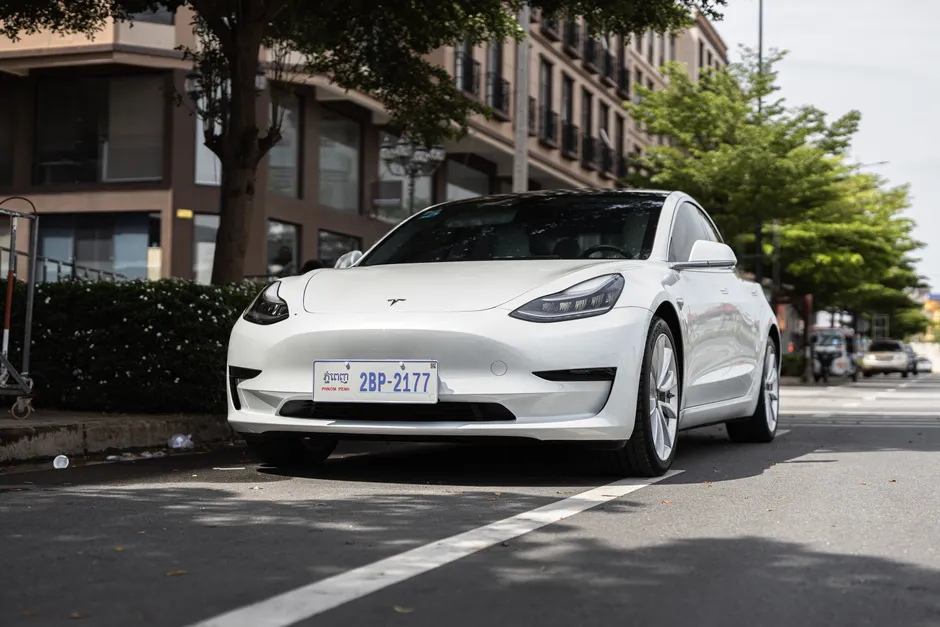
Tesla used its Q2 2026 earnings call to report progress on its robotaxi program while Elon Musk noticeably sought to lower expectations for the initiative's near-term trajectory. The shift in tone, reported by Reuters on July 23, 2026, followed the release of Tesla's Second Quarter 2026 Update on July 22 (Tesla IR).
Musk told analysts the program was adding new cities, accumulating more miles, and reaching more people with unsupervised vehicles. But the characteristic bullishness was absent. Musk instead sought to temper expectations about the robotaxi program's future. "We're going as fast as humanly possible in scaling Robotaxi, while trying to ensure that we do not harm anyone at all and ideally do not even run over a pet," he said during the call (The Verge).
Ashok Elluswamy, Tesla's head of AI, provided the operational figures. Tesla's unsupervised robotaxis have driven 380,000 miles across six cities in two different states. Musk added that robotaxi miles driven were increasing at a rate of 10 percent per week. Paying customers have now traveled 2.5 million cumulative miles through the end of Q2 2026 (Reuters, Business Insider).
Those numbers remain a fraction of the competitive set. Waymo typically drives around four million miles per week. Tesla's total robotaxi mileage a year into its program was less than 10 percent of that weekly figure. BNP Paribas Equity Research senior analyst James Picariello described Tesla's robotaxi mileage situation as "an alarming decline" in a research note to clients (The Verge).
A crowdsourced Robotaxi Tracker cited by The Verge counted 16 unsupervised vehicles in Austin, four in Dallas, and one in Houston. Elluswamy said Tesla expanded across different cities rather than concentrating vehicles in Austin to prove its autonomous driving stack is general and works without too much effort per city. Tesla had launched its first robotaxis on the streets of Austin, Texas, according to an SEC filing from September 2025.
Elluswamy defended Tesla's camera-only approach, noting that competitors and experts have historically claimed lidar, radar, and HD maps are necessary. Lidar uses laser pulses to measure distances and build a detailed 3D view of surroundings; radar uses radio waves to detect objects and their speed. Tesla, he said, shows safe autonomy is possible with just cameras. That approach now faces legislative friction. New Jersey is considering a bill that would effectively ban robotaxis without multiple sensors such as radar and lidar. Morgan Stanley analyst Andrew Percoco flagged evolving state-level regulations around sensor requirements during the call. Tesla VP of vehicle engineering Lars Morvay described the New Jersey regulatory situation as "a little bit disheartening." (The Verge)
The robotaxi update arrived against a mixed financial backdrop. Tesla posted record-setting Q2 2026 delivery numbers that exceeded Wall Street estimates, led by a rebound in European sales (Reuters). The company produced over 450,000 vehicles in the quarter. But CFO Vaibhav Taneja stated during the earnings period that Tesla will have negative free cash flow for the rest of 2026 (Reuters).
The broader context here is that the tension between Tesla's camera-only architecture and emerging state-level sensor mandates may be the most consequential thread in this story. If New Jersey's bill passes, it would not only block Tesla from operating in that state. It would establish a regulatory precedent that a pure-vision stack, which relies solely on cameras and neural networks rather than multiple sensor types, is legally insufficient for driverless deployment. That is a fundamentally different kind of barrier than a technical milestone missed by a few quarters.
There is also a stark operational contrast worth flagging. A 10 percent weekly growth rate on a small base sounds aggressive, but it does not close a gap against a competitor already running four million miles weekly. Tesla has historically pursued a fleetwide, software-first scaling model, leaning on its existing vehicle population and the upcoming purpose-built Cybercab, which the company stated in its Q1 2025 Update is scheduled for volume production starting in 2026. The Cybercab is central to Tesla's economic argument for robotaxi: it is the vehicle meant to drive unit costs down and utilization up simultaneously.
In my view, Musk's tempering of expectations is a more significant signal than the mileage numbers themselves. I have watched enough technology shifts cycle through hype, deflation, and eventual maturity to recognize that when a CEO known for aggressive timelines starts quoting pet safety as a constraint, the engineering team is likely confronting edge cases, meaning rare or unusual driving situations, that do not scale with compute power alone. The camera-only thesis has always been a bet that neural networks can match the redundancy of active sensor fusion, where multiple sensor types cross-check each other. That bet is now being tested in the real world and in state legislatures simultaneously.
What remains genuinely encouraging is that Tesla is expanding its unsupervised footprint at all. Six cities across two states, with paying customers accumulating real miles, is measurable progress on a problem that has frustrated the industry for over a decade. The question is no longer whether the technology works in a narrow sense but whether it can scale safely and legally without the sensor redundancy that competitors and some regulators consider non-negotiable.