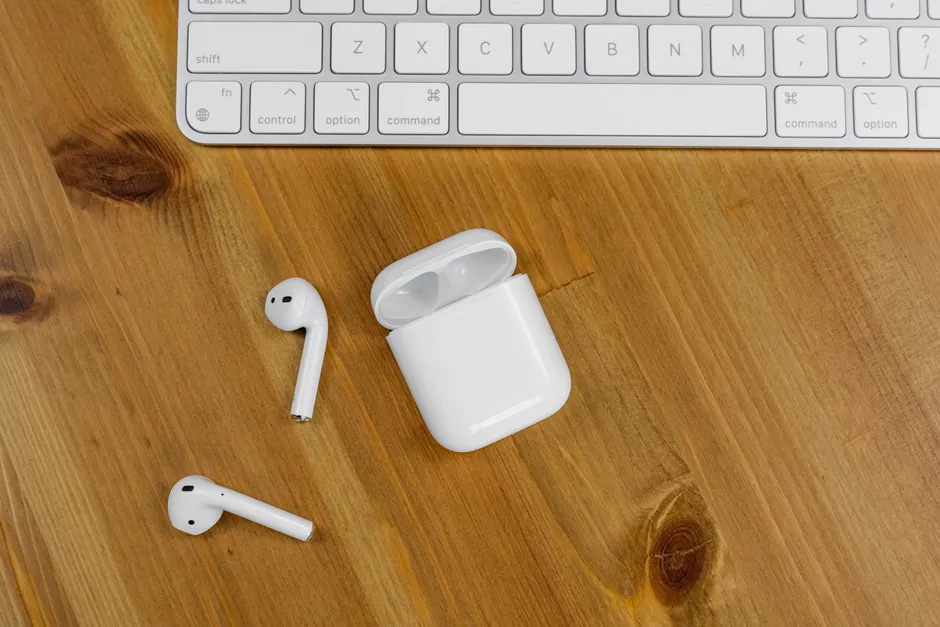
Apple's Camera-Equipped AirPods Surface in macOS Leak

A video found inside Apple's macOS 26.7 release candidate shows a person wearing camera-equipped AirPods and talking with Siri about a physical book, offering the clearest look yet at a product Apple has been quietly developing for months.
MacRumors first spotted and reported the leaked video on August 17. 9to5Mac corroborated the finding the same day, confirming that a short clip bundled in the macOS Tahoe 26.7 RC appears to show Apple's camera-equipped AirPods working with a feature called Visual Intelligence — Apple's term for features that let its devices understand and act on what a camera sees. TechCrunch published its own report on August 18.
The video depicts a man holding up a book and talking with Siri about it, using visual information captured by the AirPods' camera. The voiceover states: "With Visual Intelligence, your world becomes savable. See something you like? Just ask me to save it for later."
MacRumors reported that the camera on the equipped AirPods can examine objects in front of the user and answer questions about them. The site also found a line in the software code suggesting the AirPods will notify the user if their hair or another obstruction is covering the camera lens, a practical consideration for a device worn on the head rather than held in the hand.
Bloomberg reported in May 2026 that Apple was in the late stages of testing camera-equipped AirPods as part of a broader push into AI-powered devices. According to that reporting, the hardware will resemble the AirPods Pro 3 but with a longer stem and an LED light that indicates when data is being sent to the cloud. Bloomberg also reported that Apple had originally aimed to release the camera-equipped AirPods in the first half of 2026 but revised that timeline to launch them alongside operating system updates after shipping the new Siri in September.
The competitive landscape for this type of device is already populated. The Ray-Ban Meta Glasses, the Looki pendant, and smart glasses from Rokid all offer comparable features, letting users ask an assistant about objects in their field of view. Apple's camera-equipped AirPods would enter a category where the basic approach, capturing what you see and asking a voice assistant about it, is already established, though Apple's version places the camera in ear-worn hardware rather than eyewear.
A few details in this leak stand out for anyone following Apple's AI strategy. A release candidate is a late-stage pre-release build, meaning marketing assets like tutorial videos are typically finalized and embedded close to ship dates. Finding a polished promotional video in a release candidate is a strong signal that the product is near launch, not merely in prototyping. The Visual Intelligence branding aligns with Apple's existing naming for visual query features on iPhone, suggesting a shared system across iPhone and AirPods rather than something built separately for the new hardware.
The cloud-indicator LED detail from Bloomberg's May reporting is consistent with the macOS video's mention of saving visual information "for later." If visual data captured by the AirPods is sent to Apple's cloud for processing or storage, the LED serves a transparency function, giving bystanders and the wearer a visible signal that capture is active. That is a design choice shaped as much by social acceptability and regulatory pressure as by engineering necessity. Wearable cameras remain a sensitive category, and the hair-obstruction notification suggests Apple is thinking through the unglamorous failure modes that determine whether this kind of capture feels reliable in daily use.
The integration with Siri also matters for what it suggests about the assistant's evolving architecture. Answering questions about a held-up book requires not just image capture but multimodal inference — meaning the system must process the visual frame, extract relevant content like the title, author, cover art, or page text, and feed it into a language model that can generate a spoken response. Whether that processing happens on-device, in the cloud, or through some combination is not specified in the leaked materials. But the cloud LED suggests at least some data leaves the device, which aligns with the hybrid approach Apple has taken with other Apple Intelligence features.
The reference to Bloomberg's September timeline for the new Siri is the scheduling detail to watch. If Apple ships the updated Siri in September alongside its fall operating system releases, the camera-equipped AirPods would follow with OS updates thereafter. The macOS 26.7 RC containing this video in August fits that timeline: marketing assets appearing in RC builds roughly one to two months ahead of a product launch.
None of this is confirmed by Apple. The video and code strings are leaked artifacts from a pre-release build, not an official announcement. But the convergence of Bloomberg's hardware reporting from May, the software evidence found in the macOS 26.7 RC, and the polished nature of the leaked promotional video together paint a picture of a product that has moved well past the experimental stage. For developers and platform watchers, the takeaway is that Apple is preparing to bring ambient visual intelligence to a mass-market wearable, and the software infrastructure to support it appears to be landing in current release candidate builds.