Apple's Camera-Equipped AirPods: What the Latest Leak Reveals
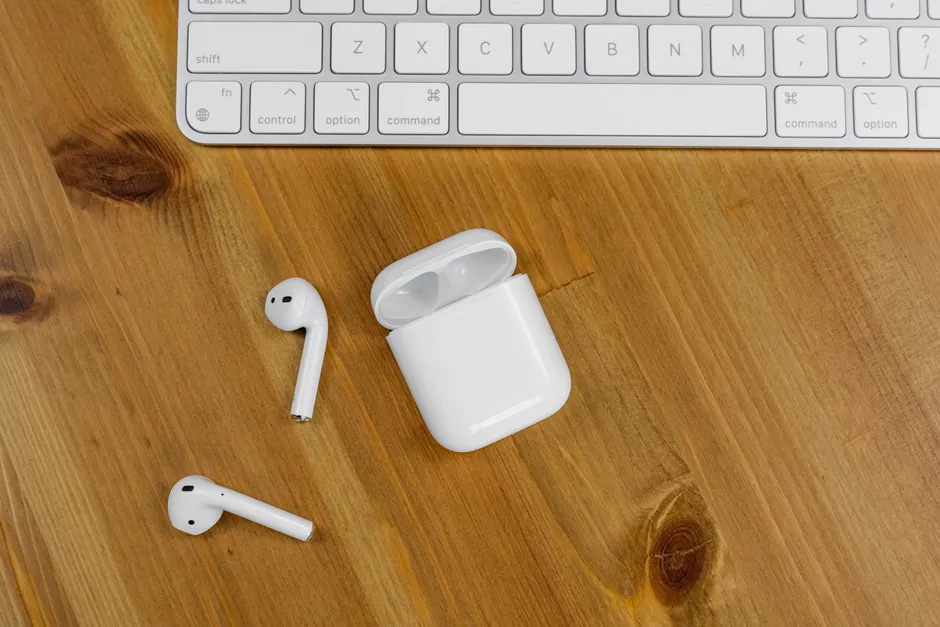
Apple has accidentally leaked a video of its forthcoming camera-equipped AirPods through a test version of an upcoming macOS update, exposing the most detailed technical picture yet of a device that may not ship until 2027. The leak, surfaced in code buried in an early macOS Tahoe 26.7 build, reveals how the earbuds capture, synchronize, and process images for Apple's Visual Intelligence software rather than for personal photography (Engadget).
Each earbud carries its own camera, and the two image streams are synchronized by Visual Intelligence software into a single cohesive picture. The cameras capture RGB (standard color) still images at resolutions up to 1 megapixel. They do not shoot video; the system operates on periodic image capture, more like an ambient sensing system that takes snapshots at intervals than a wearable camcorder recording continuously.
The design relies on hardware already present in current AirPods. Multiple accelerometers in the earbuds track head movement, allowing the system to align the two camera feeds with the wearer's orientation. Software on the earbuds rejects images degraded by excessive motion or an blocked view, discarding frames that would compromise downstream analysis rather than trying to clean them up after the fact.
Some image processing happens locally on the earbuds themselves. Code references this as "peripheral inference," meaning the AirPods perform at least preliminary on-device computation before passing data to the paired phone or computer. The system also supports both an active and a passive mode, with active mode producing higher-quality images. The distinction suggests a power-management tradeoff: passive capture for always-on ambient awareness, active capture when the system or user demands sharper input.
Each earbud likely includes a capture indicator light so bystanders can tell when the cameras are operating. This is a design choice with obvious social implications, and it is one Apple appears to be making proactively rather than reactively. Bloomberg's opinion coverage has already noted Apple's Visual Intelligence marketing tagline, which promises that "your world becomes savable," and drawn attention to the privacy backlash Meta faced over its camera-equipped Ray-Ban smart glasses (Bloomberg).
Visual Intelligence is part of Apple's long-delayed upgraded Siri, a multimodal assistant designed to analyze images sent by the earbuds and act on what it sees. Multimodal here means the assistant can process multiple types of input, including text, voice, and images. The only use case Apple describes in the leaked video is narrow: a man asks Siri to remember a book he is looking at. It is a simple scenario, but it establishes the intended interaction model. The cameras exist to feed contextual data to an AI assistant, not to produce images the wearer views, edits, or shares.
That distinction matters. The camera-equipped AirPods are not a photography product. They are a sensing peripheral for an AI system that Apple has been building toward for years. Bloomberg reported in February that Apple is ramping up work on three AI-era devices: smart glasses, an AI pendant, and camera-equipped AirPods, all built around the Siri digital assistant (Bloomberg). By May, the AirPods specifically had reached an advanced testing stage (Bloomberg). Mark Gurman has suggested the product will not reach consumers until 2027.
The broader context here is that Apple is not building a single wearable camera device. It is building a category. Three form factors, all feeding the same Siri-based multimodal pipeline, suggest Apple is hedging on which wearable shape wins while committing to the underlying thesis that AI assistants need eyes. The AirPods form factor is the most technically constrained of the three: the earbuds must fit existing acoustic and battery requirements while adding cameras, accelerometers, indicator lights, and on-device inference. The peripheral inference model is a logical response to that constraint, pushing preliminary compute to the edge and reserving heavier processing for the paired device.
The privacy architecture is the part worth watching most closely. A capture indicator light is a baseline social-license feature, not a privacy guarantee. The harder questions concern what Visual Intelligence does with the images it captures, how long they persist, whether they leave the device at all, and what Apple's on-device processing commitment means for a system that by definition must analyze the wearer's visual environment continuously. Apple has not answered these questions yet, and the leaked code does not address them. The "your world becomes savable" tagline is doing a lot of heavy lifting for a product whose data lifecycle remains undocumented.
The technical details that have surfaced point to a carefully scoped system. RGB stills at up to 1 megapixel, periodic rather than continuous capture, motion and occlusion rejection, dual-mode power management, on-earbud inference. Each of these choices constrains what the device can do and, by extension, what it can do wrong. A system that captures low-resolution stills intermittently and discards bad frames is easier to defend on privacy grounds than one streaming continuous video. Whether that architecture holds through to a 2027 release, or whether Apple expands the capture envelope as the multimodal assistant's capabilities grow, is the open question.
For now, the leak confirms that Apple's camera AirPods are real, technically sophisticated, and designed around a specific thesis: wearable AI assistants need visual context, and the earbuds on your head are a convenient place to put the sensors that provide it. The execution details suggest Apple understands the engineering and social constraints. What remains unknown is whether Visual Intelligence and the upgraded Siri will be capable enough by 2027 to make the whole proposition worthwhile.


